
Species
Hairy-tailed mole
Parascalops breweri
A black, velvety mole of upland forests and fields with a short, furry tail.
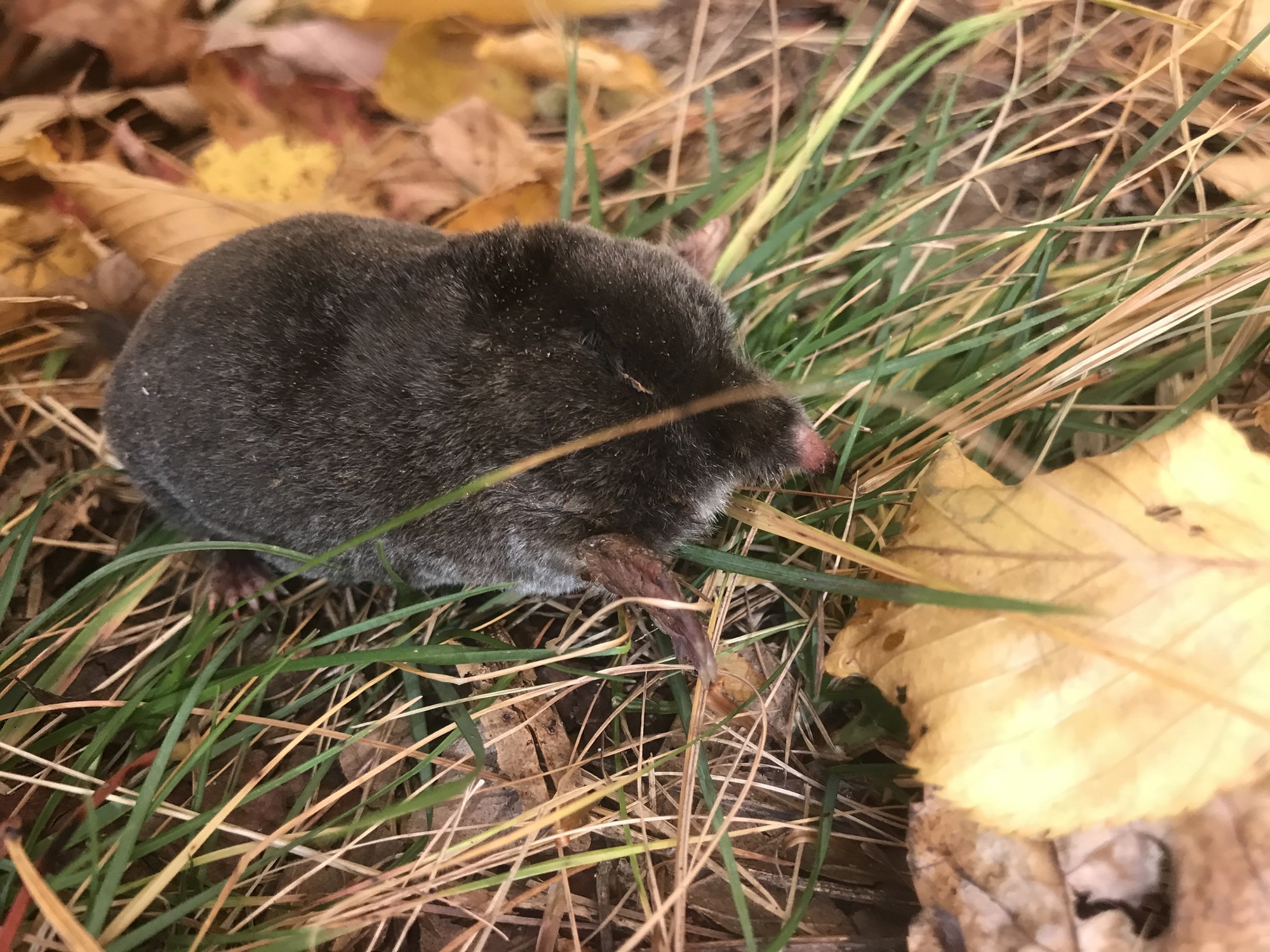
Photo Tayton Alvis (opens in a new tab) / Wikimedia Commons, CC BY 4.0 (opens in a new tab)
At a glance
- Size
- Body about 12 to 14 cm; tail about 2.5 to 3.5 cm
- Weight
- About 40 to 65 g
- Habitat
- Forests, fields and gardens with light, well-drained soil in hills and mountains
- Diet
- Earthworms, insect larvae and other soil invertebrates
- Active
- Day and night, all year
- Shelter
- Shallow feeding tunnels and deeper permanent tunnels
- Lifespan
- Several years
- Rabies vector
- No
Identification
- Key marks
- Dark grey to black velvety fur; broad digging forefeet; short tail covered with hair
- Told apart from
- Eastern mole, which is paler and has a nearly bare tail
- Told apart from
- Star-nosed mole, which has a star on its nose and a long tail
- Where to look
- Mountains of north Georgia; mounds and ridges in forest and field
Behaviour
Hairy-tailed moles dig two kinds of tunnel: shallow runs just under the surface for feeding, and deeper tunnels for resting and nesting. They prefer lighter, well-drained soils than the eastern mole and are often found in forest.
They come to the surface more often than most moles, especially at night, and sometimes forage above ground in leaf litter.
Why they matter
Like other moles, they turn and aerate the soil, mixing leaf litter into the ground and helping water soak in. In mountain forests they are one of the animals that keep soils open and alive.
Reproduction and lifecycle
Mating — early spring
Gestation — about four to six weeks
Birth — April and May, one litter of usually four or five young
Leaving the nest — at about four weeks old
Lifespan — up to several years
Living around people
- Moles do not eat plants; they eat worms and grubs.
- Poison baits for moles harm other wildlife and pets.
- A mole on the surface can be moved in a container to nearby soft ground.
Misconceptions
- Mole mounds are damage. They are a sign of busy, healthy soil.
- Moles are rodents. They are insect-eaters, related to shrews.
Related species
Seasonal activity
When this species is breeding, and when there are nests on the ground. Mowing during the shaded months is how most nests are found.
| Jan | Feb | Mar | Apr | May | Jun | Jul | Aug | Sep | Oct | Nov | Dec | |
|---|---|---|---|---|---|---|---|---|---|---|---|---|
| Breeding | Jan: no | Feb: no | Mar: no | Apr: no | May: no | Jun: no | Jul: no | Aug: no | Sep: no | Oct: no | Nov: no | Dec: no |
| Active nests | Jan: no | Feb: no | Mar: no | Apr: no | May: no | Jun: no | Jul: no | Aug: no | Sep: no | Oct: no | Nov: no | Dec: no |
| Notes | Active in deeper tunnels | Active | Breeding begins | Mating | Young born in a deep nest | Young leave the nest at about a month old | Young disperse | Active | Active | Active near the surface in moist soil | Moving deeper as soil cools | Active in deeper tunnels |
Where it lives
Recorded in 19 states and provinces. Each one links to the other animals there, and to the rehabilitators licensed for them.
United States
If you found one
Answer a few questions and you will get a specific answer for what you are looking at.
I found an animal