
Species
Smoky shrew
Sorex fumeus
A grey, long-tailed shrew of cool, damp mountain forests.
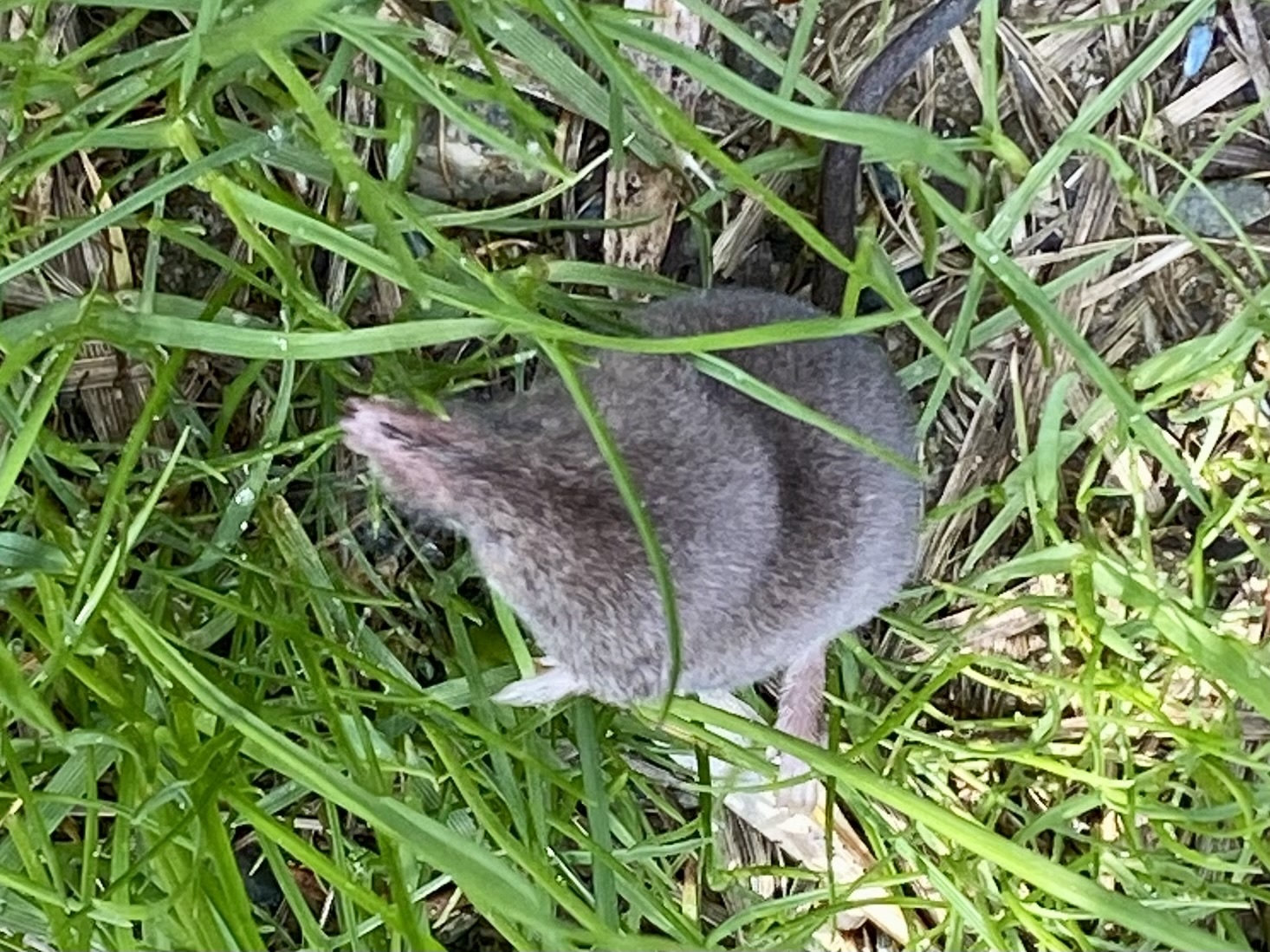
Photo Michael K. Oliver (opens in a new tab) / iNaturalist, CC BY 4.0 (opens in a new tab)
At a glance
- Size
- Body about 6 to 8 cm; tail about 4 to 5 cm
- Weight
- About 6 to 11 g
- Habitat
- Cool, moist forests with deep leaf litter, moss and rotting logs
- Diet
- Insects and their larvae, earthworms, snails, spiders and centipedes
- Active
- Day and night, all year
- Shelter
- Runways under leaf litter and moss
- Lifespan
- Usually a year or so
- Rabies vector
- No
Identification
- Key marks
- Grey fur, browner in summer; long tail, darker above and paler below; pointed snout
- Told apart from
- Masked shrew, which is smaller and browner
- Told apart from
- Short-tailed shrews, which have short tails
- Where to look
- Damp forest floors in the mountains and hills of north Georgia
Behaviour
Smoky shrews are forest-floor hunters of the Appalachians and the Northeast. They run through leaf litter, moss and the soft wood of rotting logs, feeding on insects, larvae and worms. Like other shrews, they are active through day and night and all year round.
In Georgia they are known from the mountains and the ridges of the northwest.
Why they matter
Smoky shrews are part of the life of old, damp forest, and they depend on the deep leaf litter and rotting wood such forests keep. Where forest floors dry out, they disappear.
Reproduction and lifecycle
Breeding — spring and summer
Gestation — about three weeks
Litter — usually two to seven young
Weaning — at about three to four weeks old
Lifespan — rarely more than about 14 months
Living around people
- Leaving fallen logs and leaf litter in woodland keeps their habitat.
- Cats catch shrews in yards near forest.
Misconceptions
- Forest leaf litter is waste. It is where smoky shrews live and hunt.
- Shrews are mice. They are insect-eaters, closer to moles.
Related species
Seasonal activity
When this species is breeding, and when there are nests on the ground. Mowing during the shaded months is how most nests are found.
| Jan | Feb | Mar | Apr | May | Jun | Jul | Aug | Sep | Oct | Nov | Dec | |
|---|---|---|---|---|---|---|---|---|---|---|---|---|
| Breeding | Jan: no | Feb: no | Mar: no | Apr: no | May: no | Jun: no | Jul: no | Aug: no | Sep: no | Oct: no | Nov: no | Dec: no |
| Active nests | Jan: no | Feb: no | Mar: no | Apr: no | May: no | Jun: no | Jul: no | Aug: no | Sep: no | Oct: no | Nov: no | Dec: no |
| Notes | Active under leaves and snow | Active | Breeding begins | First litters born | Young leave the nest | Breeding continues | Young disperse | Breeding slows | Young of the year dominate the population | Active | Active in cold weather | Active under leaves and snow |
Where it lives
Recorded in 23 states and provinces. Each one links to the other animals there, and to the rehabilitators licensed for them.
United States
If you found one
Answer a few questions and you will get a specific answer for what you are looking at.
I found an animal