
Species
Spring salamander
Gyrinophilus porphyriticus
A big, salmon-pink salamander of cold mountain springs that eats other salamanders.
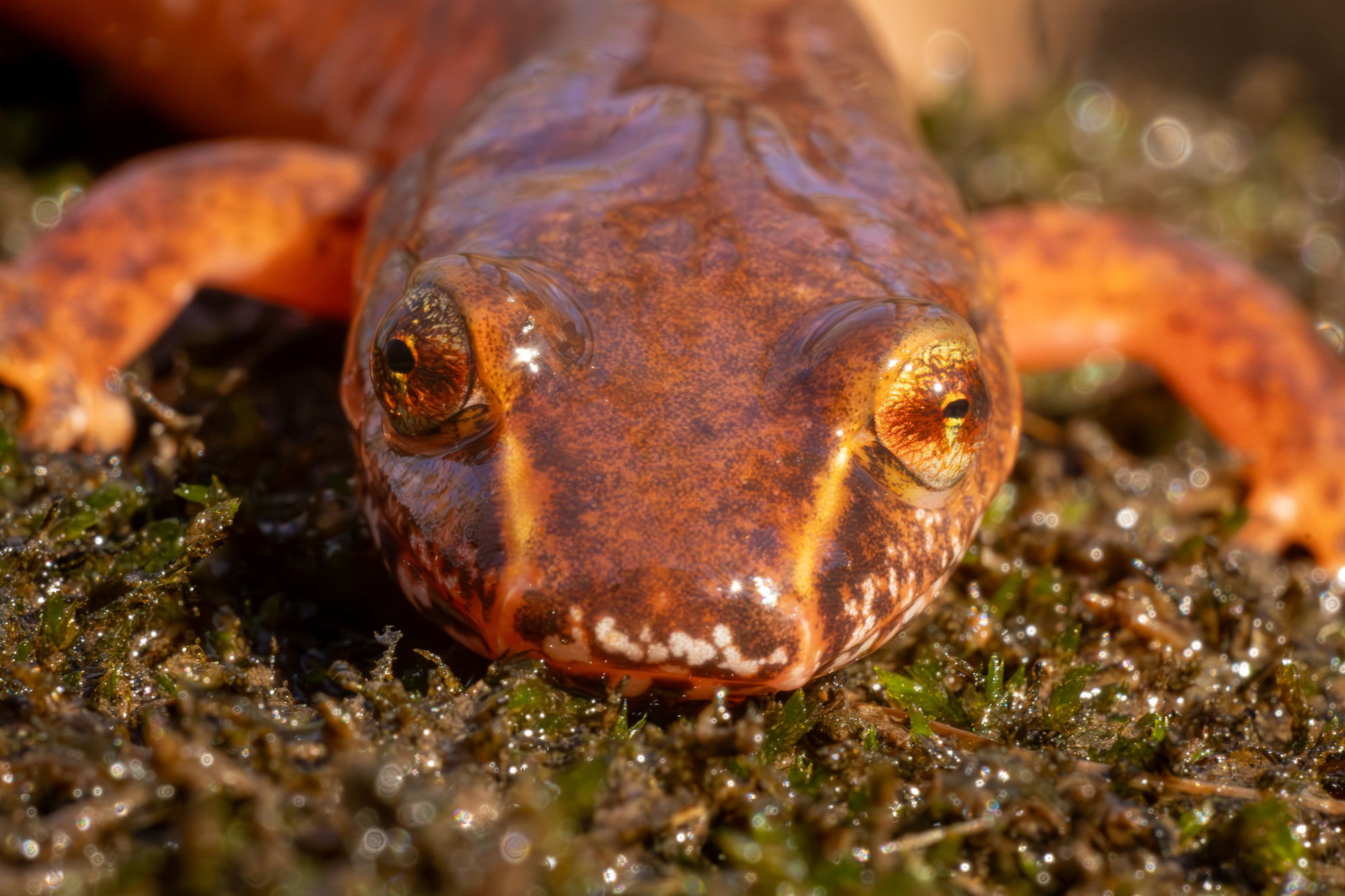
Photo Alex Stach (opens in a new tab) / iNaturalist, CC BY 4.0 (opens in a new tab)
At a glance
- Size
- Usually 12 to 19 cm long; up to about 23 cm
- Habitat
- Cold springs, seeps and mountain streams
- Diet
- Other salamanders, insects and worms
- In Georgia
- The mountains of north Georgia
- Rabies vector
- No
Identification
- Key marks
- Large and stout; salmon-pink to reddish, often mottled; a light line edged with dark from the eye to the nostril
- Told apart from
- Red salamander, which has clear black spots and no eye line
- Where to look
- Under rocks in cold springs and streams
Behaviour
Spring salamanders are the top predator among salamanders in mountain springs and eat many smaller salamanders. They stay in or beside the water.
Why they matter
They need cold, clean spring water and take many years to grow up, so they are sensitive to disturbance.
Reproduction and lifecycle
Eggs — Attached under rocks in springs, guarded by the female
Hatching — In late summer
Larvae — Aquatic for three to five years
Maturity — At about five years
Lifespan — Around 20 years
Habits — Lives in and beside water
Living around people
- Cold springs kept clean and shaded are its home.
Misconceptions
- Salamanders eat only insects. This one eats other salamanders.
Related species
Seasonal activity
When this species is breeding, and when there are nests on the ground. Mowing during the shaded months is how most nests are found.
| Jan | Feb | Mar | Apr | May | Jun | Jul | Aug | Sep | Oct | Nov | Dec | |
|---|---|---|---|---|---|---|---|---|---|---|---|---|
| Breeding | Jan: no | Feb: no | Mar: no | Apr: no | May: no | Jun: no | Jul: no | Aug: no | Sep: no | Oct: no | Nov: no | Dec: no |
| Active nests | Jan: no | Feb: no | Mar: no | Apr: no | May: no | Jun: no | Jul: no | Aug: no | Sep: no | Oct: no | Nov: no | Dec: no |
| Notes | Under rocks in water | Under rocks in water | Active | Active | Active | Laying eggs | Females guarding eggs | Guarding eggs | Larvae hatching | Active | Active | Under rocks in water |
Where it lives
Recorded in 18 states and provinces. Each one links to the other animals there, and to the rehabilitators licensed for them.
United States
Canada
If you found one
Answer a few questions and you will get a specific answer for what you are looking at.
I found an animal