
Species
Red salamander
Pseudotriton ruber
A bright red, black-spotted salamander of springs and seeps, whose colour warns predators its skin is distasteful.
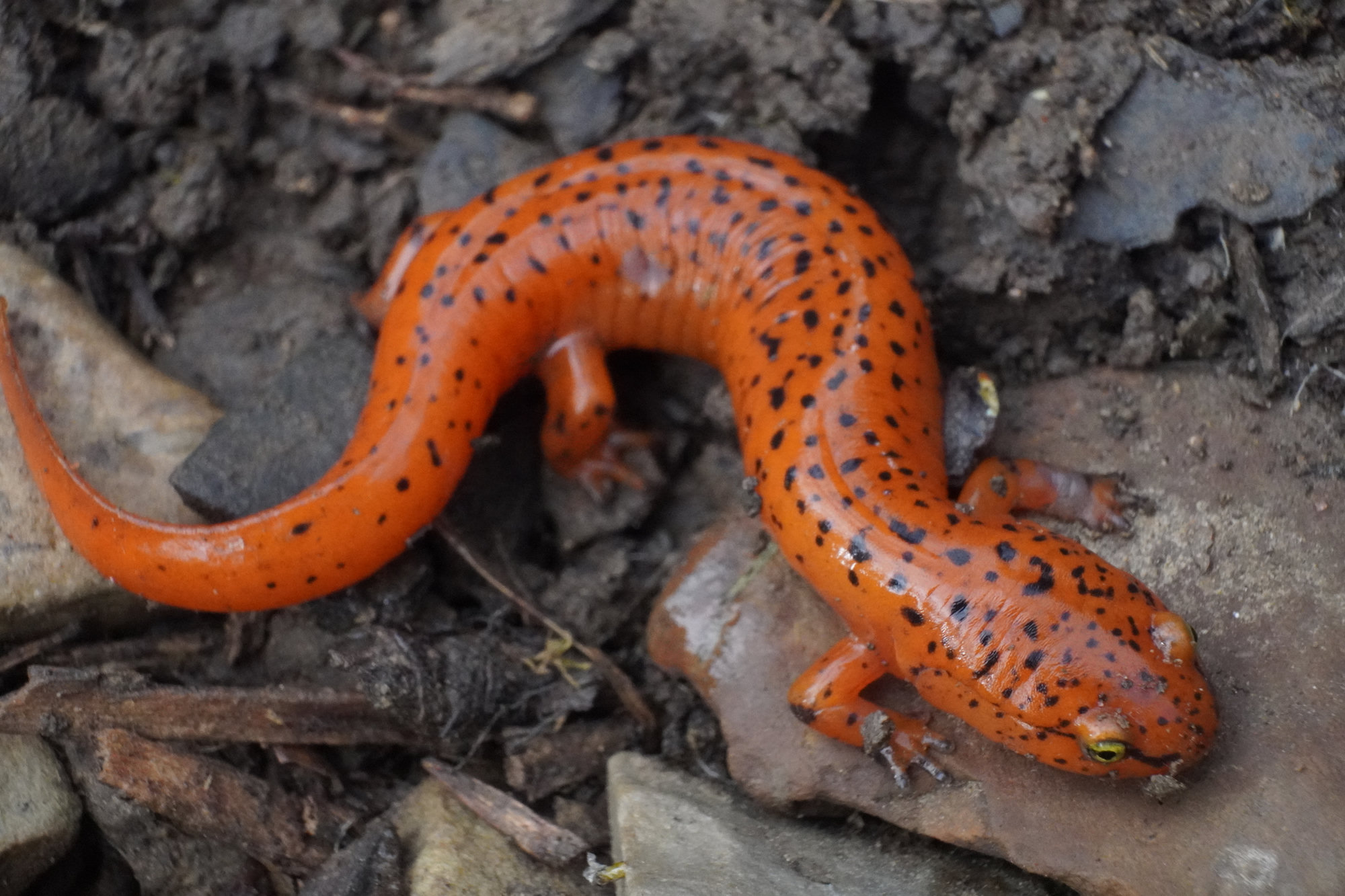
Photo Nick Chirico (opens in a new tab) / iNaturalist, CC BY 4.0 (opens in a new tab)
At a glance
- Size
- Usually 10 to 15 cm long; up to about 18 cm
- Habitat
- Springs, seeps, clear streams and the wet woods around them
- Diet
- Worms, insects and smaller salamanders
- In Georgia
- Most of the state except the lower Coastal Plain
- Rabies vector
- No
Identification
- Key marks
- Stout, bright red to orange-red with many irregular black spots; yellow eyes; older adults purplish
- Told apart from
- Mud salamander, which has fewer, rounder spots and brown eyes
- Told apart from
- Eastern newt efts, which are rough-skinned and have red spots ringed in black
- Where to look
- Under logs and rocks by springs and seeps
Behaviour
Red salamanders spend much of their time in burrows near springs. Their bright colour mimics the toxic eastern newt eft, and their skin secretions are distasteful.
Why they matter
They are predators in spring-fed wetlands, where they eat other salamanders as well as invertebrates.
Reproduction and lifecycle
Eggs — Attached under rocks in springs
Hatching — In winter
Larvae — Aquatic for two to three years
Maturity — At four to five years
Lifespan — Around 20 years
Habits — Lives near springs
Living around people
- Springs and seeps kept free of silt and cattle are where it lives.
Misconceptions
- Bright colours mean an animal is venomous. It is harmless to people.
Related species
Seasonal activity
When this species is breeding, and when there are nests on the ground. Mowing during the shaded months is how most nests are found.
| Jan | Feb | Mar | Apr | May | Jun | Jul | Aug | Sep | Oct | Nov | Dec | |
|---|---|---|---|---|---|---|---|---|---|---|---|---|
| Breeding | Jan: no | Feb: no | Mar: no | Apr: no | May: no | Jun: no | Jul: no | Aug: no | Sep: no | Oct: no | Nov: no | Dec: no |
| Active nests | Jan: no | Feb: no | Mar: no | Apr: no | May: no | Jun: no | Jul: no | Aug: no | Sep: no | Oct: no | Nov: no | Dec: no |
| Notes | In springs | In springs | Active | Active | Active | Active on wet nights | Active on wet nights | Active | Mating | Laying eggs in springs | Eggs | Larvae hatching |
Where it lives
Recorded in 17 states and provinces. Each one links to the other animals there, and to the rehabilitators licensed for them.
If you found one
Answer a few questions and you will get a specific answer for what you are looking at.
I found an animal