
Species
Mud salamander
Pseudotriton montanus
A shy, reddish salamander of muddy springs and swamps, with round black spots and dark eyes.
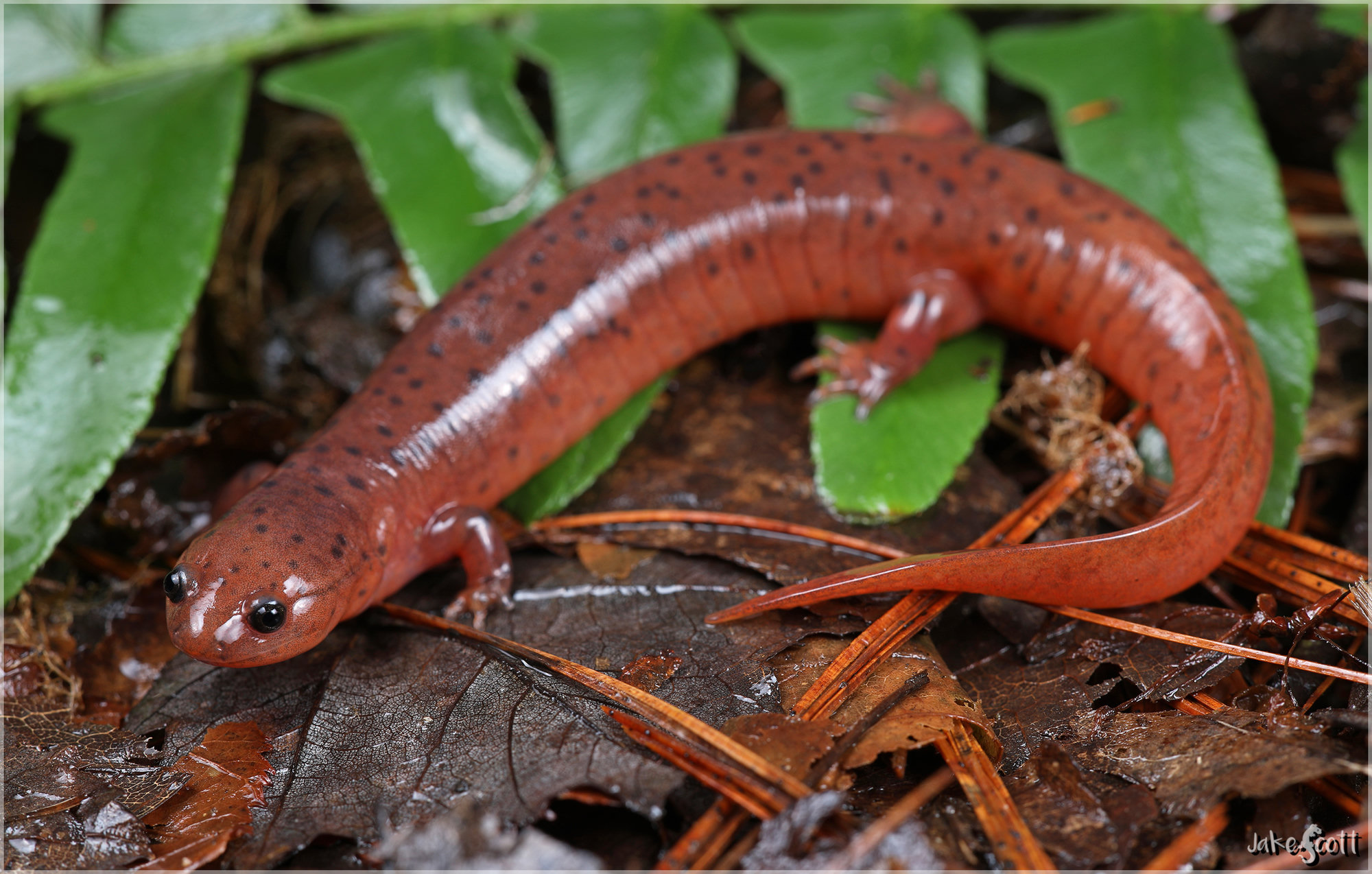
Photo Caudatejake (opens in a new tab) / Wikimedia Commons, CC BY-SA 4.0 (opens in a new tab)
At a glance
- Size
- Usually 8 to 16 cm long
- Habitat
- Muddy springs, seeps and swamp edges
- Diet
- Worms and small invertebrates
- In Georgia
- The eastern Piedmont and Coastal Plain; rarely seen
- Rabies vector
- No
Identification
- Key marks
- Coral-red to brownish with a few round black spots; brown eyes; short snout
- Told apart from
- Red salamander, which has more, irregular spots and yellow eyes
- Where to look
- Almost never seen; it lives in burrows in mud
Behaviour
It lives in burrows in soft mud near springs and swamps and hunts in the tunnels.
Why they matter
It is a hidden predator of muddy wetlands, and like other amphibians sensitive to changes in water.
Reproduction and lifecycle
Eggs — Laid in burrows or under debris in water
Hatching — In winter
Larvae — Aquatic for over a year
Maturity — At a few years
Lifespan — Many years
Habits — Lives in mud burrows
Living around people
- Muddy springs and seeps are its home; keep them undrained.
Misconceptions
- Muddy places are empty of life. Mud salamanders live in them.
Related species
Seasonal activity
When this species is breeding, and when there are nests on the ground. Mowing during the shaded months is how most nests are found.
| Jan | Feb | Mar | Apr | May | Jun | Jul | Aug | Sep | Oct | Nov | Dec | |
|---|---|---|---|---|---|---|---|---|---|---|---|---|
| Breeding | Jan: no | Feb: no | Mar: no | Apr: no | May: no | Jun: no | Jul: no | Aug: no | Sep: no | Oct: no | Nov: no | Dec: no |
| Active nests | Jan: no | Feb: no | Mar: no | Apr: no | May: no | Jun: no | Jul: no | Aug: no | Sep: no | Oct: no | Nov: no | Dec: no |
| Notes | In burrows | In burrows | Active | Active | Active | Active | Active | Active | Mating | Laying eggs | Eggs | Larvae hatching |
Where it lives
Recorded in 5 states and provinces. Each one links to the other animals there, and to the rehabilitators licensed for them.
United States
If you found one
Answer a few questions and you will get a specific answer for what you are looking at.
I found an animal