
Species
Hellbender
Cryptobranchus alleganiensis
North America's largest salamander, a flat, wrinkled giant of clean mountain rivers that breathes through its skin.
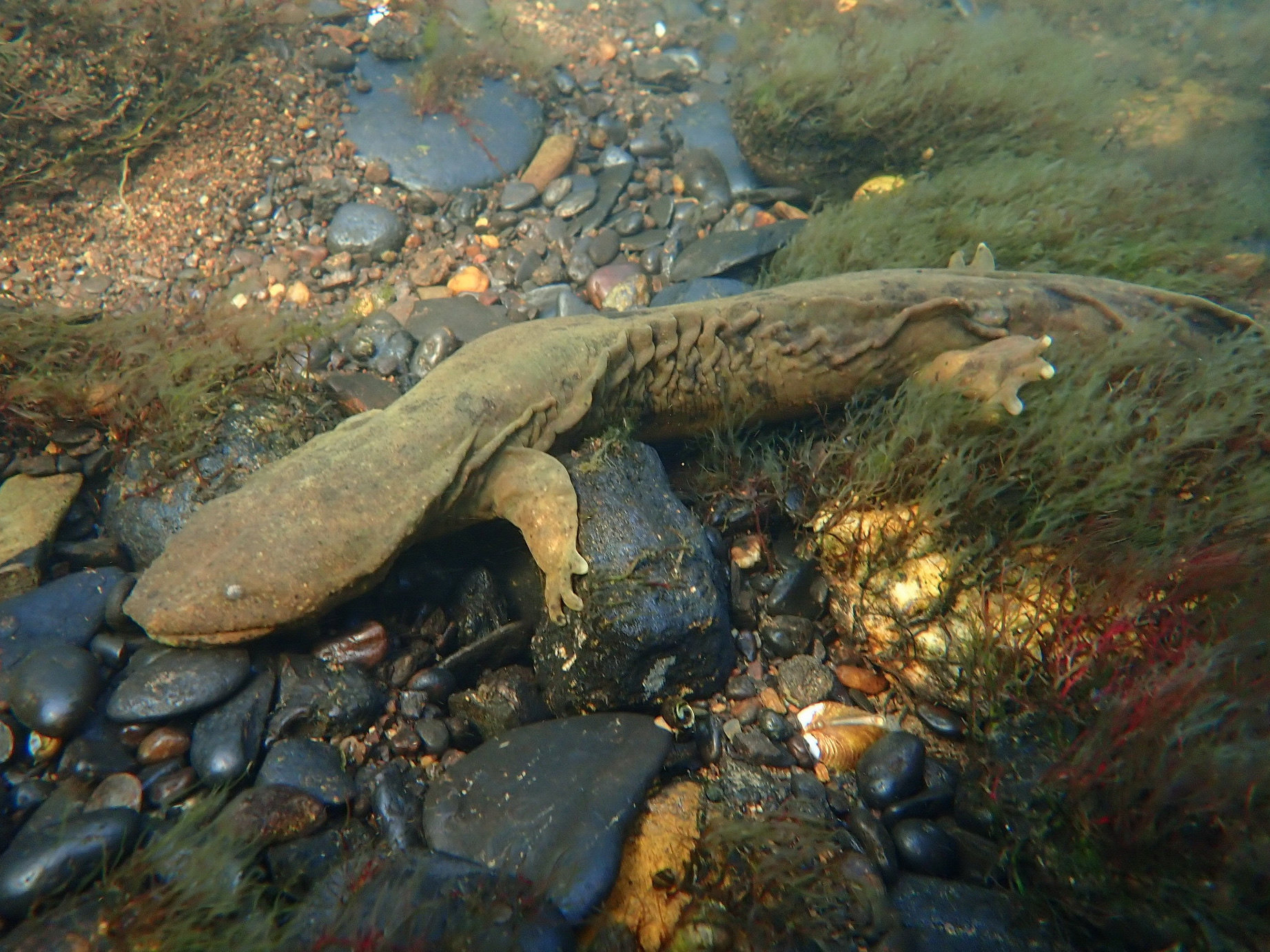
Photo Turner Brockman (opens in a new tab) / iNaturalist, CC BY-SA 4.0 (opens in a new tab)
At a glance
- Size
- Usually 30 to 55 cm long; up to about 74 cm
- Habitat
- Clear, cold, fast-flowing rocky rivers and large streams
- Diet
- Crayfish, mainly; also fish, snails and insects
- In Georgia
- Rivers of the north Georgia mountains; rare
- Rabies vector
- No
Identification
- Key marks
- Very large, flat head and body; loose, wrinkled folds of skin along the sides; brown to grey with dark blotches
- Told apart from
- Common mudpuppy, which is smaller and has feathery red gills
- Where to look
- Almost never seen; they live under large flat rocks in rivers
Behaviour
Hellbenders take in most of their oxygen through the folds of their skin, which is why they need cold, fast, clean water. Each lives under its own large rock. Males guard nests of eggs under rocks for months.
Why they matter
Hellbenders have declined across their range as rivers have silted up and warmed. A river that still has hellbenders is clean, cold and well oxygenated, and their presence is one of the best measures of mountain river health.
Reproduction and lifecycle
Eggs — Several hundred in strings under a nest rock, guarded by the male
Hatching — In about two to three months
Larvae — Keep external gills for about 18 months
Maturity — At five to eight years
Lifespan — Over 30 years
Breathing — Mostly through the skin
Living around people
- Leave river rocks where they are; moving them destroys hellbender homes and nests.
- A hellbender caught on a line should be released by cutting the line close to the mouth; it is harmless.
- Keeping silt out of mountain streams is the most important thing for them.
Misconceptions
- Hellbenders are venomous or poison fish. They are harmless and eat crayfish.
- "Snot otters" are slimy because they are sick. The slime protects their skin.
Related species
Seasonal activity
When this species is breeding, and when there are nests on the ground. Mowing during the shaded months is how most nests are found.
| Jan | Feb | Mar | Apr | May | Jun | Jul | Aug | Sep | Oct | Nov | Dec | |
|---|---|---|---|---|---|---|---|---|---|---|---|---|
| Breeding | Jan: no | Feb: no | Mar: no | Apr: no | May: no | Jun: no | Jul: no | Aug: no | Sep: no | Oct: no | Nov: no | Dec: no |
| Active nests | Jan: no | Feb: no | Mar: no | Apr: no | May: no | Jun: no | Jul: no | Aug: no | Sep: no | Oct: no | Nov: no | Dec: no |
| Notes | Under rocks | Under rocks | Under rocks | Feeding at night | Feeding | Feeding | Feeding | Males preparing nest rocks | Breeding; males guarding eggs | Guarding eggs | Guarding eggs | Larvae hatching |
Where it lives
Recorded in 16 states and provinces. Each one links to the other animals there, and to the rehabilitators licensed for them.
If you found one
Answer a few questions and you will get a specific answer for what you are looking at.
I found an animal