
Species
Common mudpuppy
Necturus maculosus
A large, permanently aquatic salamander with bushy red gills, found in north Georgia's rivers.
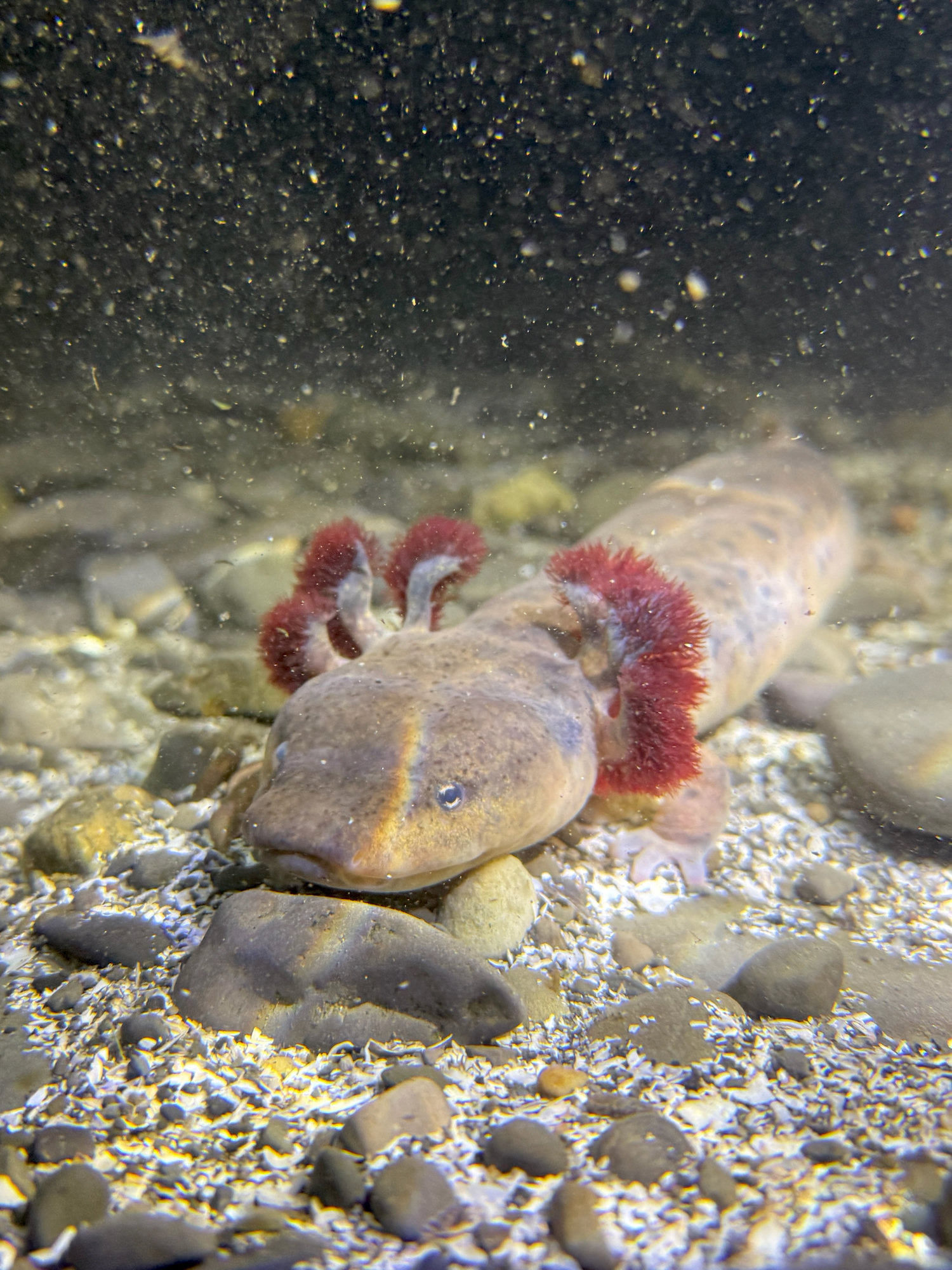
Photo Rajan Rao (opens in a new tab) / iNaturalist, CC BY 4.0 (opens in a new tab)
At a glance
- Size
- Usually 20 to 33 cm long
- Habitat
- Rivers, streams and lakes with rocks and debris
- Diet
- Crayfish, insects, snails, fish and worms
- In Georgia
- Rivers of north Georgia; uncommon
- Rabies vector
- No
Identification
- Key marks
- Large, with bushy, dark red external gills; four toes on each foot; brown with dark spots
- Told apart from
- Hellbender, which has no external gills and loose skin folds
- Where to look
- Rarely seen; sometimes caught by anglers in winter
Behaviour
Mudpuppies keep their gills all their lives and never leave the water. They stay active in winter, even under ice.
Why they matter
They host the larvae of some freshwater mussels, so mussels depend on them. They are sensitive to pollution.
Reproduction and lifecycle
Eggs — 30 to 200, attached under rocks and guarded by the female
Hatching — In one to two months
Larvae — Keep their gills for life
Maturity — At four to six years
Lifespan — Over 20 years
Habits — Fully aquatic
Living around people
- A mudpuppy caught on a line is harmless; cut the line close and let it go.
Misconceptions
- Mudpuppies are poisonous. They are harmless.
Related species
Seasonal activity
When this species is breeding, and when there are nests on the ground. Mowing during the shaded months is how most nests are found.
| Jan | Feb | Mar | Apr | May | Jun | Jul | Aug | Sep | Oct | Nov | Dec | |
|---|---|---|---|---|---|---|---|---|---|---|---|---|
| Breeding | Jan: no | Feb: no | Mar: no | Apr: no | May: no | Jun: no | Jul: no | Aug: no | Sep: no | Oct: no | Nov: no | Dec: no |
| Active nests | Jan: no | Feb: no | Mar: no | Apr: no | May: no | Jun: no | Jul: no | Aug: no | Sep: no | Oct: no | Nov: no | Dec: no |
| Notes | Active under water | Active | Active | Breeding | Females guarding eggs | Guarding eggs | Larvae hatch | Active | Active | Mating | Active | Active |
Where it lives
Recorded in 20 states and provinces. Each one links to the other animals there, and to the rehabilitators licensed for them.
United States
If you found one
Answer a few questions and you will get a specific answer for what you are looking at.
I found an animal