
Species
Spotted turtle
Clemmys guttata
A small black turtle scattered with yellow spots, living quietly in the wetlands of eastern Georgia.
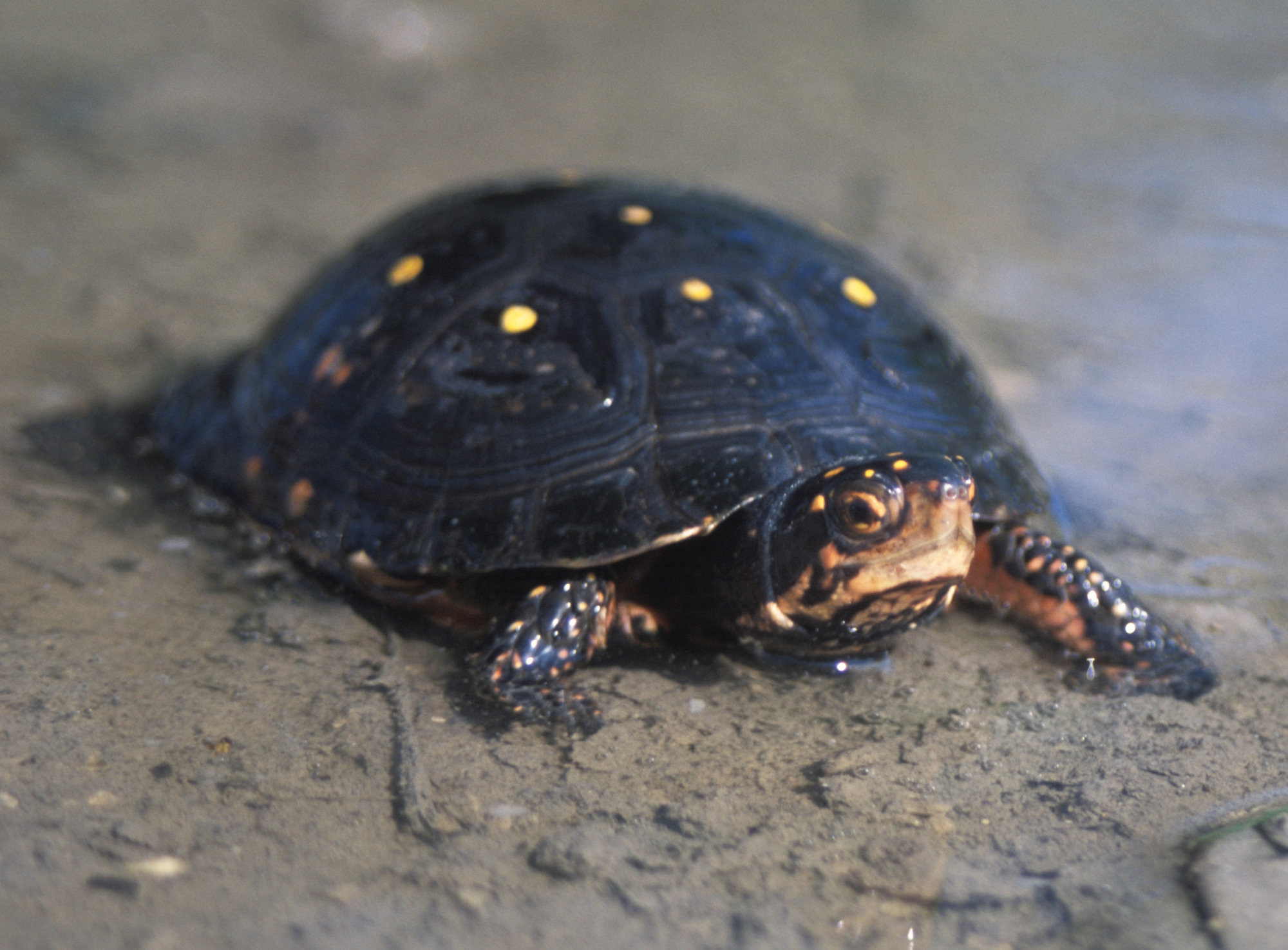
Photo John J. Mosesso, NBII (opens in a new tab) / Wikimedia Commons, Public domain (opens in a new tab)
At a glance
- Size
- Shell usually 8 to 13 cm long
- Habitat
- Shallow, clear wetlands with soft bottoms: bogs, wet meadows, ditches and swamp edges
- Diet
- Insects, worms, snails, tadpoles, carrion and some plants
- In Georgia
- Scattered in eastern Georgia, mainly the Coastal Plain; uncommon
- Rabies vector
- No
Identification
- Key marks
- Smooth black shell with round yellow spots; spots also on the head and legs
- Told apart from
- Other small Georgia turtles, none of which have yellow spots on a black shell
- Where to look
- In shallow, weedy water in late winter and spring
Behaviour
Spotted turtles are most active in the cool months of late winter and spring, when their wetlands are full. In the heat of summer many of them rest buried in mud or on land.
Why they matter
They are sensitive to the loss of small wetlands and to collecting for the pet trade, and have declined through much of their range. Where they still live, the wetlands around them are usually in good condition.
Reproduction and lifecycle
Nest — Dug in soil near the wetland
Eggs — Usually 3 to 5
Incubation — About 70 to 85 days
Hatchlings — Usually one spot per scute
Maturity — At 7 to 10 years
Lifespan — Over 50 years
Living around people
- A spotted turtle on land can be helped across a road in the direction it was heading. Taking one from the wild harms a population that grows slowly.
Misconceptions
- Turtles are summer animals. Spotted turtles are busiest in late winter and early spring.
Related species
Seasonal activity
When this species is breeding, and when there are nests on the ground. Mowing during the shaded months is how most nests are found.
| Jan | Feb | Mar | Apr | May | Jun | Jul | Aug | Sep | Oct | Nov | Dec | |
|---|---|---|---|---|---|---|---|---|---|---|---|---|
| Breeding | Jan: no | Feb: no | Mar: no | Apr: no | May: no | Jun: no | Jul: no | Aug: no | Sep: no | Oct: no | Nov: no | Dec: no |
| Active nests | Jan: no | Feb: no | Mar: no | Apr: no | May: no | Jun: no | Jul: no | Aug: no | Sep: no | Oct: no | Nov: no | Dec: no |
| Notes | Active in mild weather | Active | Courtship | Feeding | Nesting | Nesting; slowing in heat | Resting through summer heat | Hatching | Hatchlings emerge | Active again | Active in mild weather | Mostly inactive |
Where it lives
Recorded in 17 states and provinces. Each one links to the other animals there, and to the rehabilitators licensed for them.
If you found one
Answer a few questions and you will get a specific answer for what you are looking at.
I found an animal