
Species
Eastern mud turtle
Kinosternon subrubrum
A small, plain turtle of shallow ponds and ditches that often wanders overland between wetlands.
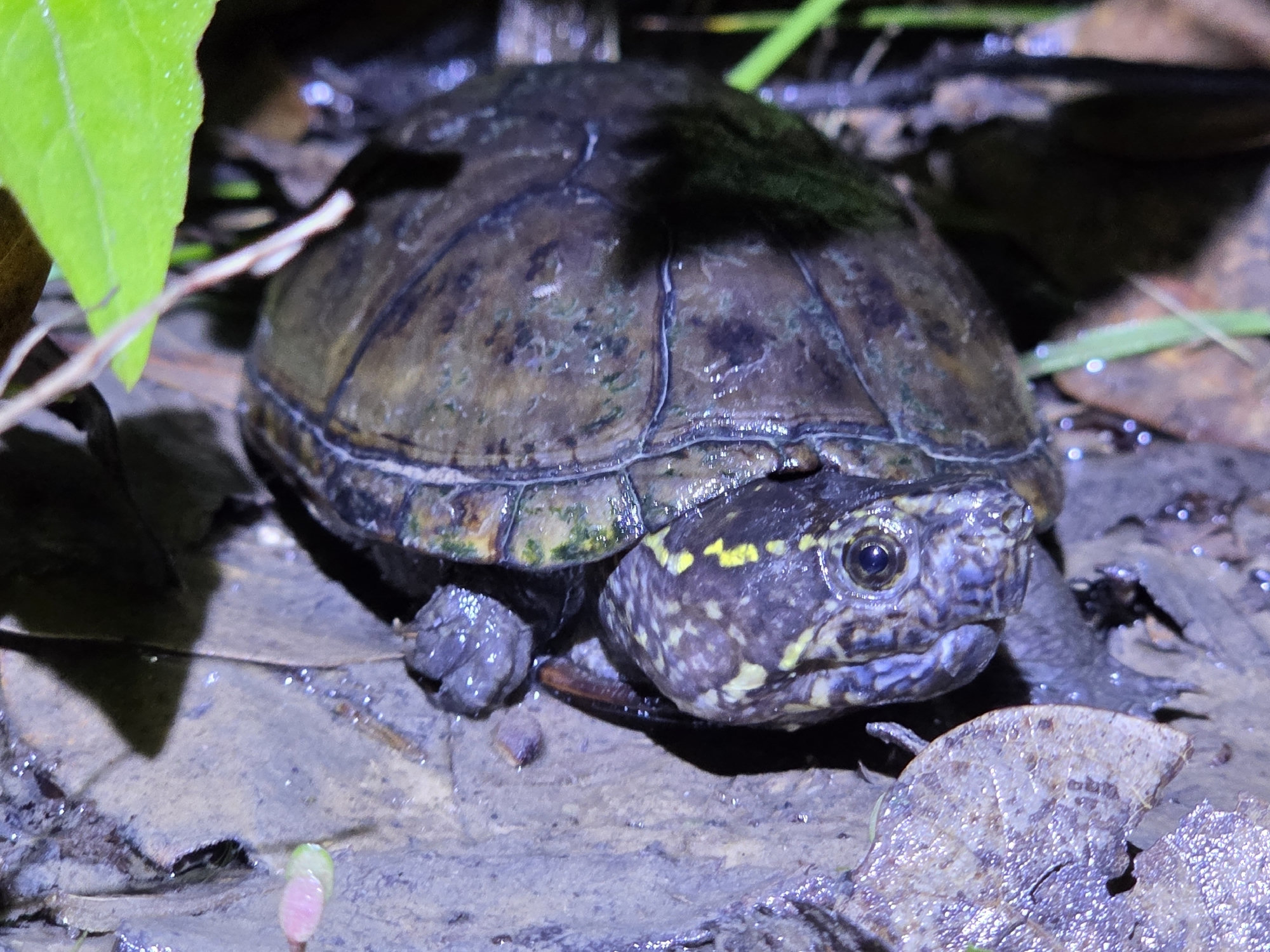
Photo Audrey Witherington (opens in a new tab) / iNaturalist, CC BY 4.0 (opens in a new tab)
At a glance
- Size
- Shell usually 7 to 12 cm long
- Habitat
- Shallow ponds, swamps, ditches and marshes, including brackish water
- Diet
- Insects, snails, worms, carrion and some plants
- In Georgia
- Common statewide
- Rabies vector
- No
Identification
- Key marks
- Smooth, plain brown to olive shell; large underside with two hinges that can close front and back
- Told apart from
- Striped mud turtle, which has three pale stripes along the shell and head
- Told apart from
- Eastern musk turtle, which has a smaller underside and yellow head stripes
- Where to look
- Walking between wetlands after rain, and in the shallows of ponds and ditches
Behaviour
Mud turtles spend much of their time on land, walking between ponds and burrowing into soil when their wetland dries up. They forage along the bottom in shallow water and can close their shells almost completely when threatened.
Why they matter
Mud turtles move between temporary wetlands, carrying nutrients and eating insects and snails that breed there. They are a small but widespread part of the food web that links ponds with the land around them.
Reproduction and lifecycle
Nest — Dug in soil or rotting vegetation near water
Eggs — Usually 2 to 5
Incubation — About 90 to 110 days
Hatchlings — Tiny and dark
Maturity — At several years
Lifespan — Can exceed 40 years
Living around people
- A mud turtle crossing a road can be helped across in the direction it was heading.
- Temporary wetlands matter to them; filling in low, wet ground takes their home.
Misconceptions
- A turtle walking across a dry field is lost. Mud turtles travel between wetlands on purpose.
Related species
Seasonal activity
When this species is breeding, and when there are nests on the ground. Mowing during the shaded months is how most nests are found.
| Jan | Feb | Mar | Apr | May | Jun | Jul | Aug | Sep | Oct | Nov | Dec | |
|---|---|---|---|---|---|---|---|---|---|---|---|---|
| Breeding | Jan: no | Feb: no | Mar: no | Apr: no | May: no | Jun: no | Jul: no | Aug: no | Sep: no | Oct: no | Nov: no | Dec: no |
| Active nests | Jan: no | Feb: no | Mar: no | Apr: no | May: no | Jun: no | Jul: no | Aug: no | Sep: no | Oct: no | Nov: no | Dec: no |
| Notes | Buried on land or in mud | Buried | Emerging | Moving between wetlands | Nesting | Nesting | Feeding | Hatching begins | Hatchlings emerge or overwinter | Moving to winter sites | Burrowing in | Buried |
Where it lives
Recorded in 19 states and provinces. Each one links to the other animals there, and to the rehabilitators licensed for them.
If you found one
Answer a few questions and you will get a specific answer for what you are looking at.
I found an animal