
Species
Eastern musk turtle
Sternotherus odoratus
A small, bottom-walking turtle nicknamed the stinkpot for the musk it releases when caught.
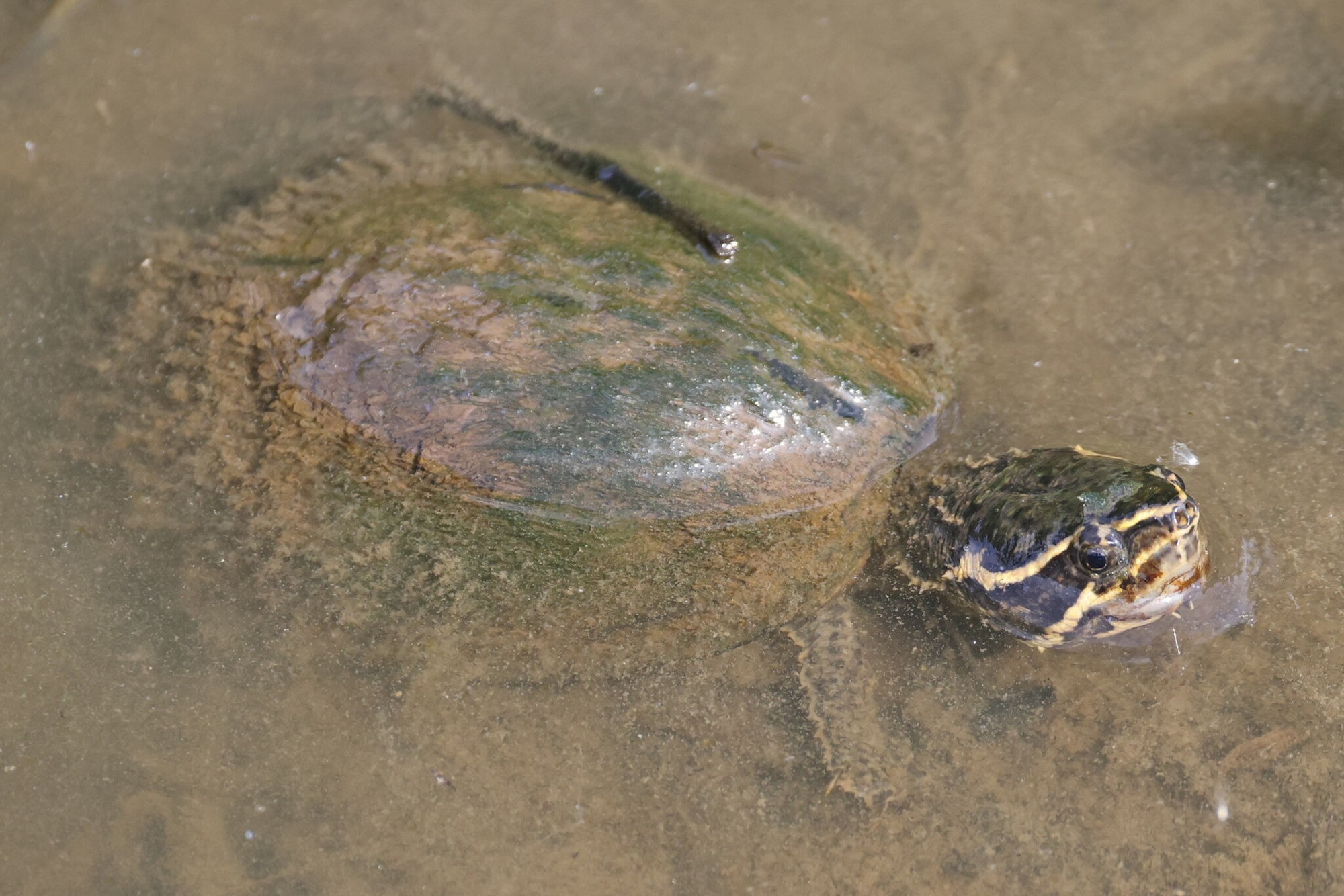
Photo Kathy Richardson (opens in a new tab) / iNaturalist, CC BY 4.0 (opens in a new tab)
At a glance
- Size
- Shell usually 5 to 11 cm long
- Habitat
- Ponds, lakes and slow streams with soft bottoms and plenty of cover
- Diet
- Snails, insects, crayfish, carrion and some plants
- In Georgia
- Common statewide
- Rabies vector
- No
Identification
- Key marks
- Small, dark, high-domed shell; two yellow stripes on each side of the head; barbels on the chin
- Told apart from
- Mud turtles, which have a larger, double-hinged underside
- Told apart from
- Loggerhead musk turtle, which has a larger head and a spotted rather than striped face
- Where to look
- Walking along the bottom of shallow water, or basking on branches leaning over it
Behaviour
Musk turtles rarely swim far: they walk along the bottom, poking into debris for food. They can climb surprisingly well and sometimes bask on branches above the water, dropping in when disturbed. When handled they release a strong-smelling musk and may bite.
Why they matter
Musk turtles eat snails, carrion and aquatic insects in great numbers and are themselves eaten by fish, herons and snakes. They are among the longest-lived small turtles, with some individuals known for more than 50 years.
Reproduction and lifecycle
Nest — Shallow, in soil, rotting logs or under leaf litter
Eggs — Usually 2 to 5, hard-shelled and oval
Incubation — About 60 to 85 days
Hatchlings — Barely 2 cm long
Maturity — At 3 to 7 years
Lifespan — Can exceed 50 years
Living around people
- A musk turtle on land can be helped across a road in the direction it was heading. Hold it by the back of the shell, away from its mouth.
- Discarded fishing line and hooks are a common cause of injury.
Misconceptions
- A turtle that smells has something wrong with it. The musk is a defence, released on purpose when the turtle is frightened.
Related species
Seasonal activity
When this species is breeding, and when there are nests on the ground. Mowing during the shaded months is how most nests are found.
| Jan | Feb | Mar | Apr | May | Jun | Jul | Aug | Sep | Oct | Nov | Dec | |
|---|---|---|---|---|---|---|---|---|---|---|---|---|
| Breeding | Jan: no | Feb: no | Mar: no | Apr: no | May: no | Jun: no | Jul: no | Aug: no | Sep: no | Oct: no | Nov: no | Dec: no |
| Active nests | Jan: no | Feb: no | Mar: no | Apr: no | May: no | Jun: no | Jul: no | Aug: no | Sep: no | Oct: no | Nov: no | Dec: no |
| Notes | Inactive in mud | Inactive | Becoming active | Courtship and feeding | Females nesting | Nesting | Feeding | Hatching begins | Hatchlings emerge | Feeding | Slowing down | Inactive |
Where it lives
Recorded in 36 states and provinces. Each one links to the other animals there, and to the rehabilitators licensed for them.
United States
- Alabama
- Arkansas
- Californiaintroduced
- Connecticut
- Delaware
- District of Columbia
- Florida
- Georgia
- Illinois
- Indiana
- Kansas
- Kentucky
- Louisiana
- Maine
- Maryland
- Massachusetts
- Michigan
- Mississippi
- Missouri
- New Hampshire
- New Jersey
- New York
- North Carolina
- Ohio
- Oklahoma
- Pennsylvania
- Rhode Island
- South Carolina
- Tennessee
- Texas
- Vermont
- Virginia
- West Virginia
- Wisconsin
If you found one
Answer a few questions and you will get a specific answer for what you are looking at.
I found an animal