
Species
Loggerhead musk turtle
Sternotherus minor
A small, big-headed musk turtle of southern Georgia's streams and springs that crushes snails in its jaws.
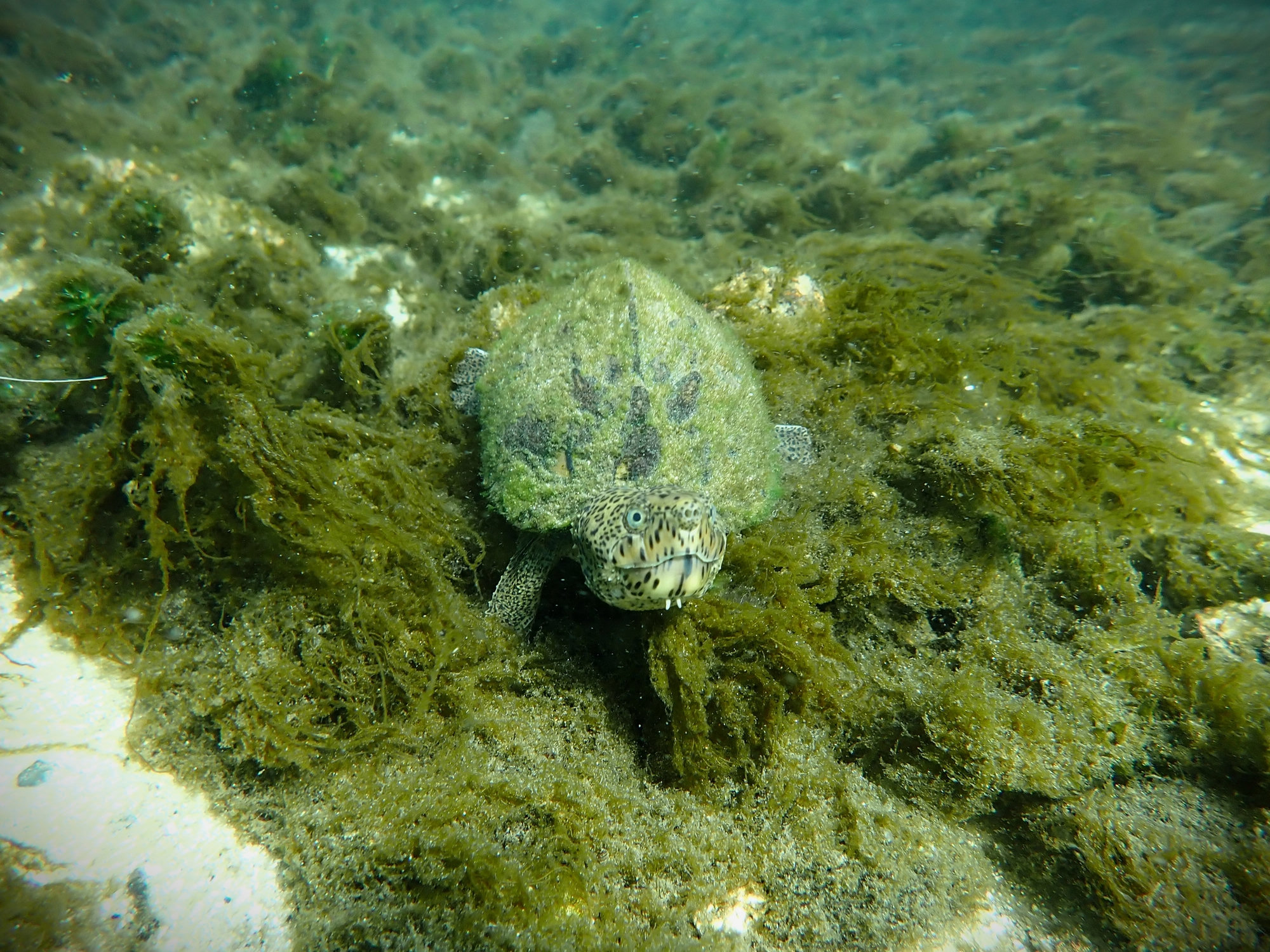
Photo Josiah Londerée (opens in a new tab) / iNaturalist, CC BY 4.0 (opens in a new tab)
At a glance
- Size
- Shell usually 8 to 13 cm long
- Habitat
- Clear streams, spring runs, rivers and swamps
- Diet
- Snails, clams, insects and crayfish
- In Georgia
- The Coastal Plain and lower Piedmont
- Rabies vector
- No
Identification
- Key marks
- Brown shell with a keel down the middle and dark streaks; large head with dark spots in adults
- Told apart from
- Eastern musk turtle, which has yellow stripes on the head rather than spots
- Where to look
- Walking on stream bottoms in clear water
Behaviour
Loggerhead musk turtles walk along the bottom of clear streams rather than swimming. Older adults develop enormously broad heads with strong jaws for crushing snail shells. Like other musk turtles they release musk when handled.
Why they matter
They eat large numbers of snails and small clams, and clear water and healthy snail populations go together with them.
Reproduction and lifecycle
Nest — Shallow nest in soil or debris near water
Eggs — Usually 1 to 5
Incubation — About 60 to 120 days
Hatchlings — Tiny, with a pronounced keel
Maturity — At several years
Lifespan — Decades
Living around people
- Keep streams clear of silt and litter; these turtles feed by sight in clear water.
- Handle one only to help it across a road, by the back of the shell, carrying it in the direction it was heading.
Misconceptions
- A turtle with a huge head is diseased. Adult loggerhead musk turtles grow broad heads to crush snails.
Related species
Seasonal activity
When this species is breeding, and when there are nests on the ground. Mowing during the shaded months is how most nests are found.
| Jan | Feb | Mar | Apr | May | Jun | Jul | Aug | Sep | Oct | Nov | Dec | |
|---|---|---|---|---|---|---|---|---|---|---|---|---|
| Breeding | Jan: no | Feb: no | Mar: no | Apr: no | May: no | Jun: no | Jul: no | Aug: no | Sep: no | Oct: no | Nov: no | Dec: no |
| Active nests | Jan: no | Feb: no | Mar: no | Apr: no | May: no | Jun: no | Jul: no | Aug: no | Sep: no | Oct: no | Nov: no | Dec: no |
| Notes | Mostly inactive | Active in warm spells | Active | Courtship | Nesting | Nesting | Feeding | Hatching | Hatchlings emerge | Feeding | Slowing down | Mostly inactive |
Where it lives
Recorded in 3 states and provinces. Each one links to the other animals there, and to the rehabilitators licensed for them.
If you found one
Answer a few questions and you will get a specific answer for what you are looking at.
I found an animal