
Species
Spotted dusky salamander
Desmognathus conanti
A brown streamside salamander with paired spots, often seen leaping away from a turned rock.
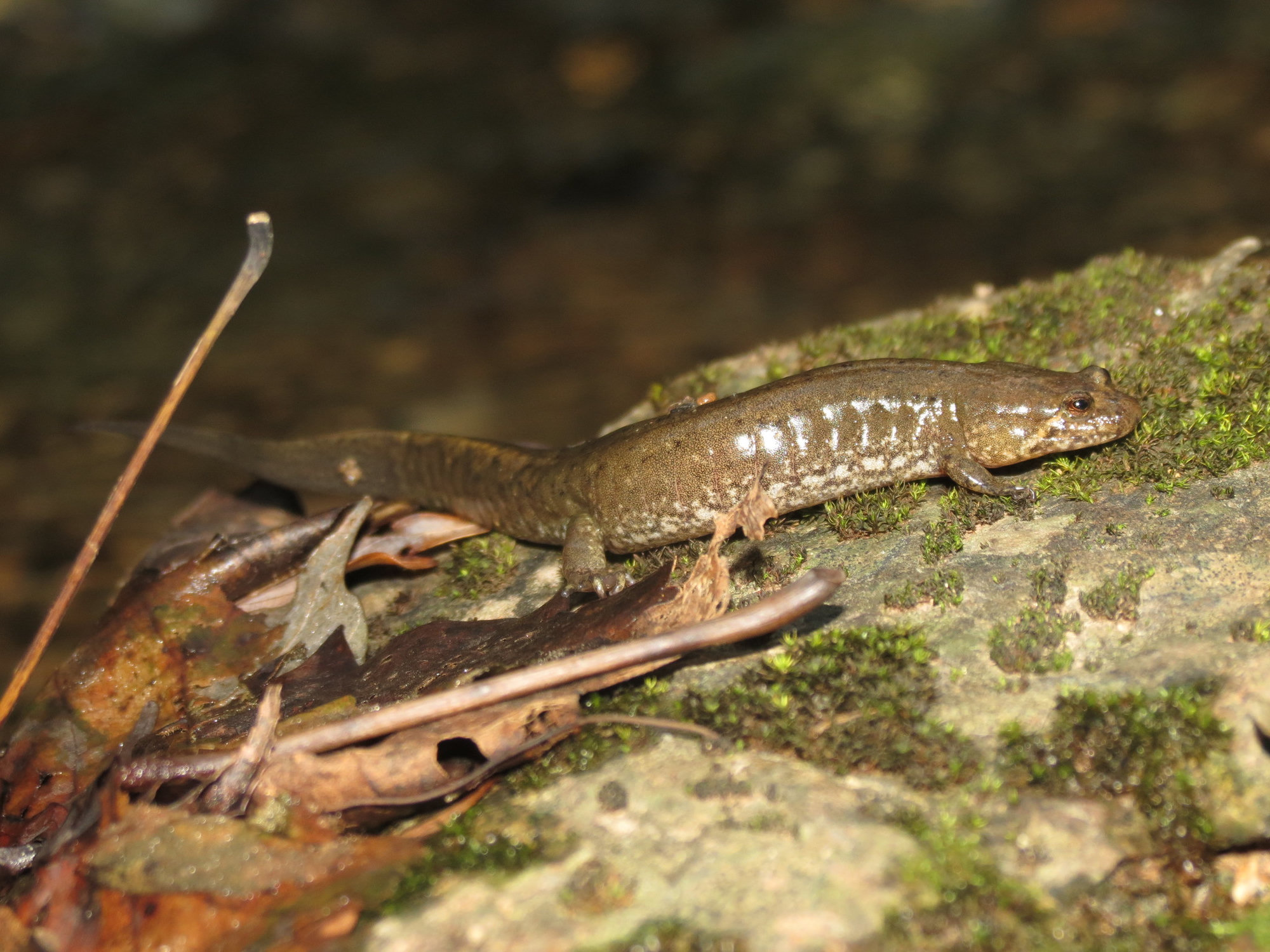
Photo Unknown photographer (opens in a new tab) / iNaturalist, CC0 1.0 (opens in a new tab)
At a glance
- Size
- Usually 6 to 12 cm long
- Habitat
- Streams, seeps and springs and their muddy banks
- Diet
- Insects, worms and other small invertebrates
- In Georgia
- The north and west of the state
- Rabies vector
- No
Identification
- Key marks
- Brown with paired golden or reddish spots down the back; a pale line from the eye to the jaw; tail flattened towards the tip
- Told apart from
- Two-lined salamanders, which are yellow with dark stripes
- Where to look
- Under rocks and logs along streams
Behaviour
Dusky salamanders are quick and can leap and wriggle away when uncovered. They hunt at the water's edge at night.
Why they matter
They are abundant stream predators and prey for snakes, birds and larger salamanders.
Reproduction and lifecycle
Eggs — A cluster laid under a log or rock near water, guarded by the female
Hatching — In one to two months
Larvae — Aquatic for several months
Maturity — At a few years
Lifespan — Several years
Breathing — Through the skin; no lungs
Living around people
- Put back stream rocks exactly as they were.
Misconceptions
- Dusky salamanders are all one species. There are many, often told apart only by genetics.
Related species
Seasonal activity
When this species is breeding, and when there are nests on the ground. Mowing during the shaded months is how most nests are found.
| Jan | Feb | Mar | Apr | May | Jun | Jul | Aug | Sep | Oct | Nov | Dec | |
|---|---|---|---|---|---|---|---|---|---|---|---|---|
| Breeding | Jan: no | Feb: no | Mar: no | Apr: no | May: no | Jun: no | Jul: no | Aug: no | Sep: no | Oct: no | Nov: no | Dec: no |
| Active nests | Jan: no | Feb: no | Mar: no | Apr: no | May: no | Jun: no | Jul: no | Aug: no | Sep: no | Oct: no | Nov: no | Dec: no |
| Notes | Under rocks | Active on mild nights | Active | Active | Active | Laying eggs | Females guarding eggs | Guarding eggs | Larvae hatching | Active | Active | Under rocks |
Where it lives
Recorded in 9 states and provinces. Each one links to the other animals there, and to the rehabilitators licensed for them.
If you found one
Answer a few questions and you will get a specific answer for what you are looking at.
I found an animal