
Species
Short-billed dowitcher
Limnodromus griseus
A chunky, long-billed shorebird that feeds like a sewing machine, common on Georgia's coast.
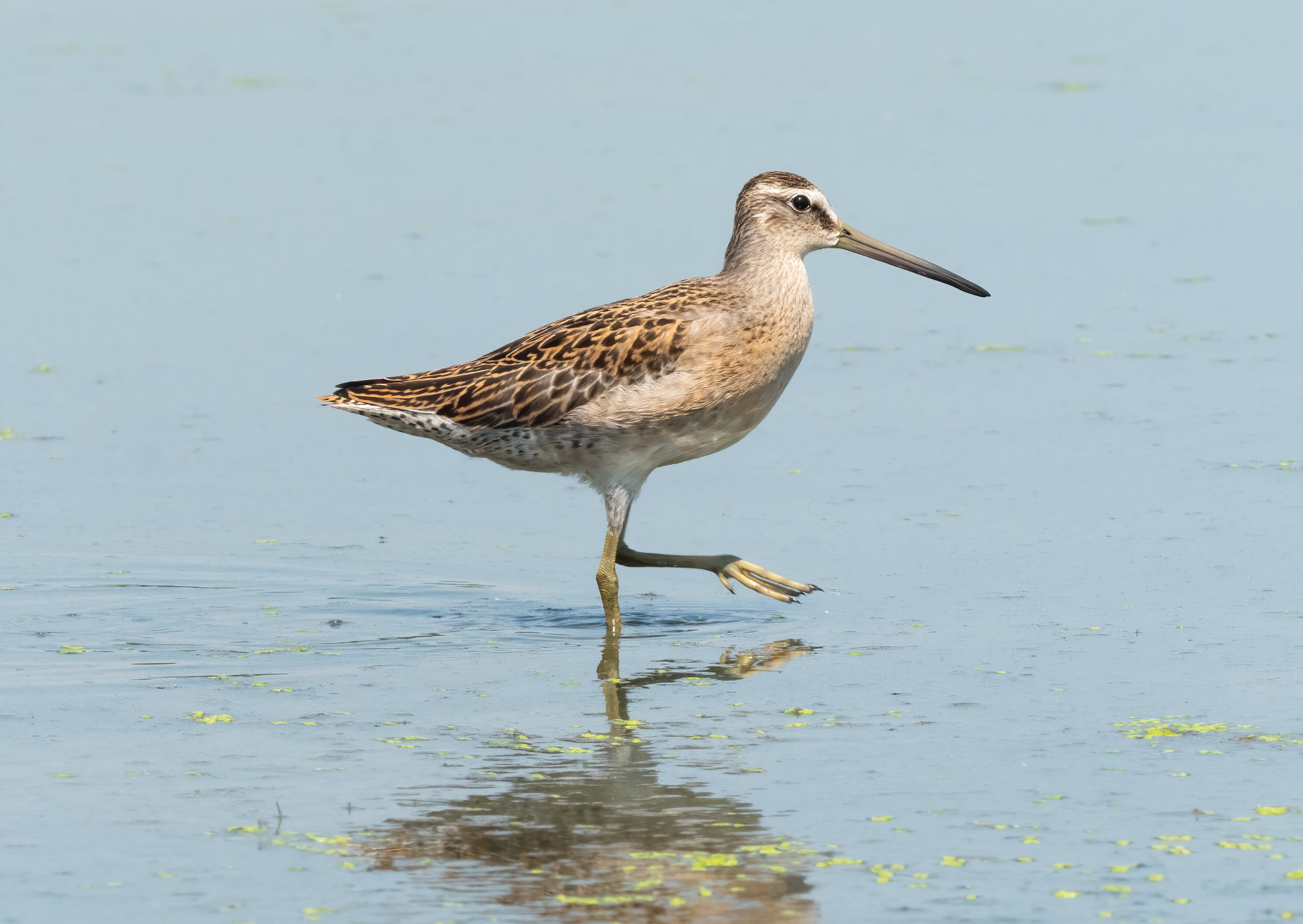
Photo Rhododendrites (opens in a new tab) / Wikimedia Commons, CC BY-SA 4.0 (opens in a new tab)
At a glance
- Size
- About 25 to 29 cm long
- Weight
- About 70 to 150 g
- Habitat
- Mudflats, salt marshes and coastal impoundments
- Diet
- Marine worms, snails, insect larvae and seeds
- In Georgia
- A common migrant and winter visitor on the coast
- Voice
- A soft, rapid "tu-tu-tu"
- Rabies vector
- No
Identification
- Key marks
- Stocky; very long, straight bill; white wedge up the back in flight; grey in winter, orange below in spring
- Told apart from
- Long-billed dowitcher, which is very similar but prefers fresh water and has a sharp "keek" call
- Told apart from
- Wilson's snipe, which has bold head stripes and lives in wet grass
- Where to look
- Mudflats and impoundments on the coast
Behaviour
Dowitchers feed by rapidly probing up and down, like a sewing machine, often in belly-deep water.
Why they matter
Short-billed dowitchers depend on coastal mudflats for much of the year. They are among the shorebirds whose numbers have declined, and they show how coastal wetlands along the entire Atlantic seaboard work as one system.
Reproduction and lifecycle
Nest — A scrape in a bog or wet meadow in the north
Eggs — Usually four
Incubation — About 21 days
Chicks — Leave the nest within a day
Flight — At about three to four weeks
Lifespan — Several years
Living around people
- Mudflat disturbance cuts into their feeding time before long flights.
Misconceptions
- Dowitchers are snipe. They share the long bill but are a separate group.
Related species
Seasonal activity
When this species is breeding, and when there are nests on the ground. Mowing during the shaded months is how most nests are found.
| Jan | Feb | Mar | Apr | May | Jun | Jul | Aug | Sep | Oct | Nov | Dec | |
|---|---|---|---|---|---|---|---|---|---|---|---|---|
| Breeding | Jan: no | Feb: no | Mar: no | Apr: no | May: no | Jun: no | Jul: no | Aug: no | Sep: no | Oct: no | Nov: no | Dec: no |
| Active nests | Jan: no | Feb: no | Mar: no | Apr: no | May: no | Jun: no | Jul: no | Aug: no | Sep: no | Oct: no | Nov: no | Dec: no |
| Notes | Wintering | Wintering | Wintering | Migrants passing | Peak spring migration | Nesting in the north | Adults returning | Migrants | Migrants | Wintering birds settle | Wintering | Wintering |
Where it lives
Recorded in 65 states and provinces. Each one links to the other animals there, and to the rehabilitators licensed for them.
United States
- Alabamain winter
- Alaskabreeding
- Arkansaspassing through
- Californiain winter
- Connecticutpassing through
- Delawarepassing through
- Floridain winter
- Georgiain winter
- Illinoispassing through
- Indianapassing through
- Iowapassing through
- Kansaspassing through
- Kentuckypassing through
- Louisianain winter
- Mainepassing through
- Marylandpassing through
- Massachusettspassing through
- Michiganpassing through
- Minnesotapassing through
- Mississippiin winter
- Missouripassing through
- Nebraskapassing through
- Nevadapassing through
- New Hampshirepassing through
- New Jerseypassing through
- New Yorkpassing through
- North Carolinain winter
- North Dakotapassing through
- Ohiopassing through
- Oregonpassing through
- Rhode Islandpassing through
- South Carolinain winter
- South Dakotapassing through
- Tennesseepassing through
- Texasin winter
- Vermontpassing through
- Virginiain winter
- Washingtonpassing through
- Wisconsinpassing through
Canada
If you found one
Answer a few questions and you will get a specific answer for what you are looking at.
I found an animal