
Species
Wilson's snipe
Gallinago delicata
A long-billed, striped bird of wet fields that bursts from cover with a harsh cry and zigzags away.
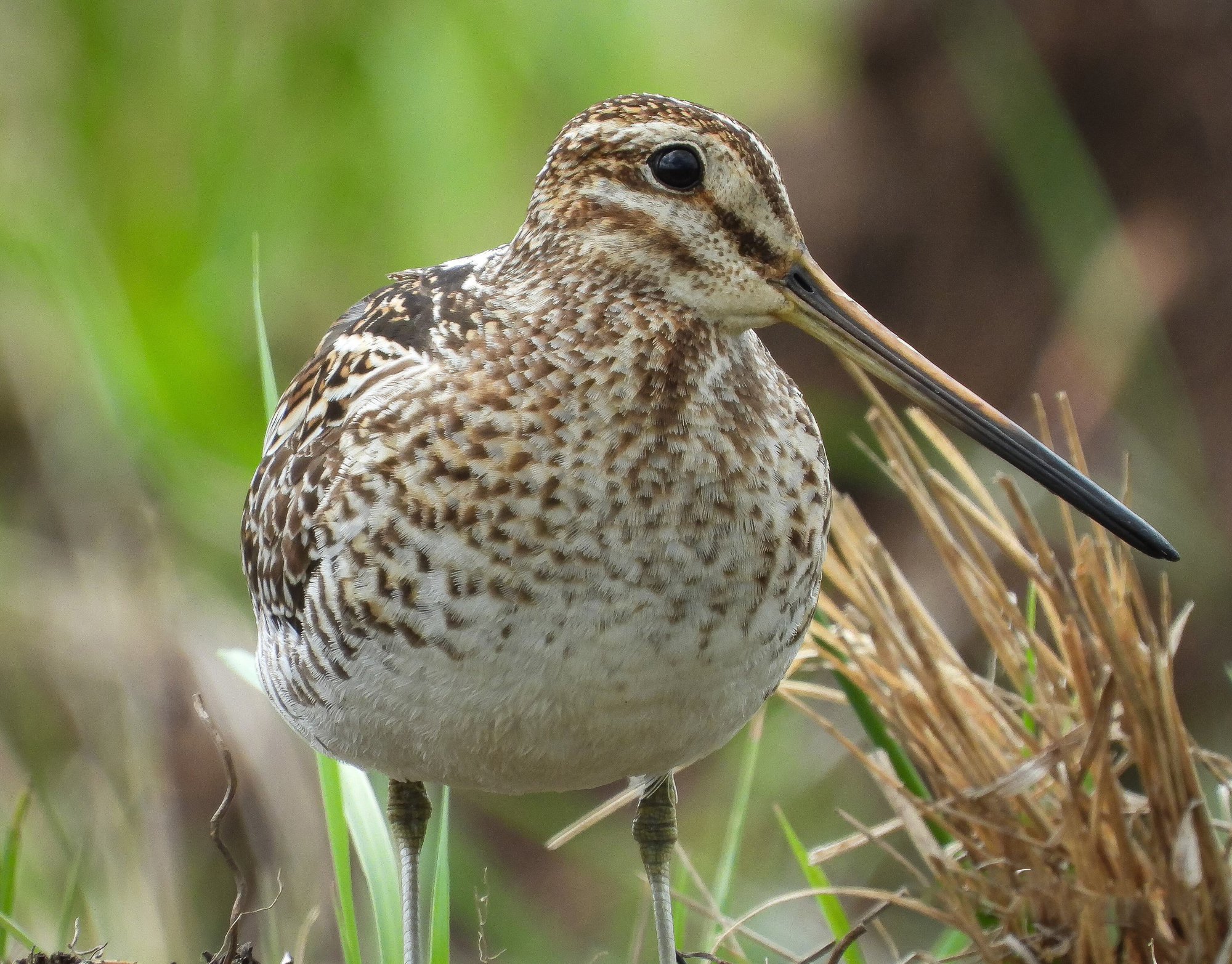
Photo PetroKaterynych (opens in a new tab) / Wikimedia Commons, CC BY-SA 4.0 (opens in a new tab)
At a glance
- Size
- About 27 to 29 cm long
- Weight
- About 80 to 145 g
- Habitat
- Wet fields, marshes, ditches and pond edges
- Diet
- Earthworms, insect larvae and small crustaceans
- In Georgia
- A common winter visitor, October to April
- Voice
- A harsh "skaip" when flushed
- Rabies vector
- No
Identification
- Key marks
- Stocky; very long straight bill; bold stripes on the head and back
- Told apart from
- American woodcock, which is plain and round and lives in woods
- Told apart from
- Dowitchers, which are greyer and feed in open water
- Where to look
- Muddy, grassy edges of ponds and wet pastures
Behaviour
Snipe hide in grass and flush with a zigzag flight when disturbed. They probe mud with their sensitive bills, feeling for worms.
On breeding grounds, males make a hollow "winnowing" sound in display dives, made by air rushing through spread tail feathers.
Why they matter
Snipe spend the winter in wet fields and marsh edges across the South, where they eat many soil invertebrates. Their presence shows that wet grasslands still have healthy soil life.
Reproduction and lifecycle
Nest — A grass-lined scrape in wet meadow
Eggs — Usually four
Incubation — About 18 to 20 days
Chicks — Leave the nest within hours
Flight — At about 19 to 20 days
Lifespan — Several years
Living around people
- Wet corners of pastures and ditches left unmown give snipe cover in winter.
Misconceptions
- Snipe hunts are made up. The joke is made up; the bird is real, and common in winter.
Related species
Seasonal activity
When this species is breeding, and when there are nests on the ground. Mowing during the shaded months is how most nests are found.
| Jan | Feb | Mar | Apr | May | Jun | Jul | Aug | Sep | Oct | Nov | Dec | |
|---|---|---|---|---|---|---|---|---|---|---|---|---|
| Breeding | Jan: no | Feb: no | Mar: no | Apr: no | May: no | Jun: no | Jul: no | Aug: no | Sep: no | Oct: no | Nov: no | Dec: no |
| Active nests | Jan: no | Feb: no | Mar: no | Apr: no | May: no | Jun: no | Jul: no | Aug: no | Sep: no | Oct: no | Nov: no | Dec: no |
| Notes | Wintering | Wintering | Migrating north | Last birds leave | Nesting in the north | Nesting | Chicks | Young flying | Migration begins | Arriving | Wintering | Wintering |
Where it lives
Recorded in 85 states and provinces. Each one links to the other animals there, and to the rehabilitators licensed for them.
United States
- Alabamain winter
- Alaskabreeding
- Arizonain winter
- Arkansasin winter
- Californiain winter
- Colorado
- Connecticutin winter
- Delawarein winter
- District of Columbiapassing through
- Floridain winter
- Georgiain winter
- Idaho
- Illinoispassing through
- Indianain winter
- Iowapassing through
- Kansaspassing through
- Kentuckyin winter
- Louisianain winter
- Mainebreeding
- Marylandin winter
- Massachusettsin winter
- Michiganbreeding
- Minnesotabreeding
- Mississippiin winter
- Missouriin winter
- Montana
- Nebraska
- Nevada
- New Hampshirebreeding
- New Jerseyin winter
- New Mexicoin winter
- New York
- North Carolinain winter
- North Dakotabreeding
- Ohioin winter
- Oklahomain winter
- Oregon
- Pennsylvaniain winter
- Rhode Islandin winter
- South Carolinain winter
- South Dakota
- Tennesseein winter
- Texasin winter
- Utah
- Vermontbreeding
- Virginiain winter
- Washington
- West Virginiain winter
- Wisconsinbreeding
- Wyoming
Canada
Mexico
- Aguascalientesin winter
- Baja Californiain winter
- Baja California Surin winter
- Campechein winter
- Chihuahuain winter
- Coahuilain winter
- Durangoin winter
- Guanajuatoin winter
- Hidalgoin winter
- Jaliscoin winter
- Mexico Cityin winter
- Michoacanin winter
- Nayaritin winter
- Nuevo Leonin winter
- Pueblain winter
- Queretaroin winter
- Quintana Rooin winter
- San Luis Potosiin winter
- Sonorain winter
- State of Mexicoin winter
- Veracruzin winter
- Yucatanin winter
If you found one
Answer a few questions and you will get a specific answer for what you are looking at.
I found an animal