
Species
American woodcock
Scolopax minor
A plump, earth-coloured shorebird of the woods that probes for worms and sky-dances at dusk in late winter.
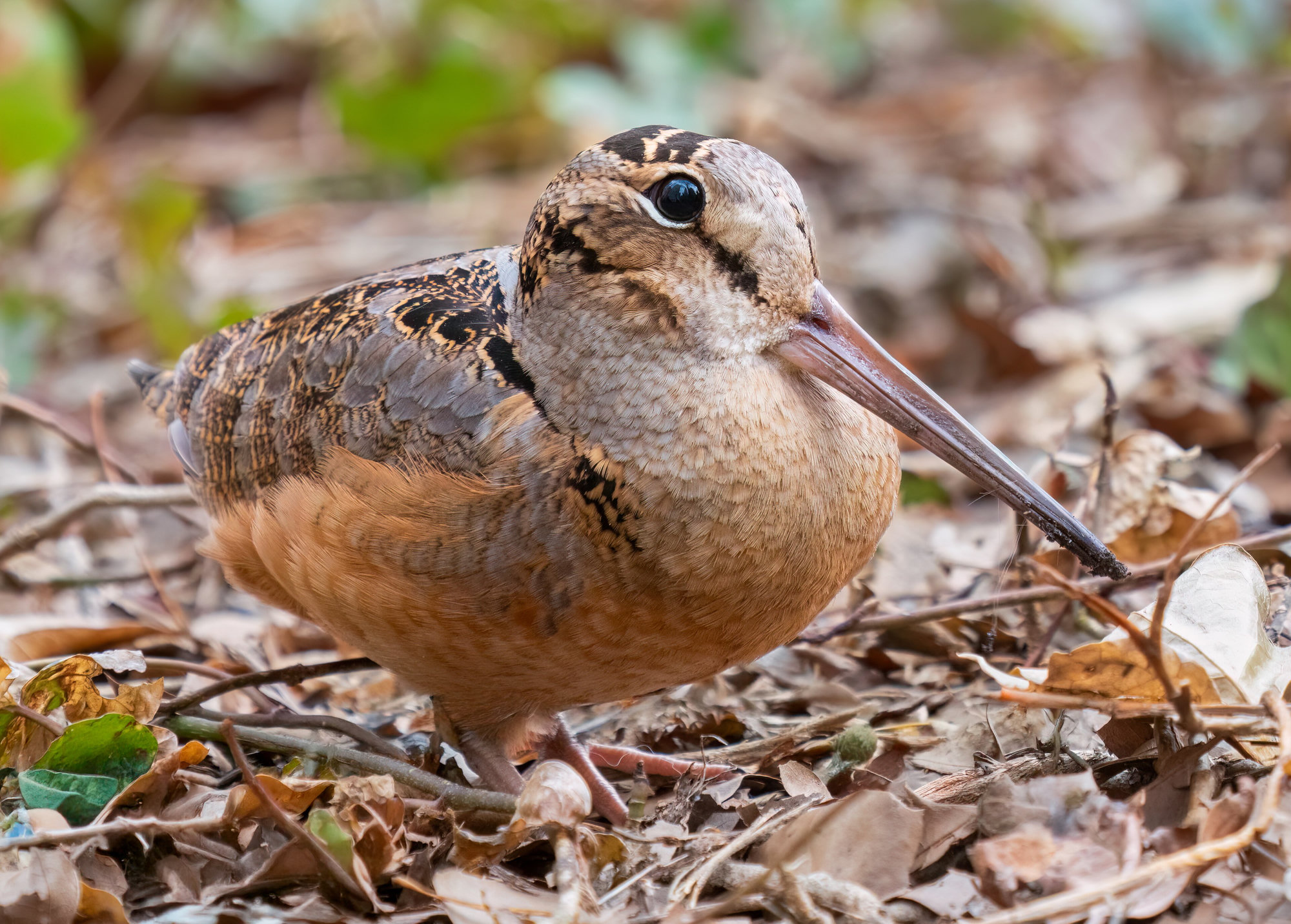
Photo Rhododendrites (opens in a new tab) / Wikimedia Commons, CC BY-SA 4.0 (opens in a new tab)
At a glance
- Size
- About 25 to 31 cm long
- Weight
- About 115 to 280 g
- Habitat
- Moist woodland, thickets, old fields and forest edges
- Diet
- Earthworms, mostly; also insect larvae
- In Georgia
- Resident; more numerous in winter, when northern birds arrive
- Voice
- A nasal "peent" on the ground; a twittering, chirping flight song
- Rabies vector
- No
Identification
- Key marks
- Round, leaf-brown body; very long bill; large eyes set high and far back on the head; short legs
- Told apart from
- Wilson's snipe, which has a striped back and lives in open wet grass
- Where to look
- Forest edges and old fields at dusk, January to March, when males display
Behaviour
Woodcocks probe damp soil for earthworms with their long bills, the tips of which can open underground to grip prey. Their eyes are placed so they can see almost all around them, including behind.
At dusk in late winter, males spiral high into the air and tumble back to earth, twittering, in a display called the sky dance.
Why they matter
Woodcocks eat vast numbers of earthworms and depend on young, moist forests and shrubby fields. They have declined as those habitats grew into mature forest or were developed, and they are a reminder that a mix of young and old woods is needed for many species.
Reproduction and lifecycle
Nest — A shallow depression in leaves on the ground
Eggs — Usually four
Incubation — About 20 to 22 days
Chicks — Leave the nest within hours; probe for worms within days
Flight — At about two weeks
Lifespan — Several years
Living around people
- Woodcocks often fly into windows and buildings during migration.
- Shrubby field edges and damp thickets left unmown give them feeding and nesting places.
Misconceptions
- Woodcocks are shorebirds, so they live at the shore. They live in damp woods and fields, probing the soil for earthworms.
Related species
Seasonal activity
When this species is breeding, and when there are nests on the ground. Mowing during the shaded months is how most nests are found.
| Jan | Feb | Mar | Apr | May | Jun | Jul | Aug | Sep | Oct | Nov | Dec | |
|---|---|---|---|---|---|---|---|---|---|---|---|---|
| Breeding | Jan: no | Feb: no | Mar: no | Apr: no | May: no | Jun: no | Jul: no | Aug: no | Sep: no | Oct: no | Nov: no | Dec: no |
| Active nests | Jan: no | Feb: no | Mar: no | Apr: no | May: no | Jun: no | Jul: no | Aug: no | Sep: no | Oct: no | Nov: no | Dec: no |
| Notes | Males beginning sky dances | Sky dances; nesting begins in the South | Nesting | Chicks | Young independent | Resident birds | Resident birds | Resident birds | Resident birds | Northern migrants arriving | Wintering birds | Wintering birds |
Where it lives
Recorded in 45 states and provinces. Each one links to the other animals there, and to the rehabilitators licensed for them.
United States
- Alabamain winter
- Arkansasin winter
- Connecticutbreeding
- Delawarein winter
- District of Columbiapassing through
- Floridain winter
- Georgia
- Illinoisbreeding
- Indianabreeding
- Iowabreeding
- Kansaspassing through
- Kentucky
- Louisianain winter
- Mainebreeding
- Maryland
- Massachusettsbreeding
- Michiganbreeding
- Minnesotabreeding
- Mississippiin winter
- Missouriin winter
- Nebraskabreeding
- New Hampshirebreeding
- New Jerseyin winter
- New Yorkbreeding
- North Carolinain winter
- North Dakotabreeding
- Ohiobreeding
- Oklahomain winter
- Pennsylvaniabreeding
- Rhode Islandin winter
- South Carolinain winter
- South Dakotapassing through
- Tennesseein winter
- Texasin winter
- Vermontbreeding
- Virginiain winter
- West Virginia
- Wisconsinbreeding
If you found one
Answer a few questions and you will get a specific answer for what you are looking at.
I found an animal