
Species
Long-billed dowitcher
Limnodromus scolopaceus
A long-billed shorebird of freshwater ponds, almost identical to its short-billed relative but for its call.
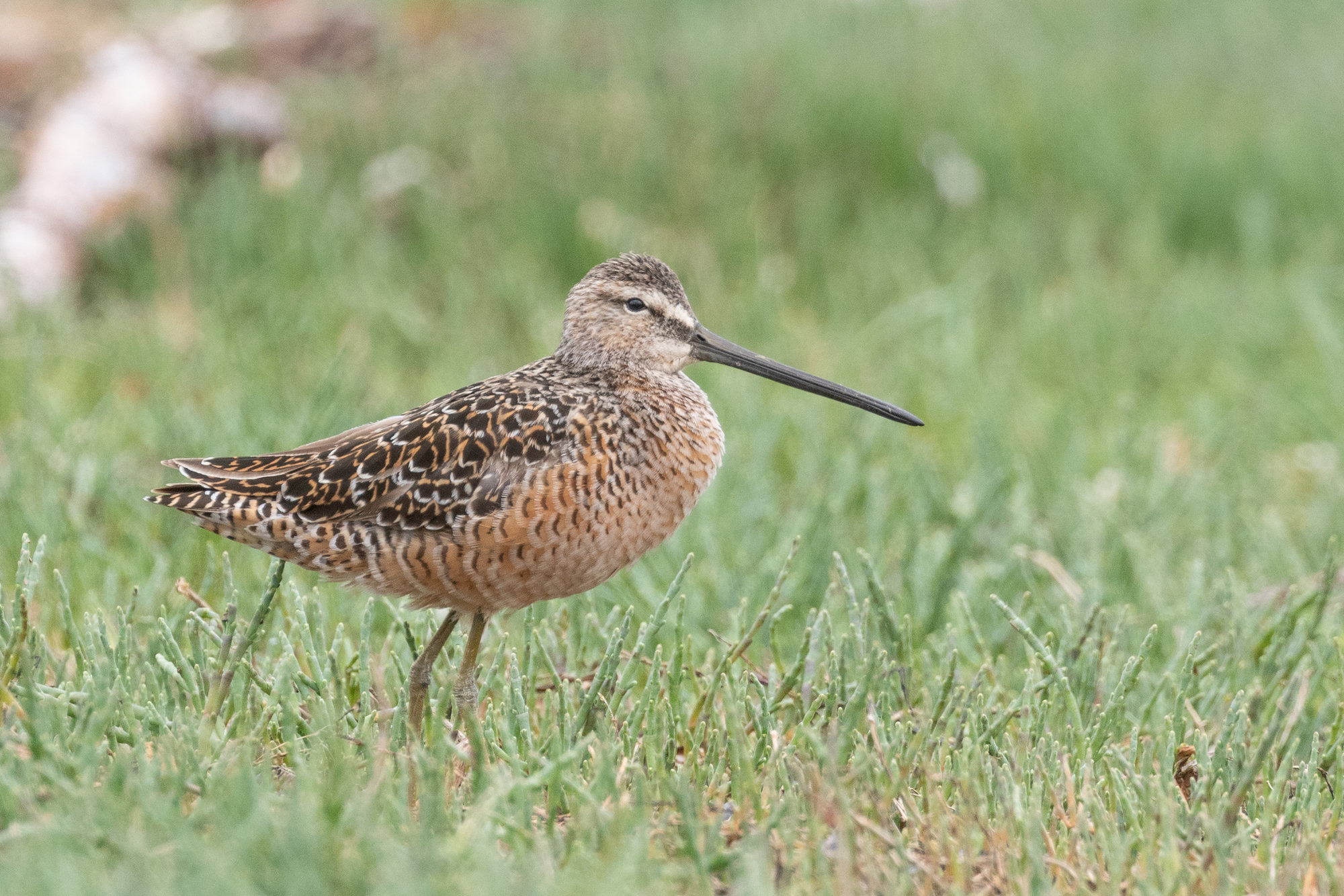
Photo Blair Dudeck (opens in a new tab) / iNaturalist, CC BY 4.0 (opens in a new tab)
At a glance
- Size
- About 24 to 30 cm long
- Weight
- About 90 to 130 g
- Habitat
- Freshwater ponds, impoundments and flooded fields
- Diet
- Insect larvae, worms, snails and seeds
- In Georgia
- An uncommon migrant and winter visitor
- Voice
- A sharp, high "keek"
- Rabies vector
- No
Identification
- Key marks
- Stocky; very long bill; white wedge up the back in flight; grey in winter
- Told apart from
- Short-billed dowitcher, which is best told by its soft "tu-tu-tu" call and a preference for salt water
- Where to look
- Freshwater impoundments and ponds in winter
Behaviour
Long-billed dowitchers feed with rapid, sewing-machine probing, usually in fresh or brackish water.
Why they matter
Long-billed dowitchers breed in Siberia and Alaska and winter in the southern United States and Mexico. They show how birds of the far north-west spread across the continent in winter, using inland wetlands along the way.
Reproduction and lifecycle
Nest — A scrape in wet tundra
Eggs — Usually four
Incubation — About 20 days
Chicks — Leave the nest within a day
Lifespan — Several years
Living around people
- Freshwater impoundments managed with shallow water in winter support them.
Misconceptions
- The two dowitchers can be told apart by bill length. Their bills overlap; the call is the surest clue.
Related species
Seasonal activity
When this species is breeding, and when there are nests on the ground. Mowing during the shaded months is how most nests are found.
| Jan | Feb | Mar | Apr | May | Jun | Jul | Aug | Sep | Oct | Nov | Dec | |
|---|---|---|---|---|---|---|---|---|---|---|---|---|
| Breeding | Jan: no | Feb: no | Mar: no | Apr: no | May: no | Jun: no | Jul: no | Aug: no | Sep: no | Oct: no | Nov: no | Dec: no |
| Active nests | Jan: no | Feb: no | Mar: no | Apr: no | May: no | Jun: no | Jul: no | Aug: no | Sep: no | Oct: no | Nov: no | Dec: no |
| Notes | Wintering | Wintering | Wintering | Migrating north | Nesting in the Arctic | Nesting | Nesting | Adults moving south | Migrants | Wintering birds arrive | Wintering | Wintering |
Where it lives
Recorded in 82 states and provinces. Each one links to the other animals there, and to the rehabilitators licensed for them.
United States
- Alabamain winter
- Alaskabreeding
- Arizonain winter
- Arkansaspassing through
- Californiain winter
- Coloradopassing through
- Delawarein winter
- Floridain winter
- Georgiain winter
- Idahopassing through
- Illinoispassing through
- Indianapassing through
- Iowapassing through
- Kansaspassing through
- Kentuckypassing through
- Louisianain winter
- Marylandin winter
- Massachusettspassing through
- Minnesotapassing through
- Mississippiin winter
- Missouripassing through
- Montanapassing through
- Nebraskapassing through
- Nevadain winter
- New Jerseyin winter
- New Mexicoin winter
- New Yorkin winter
- North Carolinain winter
- North Dakotapassing through
- Ohiopassing through
- Oklahomapassing through
- Oregonin winter
- Rhode Islandpassing through
- South Carolinain winter
- South Dakotapassing through
- Tennesseepassing through
- Texasin winter
- Utahpassing through
- Washingtonin winter
- Wisconsinpassing through
- Wyomingpassing through
Canada
Mexico
- Aguascalientesin winter
- Baja Californiain winter
- Baja California Surin winter
- Campechein winter
- Chiapasin winter
- Chihuahuain winter
- Coahuilain winter
- Colimain winter
- Durangoin winter
- Guanajuatoin winter
- Guerreroin winter
- Hidalgoin winter
- Jaliscoin winter
- Mexico Cityin winter
- Michoacanin winter
- Morelosin winter
- Nayaritin winter
- Nuevo Leonin winter
- Oaxacain winter
- Pueblain winter
- Queretaroin winter
- San Luis Potosiin winter
- Sinaloain winter
- Sonorain winter
- State of Mexicoin winter
- Tabascoin winter
- Tamaulipasin winter
- Tlaxcalain winter
- Veracruzin winter
- Yucatanin winter
- Zacatecasin winter
If you found one
Answer a few questions and you will get a specific answer for what you are looking at.
I found an animal