
Species
Ring-billed gull
Larus delawarensis
The gull of car parks and inland lakes, with a black ring around its yellow bill.
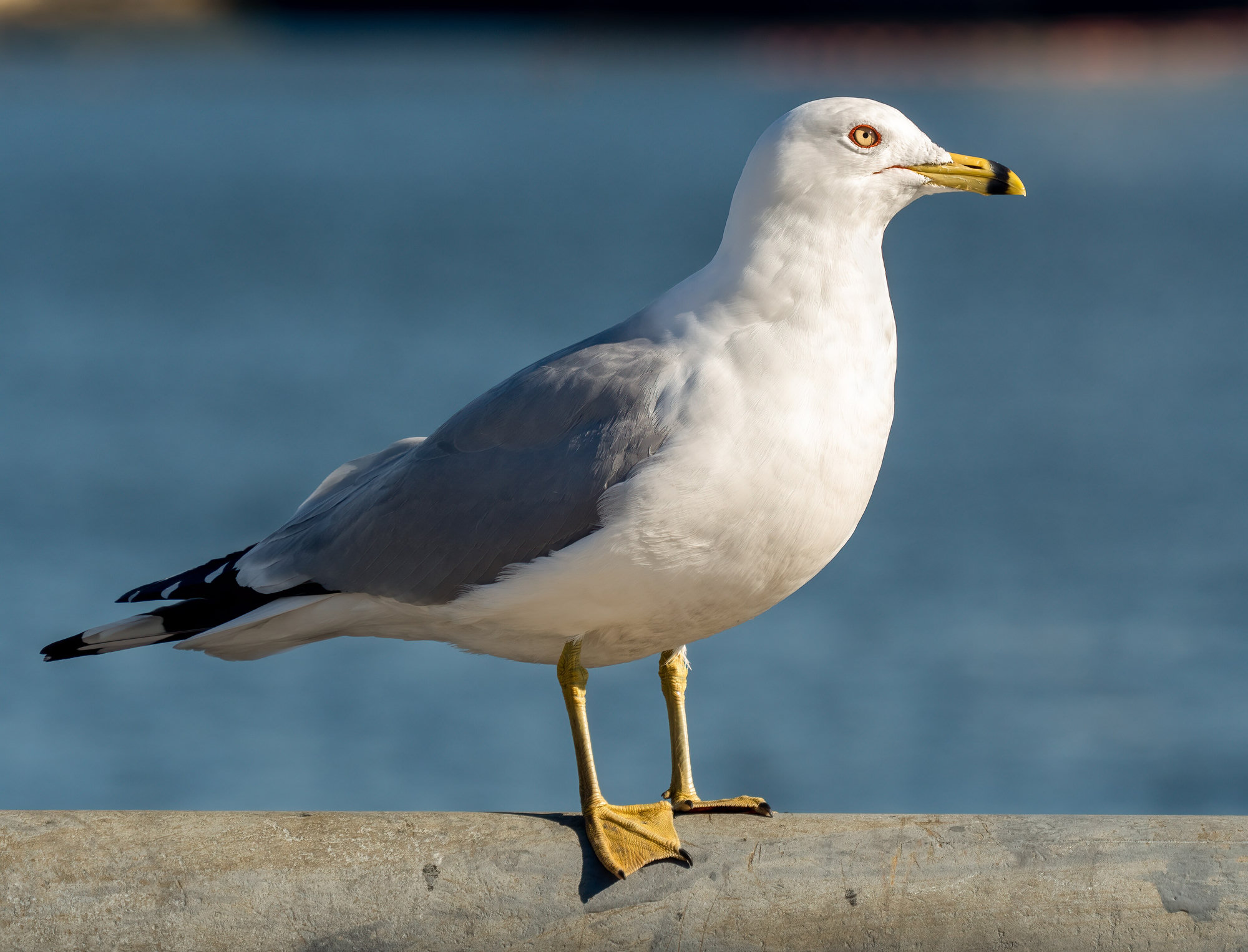
Photo Rhododendrites (opens in a new tab) / Wikimedia Commons, CC BY-SA 4.0 (opens in a new tab)
At a glance
- Size
- About 43 to 54 cm long
- Weight
- About 400 to 700 g
- Habitat
- Lakes, rivers, car parks, landfills, fields and coasts
- Diet
- Fish, insects, earthworms, grain and food scraps
- In Georgia
- An abundant winter visitor, statewide
- Voice
- A high, mewing "kee-yow"
- Rabies vector
- No
Identification
- Key marks
- Pale grey back; black wingtips with white spots; yellow legs; yellow bill with a black ring near the tip
- Told apart from
- Herring gull, which is larger with pink legs and no ring on the bill
- Told apart from
- Laughing gull, which has a darker back and black legs
- Where to look
- Shopping-centre car parks, reservoirs and fast-food restaurants in winter
Behaviour
Ring-billed gulls are highly adaptable, following ploughs, picking through landfills and gathering in car parks. They return to the same wintering spots year after year.
Why they matter
Ring-billed gulls were scarce in the early 1900s but have boomed alongside people. They are the gull most Georgians see inland, and they clean up food waste and eat many insects in fields.
Reproduction and lifecycle
Nest — A shallow scrape on islands in large lakes, in colonies
Eggs — Usually three
Incubation — About 20 to 31 days
Chicks — Fed by both parents
Flight — At about five weeks
Lifespan — Wild birds over twenty years are recorded
Living around people
- Feeding gulls in car parks draws large flocks and teaches them to snatch food.
- Six-pack rings and fishing line tangle gulls; cutting rings and binning line helps.
Misconceptions
- Gulls inland are lost from the sea. Ring-billed gulls winter inland by choice.
Related species
Seasonal activity
When this species is breeding, and when there are nests on the ground. Mowing during the shaded months is how most nests are found.
| Jan | Feb | Mar | Apr | May | Jun | Jul | Aug | Sep | Oct | Nov | Dec | |
|---|---|---|---|---|---|---|---|---|---|---|---|---|
| Breeding | Jan: no | Feb: no | Mar: no | Apr: no | May: no | Jun: no | Jul: no | Aug: no | Sep: no | Oct: no | Nov: no | Dec: no |
| Active nests | Jan: no | Feb: no | Mar: no | Apr: no | May: no | Jun: no | Jul: no | Aug: no | Sep: no | Oct: no | Nov: no | Dec: no |
| Notes | Abundant inland and on the coast | Wintering | Migrating north | Last birds leave; a few young birds stay | Nesting on northern lakes | Nesting | Chicks | Young flying | Migration begins | Arriving | Wintering | Wintering |
Where it lives
Recorded in 80 states and provinces. Each one links to the other animals there, and to the rehabilitators licensed for them.
United States
- Alabamain winter
- Arizonain winter
- Arkansasin winter
- Californiain winter
- Coloradoin winter
- Connecticutin winter
- Delawarein winter
- District of Columbiain winter
- Floridain winter
- Georgiain winter
- Idaho
- Illinois
- Indianain winter
- Iowain winter
- Kansasin winter
- Kentuckyin winter
- Louisianain winter
- Maine
- Marylandin winter
- Massachusettsin winter
- Michigan
- Minnesotabreeding
- Mississippiin winter
- Missouriin winter
- Montana
- Nebraskain winter
- Nevadain winter
- New Hampshirein winter
- New Jerseyin winter
- New Mexicoin winter
- New Yorkin winter
- North Carolinain winter
- North Dakotabreeding
- Ohioin winter
- Oklahomain winter
- Oregon
- Pennsylvaniain winter
- Rhode Islandin winter
- South Carolinain winter
- South Dakota
- Tennesseein winter
- Texasin winter
- Utahin winter
- Vermont
- Virginiain winter
- Washington
- West Virginiain winter
- Wisconsin
- Wyomingbreeding
Canada
Mexico
- Aguascalientesin winter
- Baja Californiain winter
- Baja California Surin winter
- Chihuahuain winter
- Coahuilain winter
- Durangoin winter
- Guanajuatoin winter
- Hidalgoin winter
- Jaliscoin winter
- Michoacanin winter
- Nayaritin winter
- Nuevo Leonin winter
- Queretaroin winter
- Sinaloain winter
- Sonorain winter
- State of Mexicoin winter
- Tamaulipasin winter
- Tlaxcalain winter
- Zacatecasin winter
If you found one
Answer a few questions and you will get a specific answer for what you are looking at.
I found an animal