
Species
Lesser black-backed gull
Larus fuscus
A European gull that now winters in growing numbers on America's Atlantic coast, including Georgia's beaches.
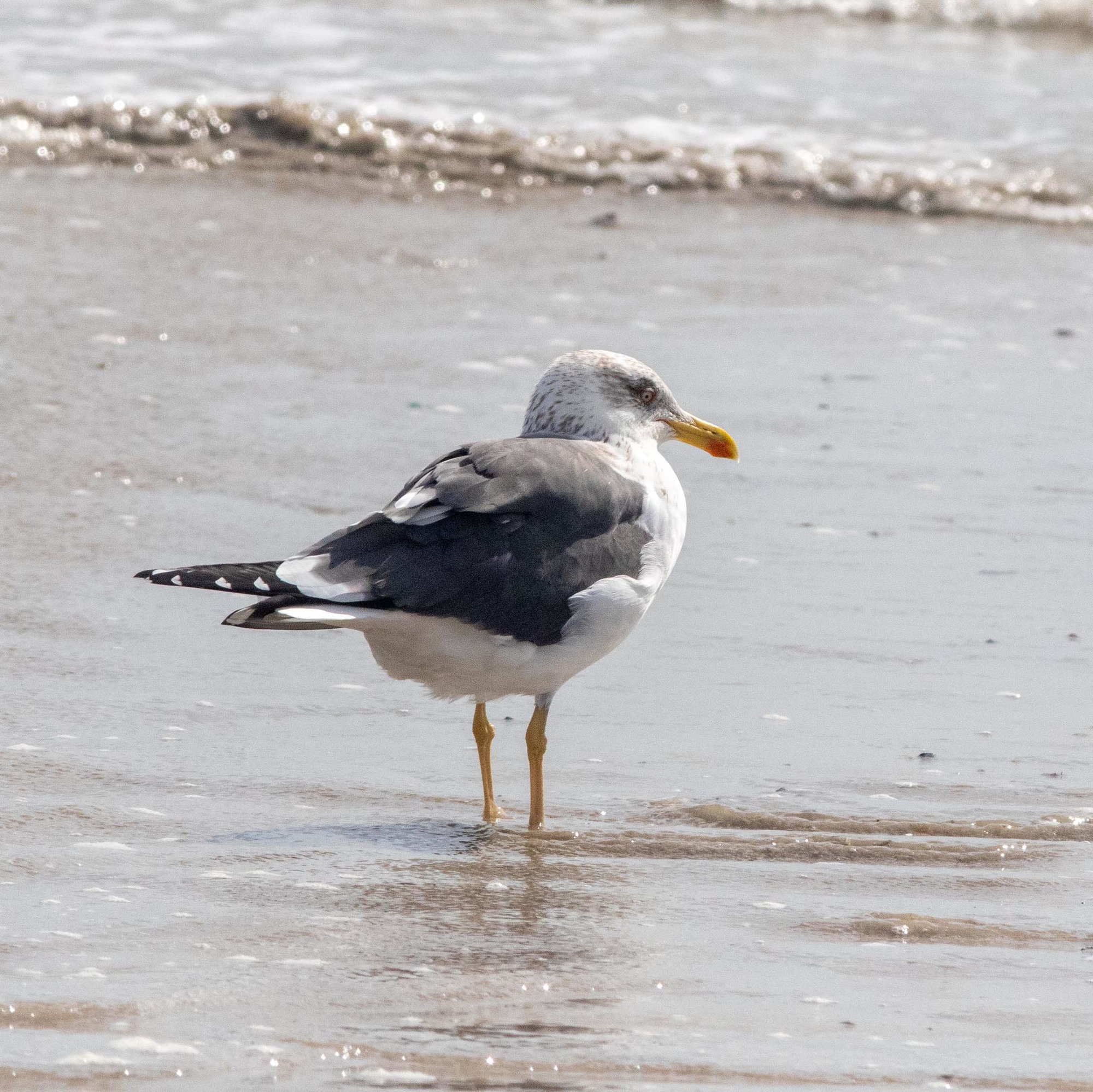
Photo tcantrell52 (opens in a new tab) / iNaturalist, CC BY 4.0 (opens in a new tab)
At a glance
- Size
- About 52 to 64 cm long
- Weight
- About 600 to 1,000 g
- Habitat
- Beaches and coastal waters
- Diet
- Fish, crabs, carrion and scraps
- In Georgia
- An uncommon but increasing winter visitor on the coast
- Voice
- A deep "kow-kow"
- Rabies vector
- No
Identification
- Key marks
- Dark slate-grey back; yellow legs; yellow bill with a red spot; streaked head in winter
- Told apart from
- Great black-backed gull, which is much larger with a blacker back and pink legs
- Told apart from
- Herring gull, which has a pale grey back and pink legs
- Where to look
- Beaches among other gulls, November to April
Behaviour
Lesser black-backed gulls breed in Europe and Iceland, but increasing numbers now winter in eastern North America. They feed at sea and on beaches alongside other gulls.
Why they matter
The spread of this gull across the Atlantic over the last half-century is one of the clearest recent changes in North American birdlife, and shows how quickly bird populations can shift their winter ranges.
Reproduction and lifecycle
Nest — A scrape on coastal ground in colonies, in Europe and Iceland
Eggs — Usually three
Incubation — About 24 to 27 days
Chicks — Fed by both parents
Maturity — Adult plumage at about four years
Lifespan — Wild birds over twenty years are recorded
Living around people
- Like other gulls, they are best left unfed.
Misconceptions
- All gulls on American beaches are American birds. Some of these came from Europe.
Related species
Seasonal activity
When this species is breeding, and when there are nests on the ground. Mowing during the shaded months is how most nests are found.
| Jan | Feb | Mar | Apr | May | Jun | Jul | Aug | Sep | Oct | Nov | Dec | |
|---|---|---|---|---|---|---|---|---|---|---|---|---|
| Breeding | Jan: no | Feb: no | Mar: no | Apr: no | May: no | Jun: no | Jul: no | Aug: no | Sep: no | Oct: no | Nov: no | Dec: no |
| Active nests | Jan: no | Feb: no | Mar: no | Apr: no | May: no | Jun: no | Jul: no | Aug: no | Sep: no | Oct: no | Nov: no | Dec: no |
| Notes | Wintering | Wintering | Wintering | Leaving | Nesting in Europe and Iceland; a few young birds remain | Nesting | Chicks | Young flying | Moving south | Arriving | Wintering | Wintering |
Where it lives
Recorded in 60 states and provinces. Each one links to the other animals there, and to the rehabilitators licensed for them.
United States
- Alabamain winter
- Arkansasin winter
- Coloradoin winter
- Connecticutin winter
- Delawarein winter
- District of Columbiain winter
- Floridain winter
- Georgiain winter
- Idahoin winter
- Illinoisin winter
- Indianain winter
- Iowain winter
- Kansasin winter
- Kentuckyin winter
- Louisianain winter
- Mainein winter
- Marylandin winter
- Massachusettsin winter
- Michiganin winter
- Minnesotain winter
- Mississippiin winter
- Missouriin winter
- Montanain winter
- Nebraskain winter
- Nevadain winter
- New Hampshirein winter
- New Jerseyin winter
- New Mexicoin winter
- New Yorkin winter
- North Carolinain winter
- North Dakotapassing through
- Ohioin winter
- Oklahomain winter
- Pennsylvaniain winter
- Rhode Islandin winter
- South Carolinain winter
- South Dakotain winter
- Tennesseein winter
- Texasin winter
- Utahin winter
- Virginiain winter
- Wisconsinin winter
- Wyomingpassing through
Canada
If you found one
Answer a few questions and you will get a specific answer for what you are looking at.
I found an animal