
Species
Red cornsnake
Pantherophis guttatus
A beautifully marked orange-and-red constrictor that hunts rodents in fields, woods and barns.
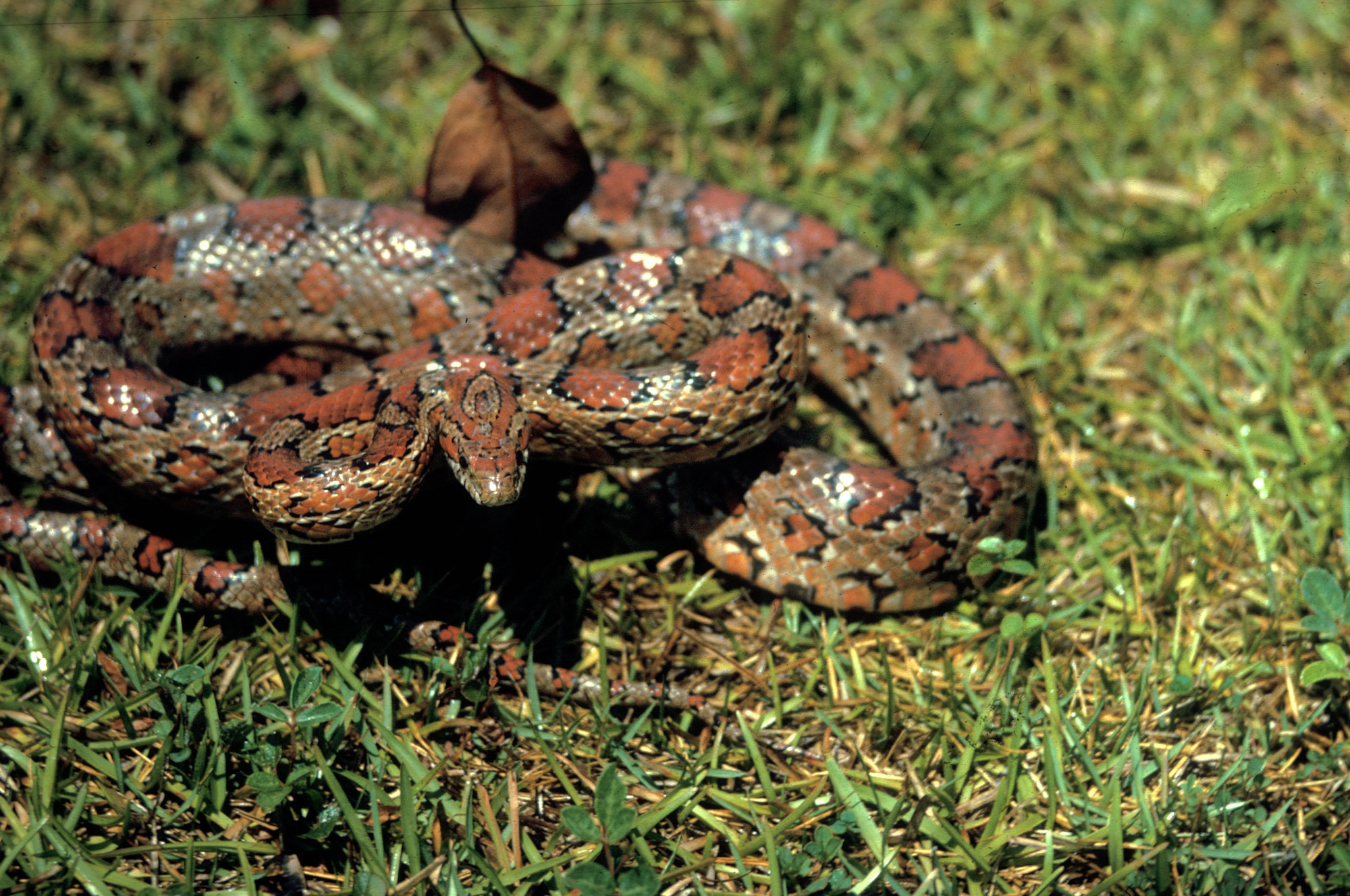
Photo Everglades NPS from Homestead, Florida, United States (opens in a new tab) / Wikimedia Commons, Public domain (opens in a new tab)
At a glance
- Size
- Usually 75 to 150 cm long
- Habitat
- Pine woods, field edges, old buildings and rocky hillsides
- Diet
- Mice, rats, birds and lizards
- In Georgia
- Statewide
- Venomous
- No
- Rabies vector
- No
Identification
- Key marks
- Orange to reddish blotches edged in black on a grey or tan body; black-and-white chequered belly; a spear-shaped mark on the head
- Told apart from
- Eastern copperhead, which has hourglass bands, a coppery head and no chequered belly
- Where to look
- Under boards and in old buildings; mostly out at night
Behaviour
Corn snakes hunt rodents in burrows and buildings, mostly at night. They climb well and constrict their prey. The name is said to come from the chequered belly, which looks like kernels of Indian corn, or from their visits to corn cribs.
Why they matter
They are important rodent predators around farms. Many are killed in mistake for copperheads.
Reproduction and lifecycle
Eggs — Usually 10 to 30
Nest — In rotting logs or loose soil
Incubation — About 60 to 65 days
Hatchlings — About 25 to 35 cm long
Maturity — At two to three years
Lifespan — Over 10 years in the wild
Living around people
- It is harmless; a corn snake indoors can be guided out.
- Never release pet corn snakes.
Misconceptions
- Red snakes are copperheads. Corn snakes are often killed by mistake; look for the chequered belly and the lack of hourglass bands.
Related species
Seasonal activity
When this species is breeding, and when there are nests on the ground. Mowing during the shaded months is how most nests are found.
| Jan | Feb | Mar | Apr | May | Jun | Jul | Aug | Sep | Oct | Nov | Dec | |
|---|---|---|---|---|---|---|---|---|---|---|---|---|
| Breeding | Jan: no | Feb: no | Mar: no | Apr: no | May: no | Jun: no | Jul: no | Aug: no | Sep: no | Oct: no | Nov: no | Dec: no |
| Active nests | Jan: no | Feb: no | Mar: no | Apr: no | May: no | Jun: no | Jul: no | Aug: no | Sep: no | Oct: no | Nov: no | Dec: no |
| Notes | Sheltering | Sheltering | Emerging | Active | Mating | Laying | Active at night | Hatching | Young active | Active | Sheltering | Sheltering |
Where it lives
Recorded in 13 states and provinces. Each one links to the other animals there, and to the rehabilitators licensed for them.
If you found one
Answer a few questions and you will get a specific answer for what you are looking at.
I found an animal