
Species
Eastern ratsnake
Pantherophis quadrivittatus
The yellow-and-black-striped ratsnake of the coastal Southeast, a climber of barns and live oaks.
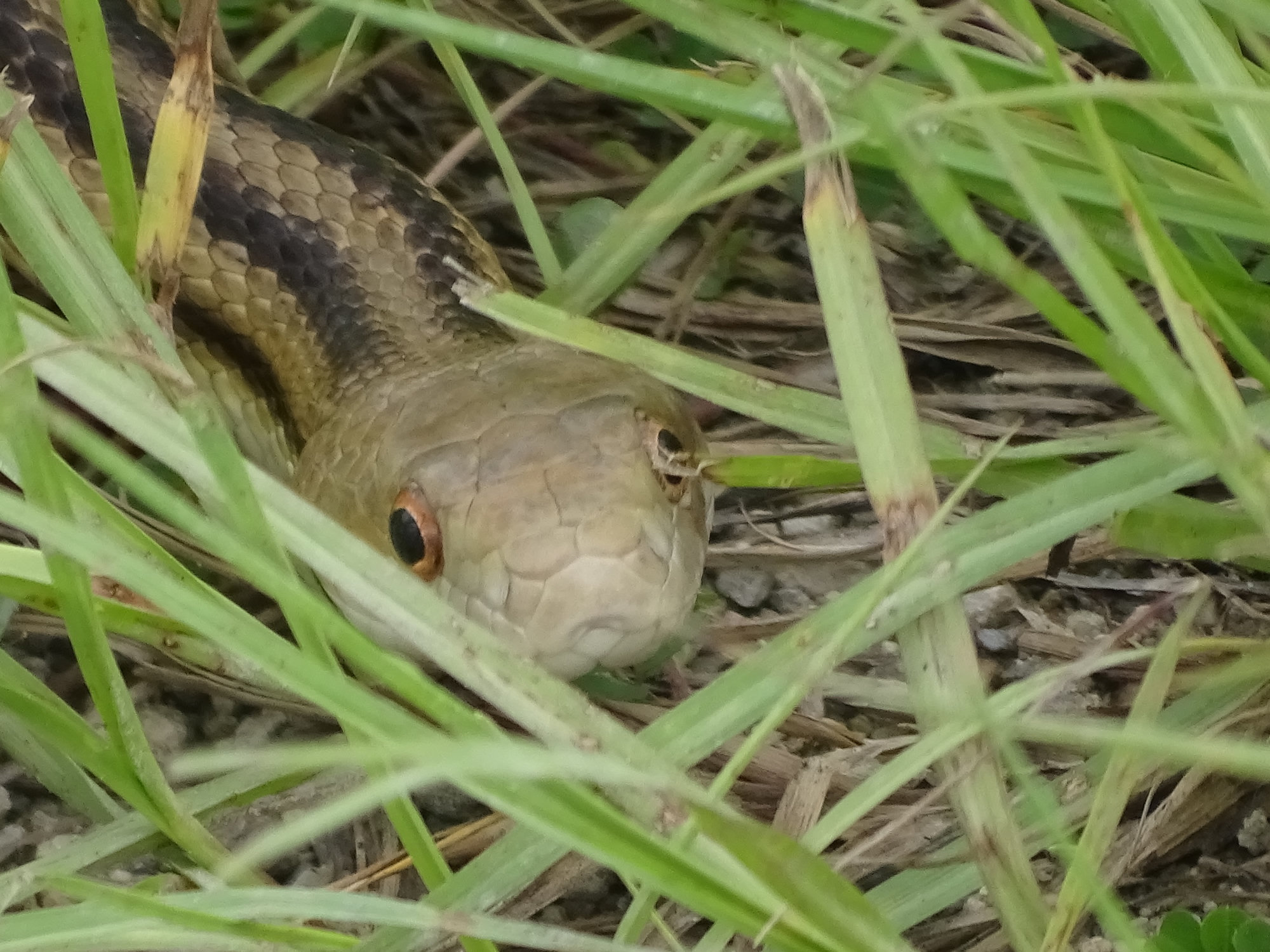
Photo Unknown photographer (opens in a new tab) / iNaturalist, CC0 1.0 (opens in a new tab)
At a glance
- Size
- Usually 1 to 1.8 m long
- Habitat
- Maritime forest, swamps, farmland and suburbs in the Coastal Plain
- Diet
- Rats, mice, birds and eggs
- In Georgia
- The coastal southeast and the barrier islands
- Venomous
- No
- Rabies vector
- No
Identification
- Key marks
- Yellow, olive or orange with four dark stripes along the body; young are blotched
- Told apart from
- Central ratsnake, which is grey and blotched or black
- Where to look
- In trees, barns and buildings near the coast
Behaviour
Like other ratsnakes it climbs well and constricts its prey. It is often found in attics, barns and birdhouses in search of rodents and eggs.
Why they matter
It controls rats and mice around coastal farms and homes and is food for hawks and kingsnakes.
Reproduction and lifecycle
Eggs — Usually 6 to 20
Nest — In rotting wood or leaf litter
Incubation — About 60 to 75 days
Hatchlings — Blotched rather than striped
Maturity — At a few years
Lifespan — Over 15 years
Living around people
- A ratsnake indoors can be guided out with a broom; it is harmless.
- Secure chicken coops and birdhouses to keep it from eggs.
Misconceptions
- Striped snakes are venomous. This striped ratsnake is harmless.
Related species
Seasonal activity
When this species is breeding, and when there are nests on the ground. Mowing during the shaded months is how most nests are found.
| Jan | Feb | Mar | Apr | May | Jun | Jul | Aug | Sep | Oct | Nov | Dec | |
|---|---|---|---|---|---|---|---|---|---|---|---|---|
| Breeding | Jan: no | Feb: no | Mar: no | Apr: no | May: no | Jun: no | Jul: no | Aug: no | Sep: no | Oct: no | Nov: no | Dec: no |
| Active nests | Jan: no | Feb: no | Mar: no | Apr: no | May: no | Jun: no | Jul: no | Aug: no | Sep: no | Oct: no | Nov: no | Dec: no |
| Notes | Sheltering; out on warm days | Out on warm days | Active | Courtship | Mating | Laying | Active | Hatching | Young active | Active | Sheltering | Sheltering |
Where it lives
Recorded in 5 states and provinces. Each one links to the other animals there, and to the rehabilitators licensed for them.
United States
If you found one
Answer a few questions and you will get a specific answer for what you are looking at.
I found an animal