
Species
Central ratsnake
Pantherophis alleghaniensis
A big, climbing constrictor of barns, woods and yards across Georgia, known to many as the gray rat snake.
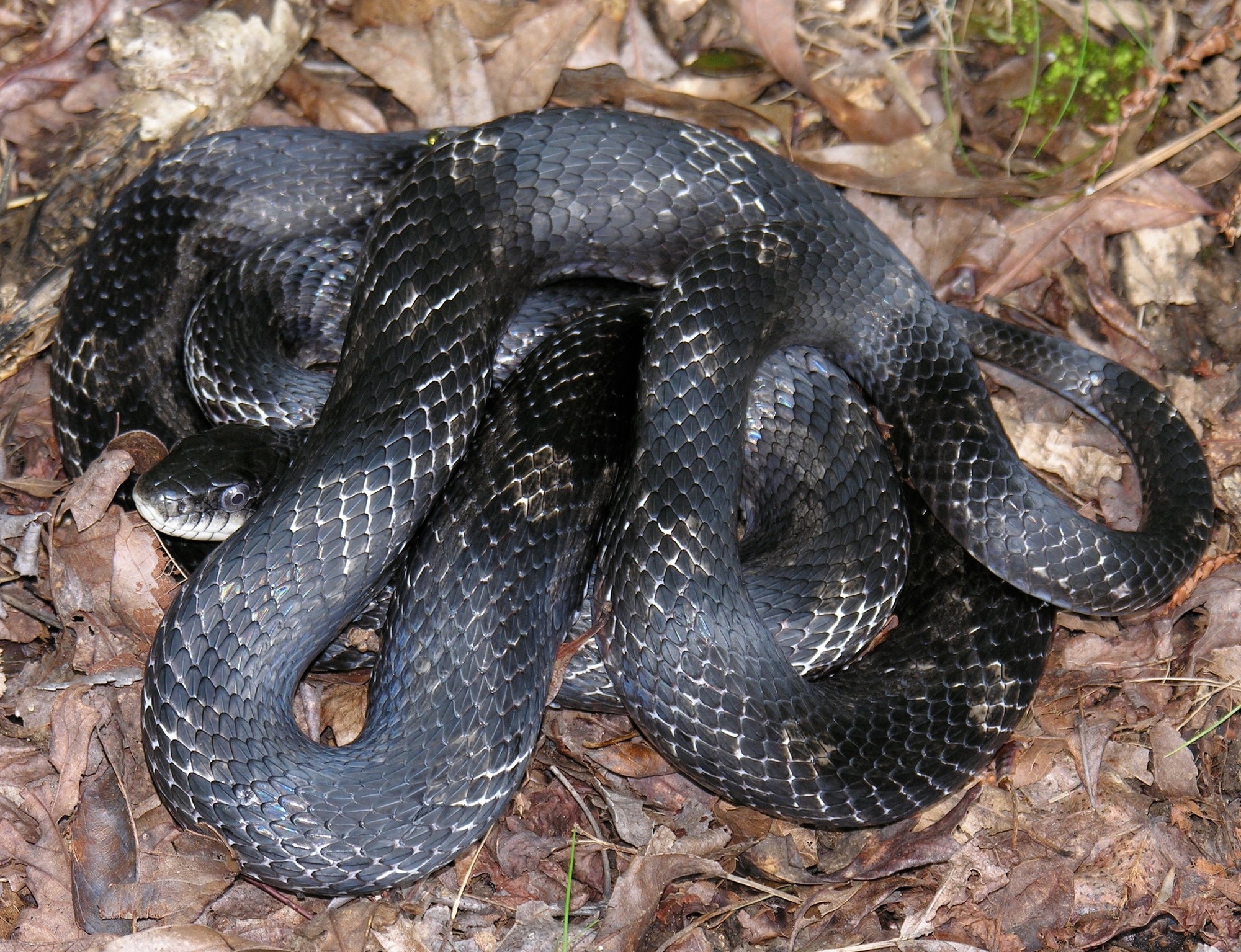
Photo skitterbug (opens in a new tab) / iNaturalist, CC BY 4.0 (opens in a new tab)
At a glance
- Size
- Usually 1 to 1.8 m long
- Habitat
- Woodland, farmland, old buildings and suburbs
- Diet
- Rats, mice, squirrels, birds and eggs
- In Georgia
- Statewide except the coastal southeast, where the eastern ratsnake replaces it
- Venomous
- No
- Rabies vector
- No
Identification
- Key marks
- Long and slim; grey with darker blotches in the south, or black with traces of pattern in the north; a flat belly edge that helps it climb
- Told apart from
- Eastern ratsnake, which is yellow to olive with dark stripes
- Told apart from
- North American racer, which is glossier and faster and holds its head high
- Where to look
- Climbing trees and walls, in barns and attics, and on roads
Behaviour
Ratsnakes are superb climbers, able to go straight up tree bark by catching their belly edges on it. When cornered they may freeze in a kinked shape, vibrate the tail and release musk. They kill prey by constriction.
Why they matter
Ratsnakes eat many rats and mice around farms and houses, and they take squirrels and bird eggs in trees. Their name is earned: a ratsnake in a barn is free pest control.
Reproduction and lifecycle
Eggs — Usually 6 to 20
Nest — In rotting logs, sawdust or compost
Incubation — About 60 to 75 days
Hatchlings — Grey with bold blotches
Maturity — At about four years
Lifespan — Over 15 years in the wild
Living around people
- A ratsnake in a chicken coop is after eggs; closing gaps in the coop is the answer.
- A ratsnake indoors can be guided out of a door with a broom.
- It is harmless, and may bite if handled; the bite is not venomous.
Misconceptions
- Rat snakes mate with rattlesnakes or copperheads. They cannot interbreed.
- A snake that vibrates its tail is a rattlesnake. Many harmless snakes do this.
Related species
Seasonal activity
When this species is breeding, and when there are nests on the ground. Mowing during the shaded months is how most nests are found.
| Jan | Feb | Mar | Apr | May | Jun | Jul | Aug | Sep | Oct | Nov | Dec | |
|---|---|---|---|---|---|---|---|---|---|---|---|---|
| Breeding | Jan: no | Feb: no | Mar: no | Apr: no | May: no | Jun: no | Jul: no | Aug: no | Sep: no | Oct: no | Nov: no | Dec: no |
| Active nests | Jan: no | Feb: no | Mar: no | Apr: no | May: no | Jun: no | Jul: no | Aug: no | Sep: no | Oct: no | Nov: no | Dec: no |
| Notes | Sheltering | Sheltering | Emerging | Active; courtship | Mating | Laying | Active | Hatching | Young active | Active | Sheltering | Sheltering |
Where it lives
Recorded in 27 states and provinces. Each one links to the other animals there, and to the rehabilitators licensed for them.
United States
Canada
If you found one
Answer a few questions and you will get a specific answer for what you are looking at.
I found an animal