
Species
Painted turtle
Chrysemys picta
A small, smooth-shelled pond turtle trimmed in red and yellow, found in north Georgia.
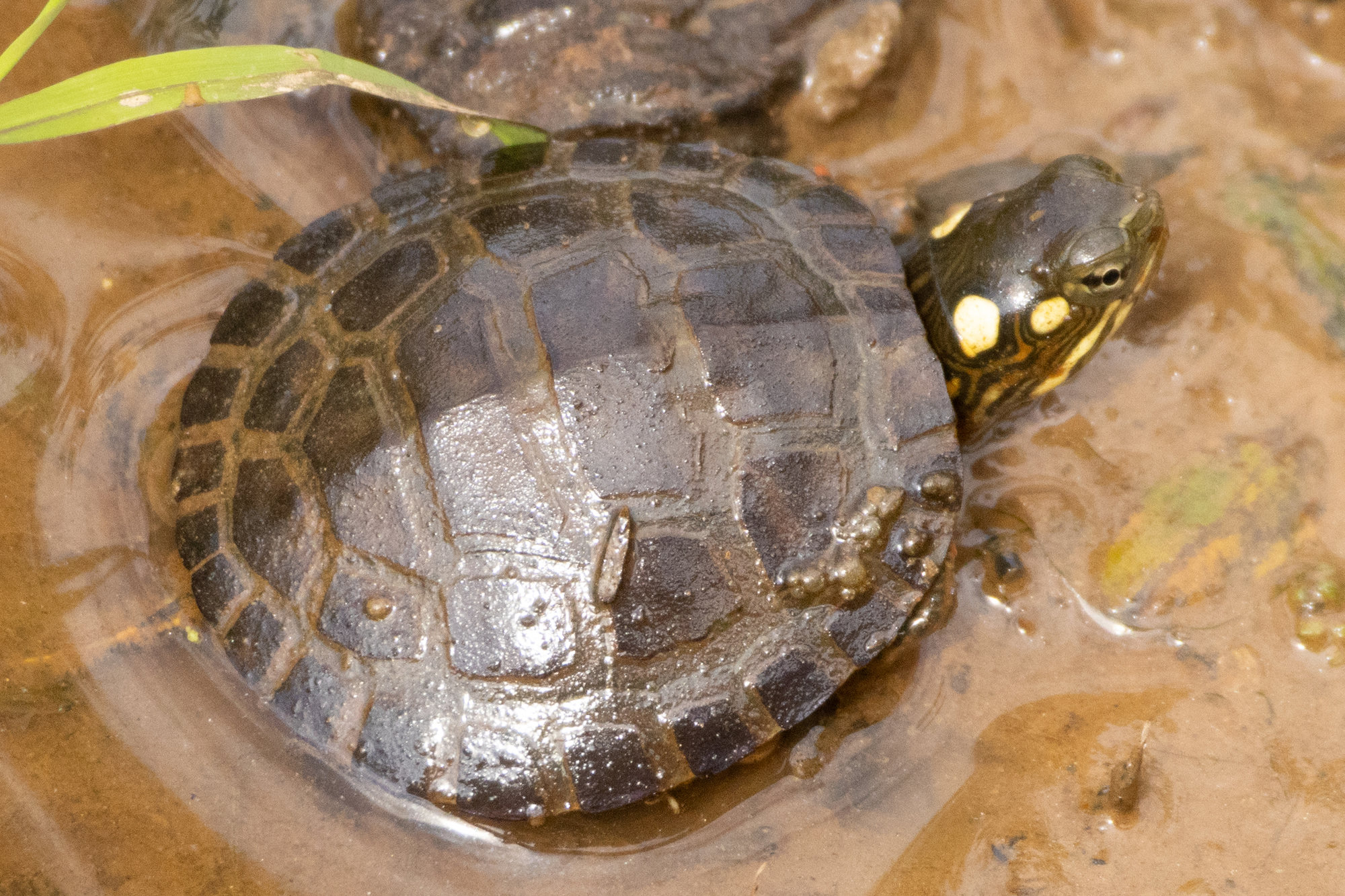
Photo Alex Stach (opens in a new tab) / iNaturalist, CC BY 4.0 (opens in a new tab)
At a glance
- Size
- Shell usually 10 to 18 cm long, smooth and flattened
- Habitat
- Ponds, lakes, marshes and slow streams with soft bottoms and basking spots
- Diet
- Insects, snails, small fish, carrion and water plants
- In Georgia
- North Georgia, mainly the Piedmont and mountains; scarce farther south
- Rabies vector
- No
Identification
- Key marks
- Smooth, dark olive to black shell with red markings on the edge; yellow stripes on the head
- Told apart from
- Pond slider, which has a yellow blotch or red stripe behind the eye and a rougher shell
- Where to look
- Basking on logs and mats of vegetation in quiet water
Behaviour
Painted turtles bask for hours on sunny days and feed in the shallows. Their young are remarkable: hatchlings of northern populations can spend the winter in the nest and survive partial freezing, and in Georgia many emerge in spring rather than autumn.
Why they matter
Painted turtles eat insects and carrion and graze water plants, and their eggs and young are food for many animals. Their hatchlings' tolerance of cold has made them a subject of research into how living tissue survives freezing.
Reproduction and lifecycle
Nest — Dug in sunny soil near water
Eggs — Usually 4 to 10
Incubation — About 70 to 80 days
Hatchlings — Often stay in the nest until spring
Maturity — At 3 to 10 years
Lifespan — Over 30 years
Living around people
- A painted turtle crossing a road can be helped across in the direction it was heading.
- Leaving logs in ponds gives turtles somewhere safe to bask.
Misconceptions
- Hatchlings that come out in spring were laid in spring. Many hatched the previous autumn and spent the winter underground.
Related species
Seasonal activity
When this species is breeding, and when there are nests on the ground. Mowing during the shaded months is how most nests are found.
| Jan | Feb | Mar | Apr | May | Jun | Jul | Aug | Sep | Oct | Nov | Dec | |
|---|---|---|---|---|---|---|---|---|---|---|---|---|
| Breeding | Jan: no | Feb: no | Mar: no | Apr: no | May: no | Jun: no | Jul: no | Aug: no | Sep: no | Oct: no | Nov: no | Dec: no |
| Active nests | Jan: no | Feb: no | Mar: no | Apr: no | May: no | Jun: no | Jul: no | Aug: no | Sep: no | Oct: no | Nov: no | Dec: no |
| Notes | Inactive under water | Inactive | Basking on warm days | Active; courtship | Nesting | Nesting | Feeding | Hatching | Some hatchlings emerge; others stay in the nest | Feeding | Slowing down | Inactive |
Where it lives
Recorded in 49 states and provinces. Each one links to the other animals there, and to the rehabilitators licensed for them.
United States
- Alabama
- Californiaintroduced
- Colorado
- Connecticut
- Delaware
- District of Columbia
- Georgia
- Idaho
- Illinois
- Indiana
- Iowa
- Kansas
- Kentucky
- Maine
- Maryland
- Massachusetts
- Michigan
- Minnesota
- Missouri
- Montana
- Nebraska
- New Hampshire
- New Jersey
- New Mexico
- New York
- North Carolina
- North Dakota
- Ohio
- Oregon
- Pennsylvania
- Rhode Island
- South Carolina
- South Dakota
- Tennessee
- Utah
- Vermont
- Virginia
- Washington
- West Virginia
- Wisconsin
- Wyoming
If you found one
Answer a few questions and you will get a specific answer for what you are looking at.
I found an animal