
Species
Chicken turtle
Deirochelys reticularia
A long-necked turtle of shallow, seasonal ponds, with a shell patterned like a net.
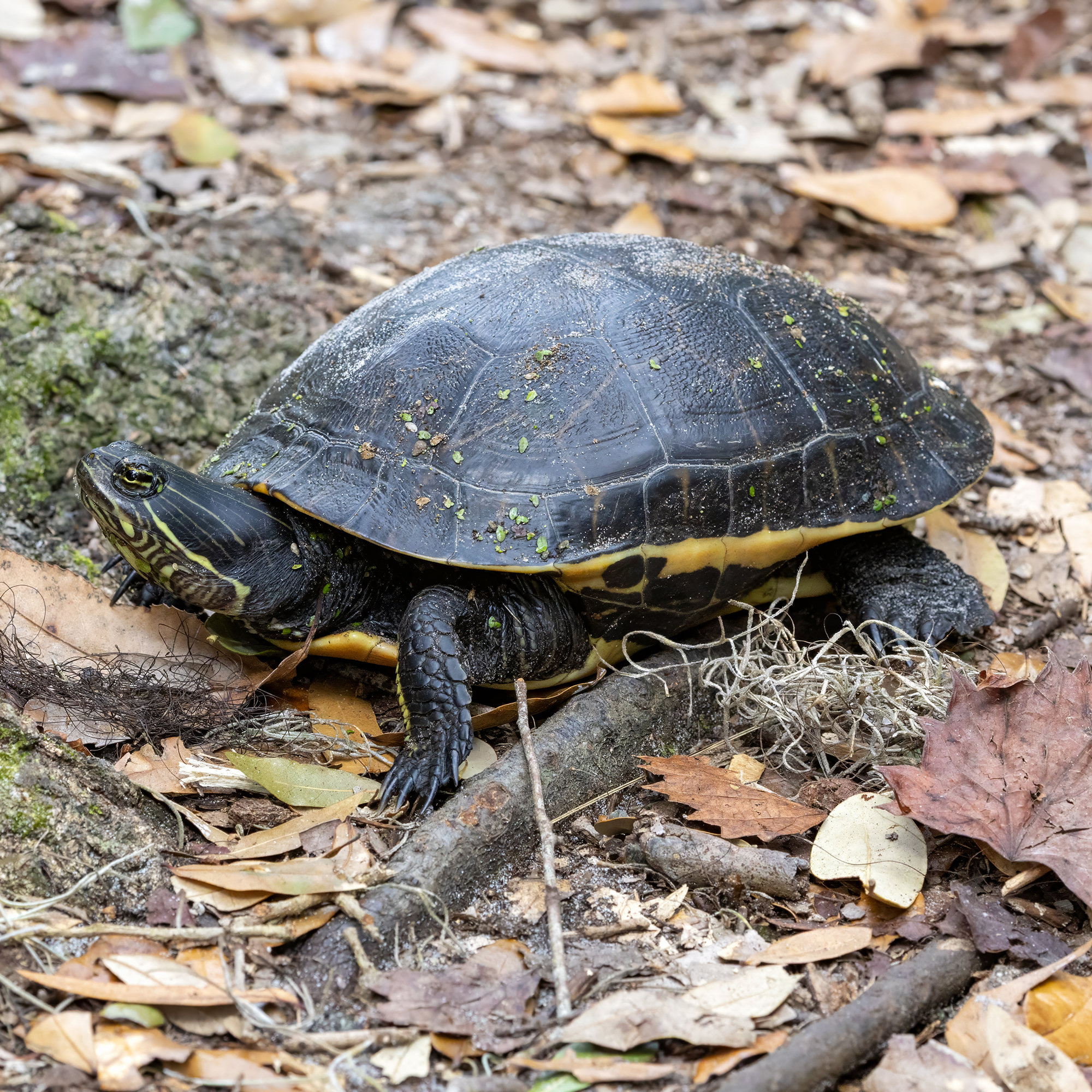
Photo Dan Vickers (opens in a new tab) / iNaturalist, CC BY 4.0 (opens in a new tab)
At a glance
- Size
- Shell usually 10 to 25 cm long
- Habitat
- Shallow ponds, Carolina bays, cypress ponds and ditches, many of them seasonal
- Diet
- Crayfish, insects and tadpoles
- In Georgia
- The Coastal Plain and lower Piedmont
- Rabies vector
- No
Identification
- Key marks
- Very long, striped neck; olive shell with a network of fine yellow lines; broad yellow stripe on the front legs
- Told apart from
- Pond slider and cooters, which have much shorter necks
- Where to look
- In shallow, weedy water, or crossing roads between ponds
Behaviour
The chicken turtle strikes at prey with its long neck, darting forward and opening its mouth wide to suck food in. It spends a good deal of time on land when its ponds dry out, and some females nest in autumn and winter rather than spring.
Why they matter
Seasonal ponds are some of the most productive wetlands in the Southeast and among the easiest to drain and fill. The chicken turtle depends on them and on the land around them.
Reproduction and lifecycle
Nest — Dug in soil near seasonal ponds
Eggs — Usually 5 to 15
Incubation — About 80 to 150 days
Hatchlings — Some spend the winter in the nest
Maturity — At a few years
Lifespan — About 20 years in the wild
Living around people
- Keeping low, wet ground and small ponds unfilled keeps chicken turtles in the landscape.
- Help one across a road in the direction it was heading.
Misconceptions
- It is named for the way it clucks. It makes no such sound; the name is said to come from the taste of its meat.
Related species
Seasonal activity
When this species is breeding, and when there are nests on the ground. Mowing during the shaded months is how most nests are found.
| Jan | Feb | Mar | Apr | May | Jun | Jul | Aug | Sep | Oct | Nov | Dec | |
|---|---|---|---|---|---|---|---|---|---|---|---|---|
| Breeding | Jan: no | Feb: no | Mar: no | Apr: no | May: no | Jun: no | Jul: no | Aug: no | Sep: no | Oct: no | Nov: no | Dec: no |
| Active nests | Jan: no | Feb: no | Mar: no | Apr: no | May: no | Jun: no | Jul: no | Aug: no | Sep: no | Oct: no | Nov: no | Dec: no |
| Notes | Some females nesting | Nesting | Active in wet ponds | Active | Feeding | Moving as ponds dry | Buried on land in dry weather | Hatchlings may emerge | Nesting begins in some years | Nesting | Nesting | Buried or active in mild weather |
Where it lives
Recorded in 9 states and provinces. Each one links to the other animals there, and to the rehabilitators licensed for them.
If you found one
Answer a few questions and you will get a specific answer for what you are looking at.
I found an animal