
Species
Northern yellow bat
Lasiurus intermedius
A large yellowish bat of southern coasts that roosts in the dead fronds of palms and in Spanish moss.
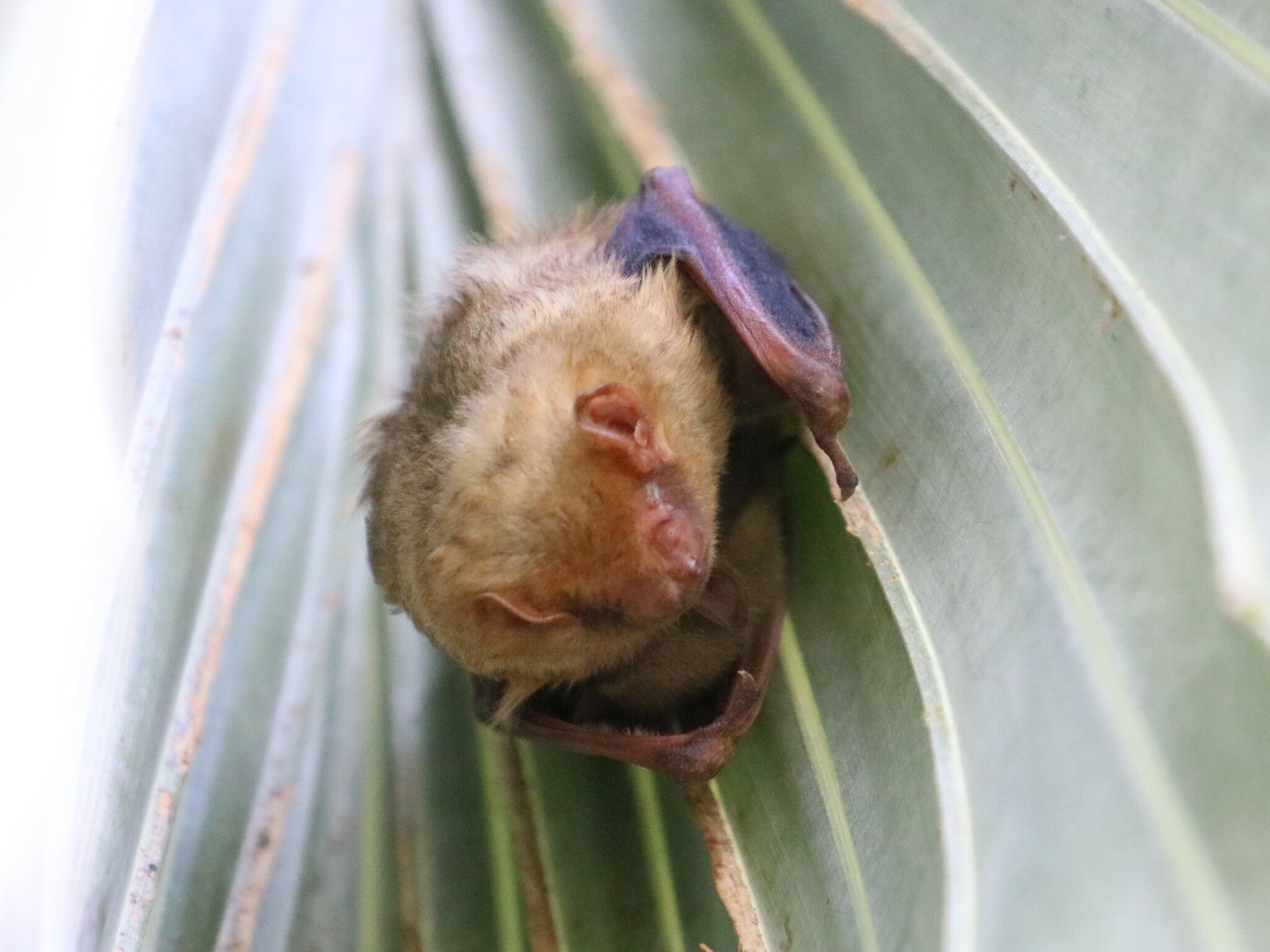
Photo birdingbunny (opens in a new tab) / iNaturalist, CC BY-NC 4.0 (opens in a new tab)
At a glance
- Size
- Body about 12 to 14 cm; wingspan about 35 to 40 cm
- Weight
- About 14 to 31 g
- Habitat
- Coastal plain woodlands, palm stands, live oak hammocks and wooded neighbourhoods
- Diet
- Flying insects, including flies, mosquitoes, beetles and moths
- Active
- Night, and year-round in the Deep South
- Roost
- Hanging clumps of Spanish moss and the dead-frond "skirts" of palms
- Young
- Usually two to four pups
- Rabies vector
- Yes
Identification
- Key marks
- Large; long yellowish-brown to greyish fur; furred only on the front half of the tail membrane
- Told apart from
- Seminole and eastern red bats, which are red and smaller
- Told apart from
- Big brown bat, which is darker brown with black wings and ears and a bare tail membrane
- Where to look
- Palm skirts and Spanish moss in coastal Georgia and Florida; hunting over open ground, golf courses and wetlands at dusk
Behaviour
Northern yellow bats live near the coast in the Southeast, where they roost in Spanish moss and among the dead fronds that hang below the crowns of palms. Several bats may use the same clump of moss or palm skirt, and females gather in small maternity groups in summer.
They hunt over open areas: marsh edges, fields, lawns, golf courses and the edges of woods, often flying 5 to 15 metres up. They do not hibernate, but slow down on cold nights and feed whenever it is warm enough for insects.
Why they matter
Their hunting grounds — open land at the edge of towns — are exactly where mosquitoes and other biting flies swarm at dusk, and flies are a regular part of their diet.
They also tie a bat's life to a single plant feature: the dead palm skirt. Where ornamental palms are trimmed clean, northern yellow bats lose roosts they cannot easily replace.
Reproduction and lifecycle
Mating — autumn and winter
Birth — May and June, usually two to four pups
Nursing — pups stay in the roost while their mother feeds
Flight — at about four weeks old
Independence — by mid-summer
Lifespan — not well recorded in the wild
Living around people
- Trimming the dead fronds from palms between April and August can kill pups in the skirt; leave skirts in place or trim in winter.
- Removing Spanish moss takes away roosts.
- Cats and outdoor lighting near roosts disturb these bats.
- A yellow bat on the ground should never be picked up with bare hands; bats are rabies vector species.
Misconceptions
- Dead palm fronds are only a fire and pest hazard. They are a nursery for yellow bats; trimming them in summer can kill a litter.
- Bats come to towns to bother people. They come for the insects that gather over lawns and water at dusk.
- All bats roost in caves or attics. This one lives in palms and moss.
Related species
Seasonal activity
When this species is breeding, and when there are nests on the ground. Mowing during the shaded months is how most nests are found.
| Jan | Feb | Mar | Apr | May | Jun | Jul | Aug | Sep | Oct | Nov | Dec | |
|---|---|---|---|---|---|---|---|---|---|---|---|---|
| Breeding | Jan: no | Feb: no | Mar: no | Apr: no | May: no | Jun: no | Jul: no | Aug: no | Sep: no | Oct: no | Nov: no | Dec: no |
| Active nests | Jan: no | Feb: no | Mar: no | Apr: no | May: no | Jun: no | Jul: no | Aug: no | Sep: no | Oct: no | Nov: no | Dec: no |
| Notes | Active on warm evenings; quiet through cold spells | Females pregnant; foraging increases with warmer nights | Activity rises | Females gather in maternity groups in moss and palm skirts | Pups are born, usually two to four | Mothers nurse pups in the roost and hunt at night | Young begin to fly | Young are independent | Mating is thought to begin | Active on most evenings | Mating continues; activity eases in cool weather | Active on mild nights |
Where it lives
Recorded in 20 states and provinces. Each one links to the other animals there, and to the rehabilitators licensed for them.
Treated as a rabies-vector species in Alabama, Florida, Georgia, Louisiana, Mississippi, North Carolina, South Carolina, Texas, Chiapas, Colima, Guerrero, Jalisco, Nayarit, Nuevo Leon, Oaxaca, Puebla, Tabasco, Tamaulipas, Veracruz and Yucatan. There, only a certified rehabilitator may take one.
If you found one
Answer a few questions and you will get a specific answer for what you are looking at.
I found an animal