
Species
Northern cottonmouth
Agkistrodon piscivorus
A heavy-bodied water snake of pit-viper stock, famous for its open-mouthed warning display.
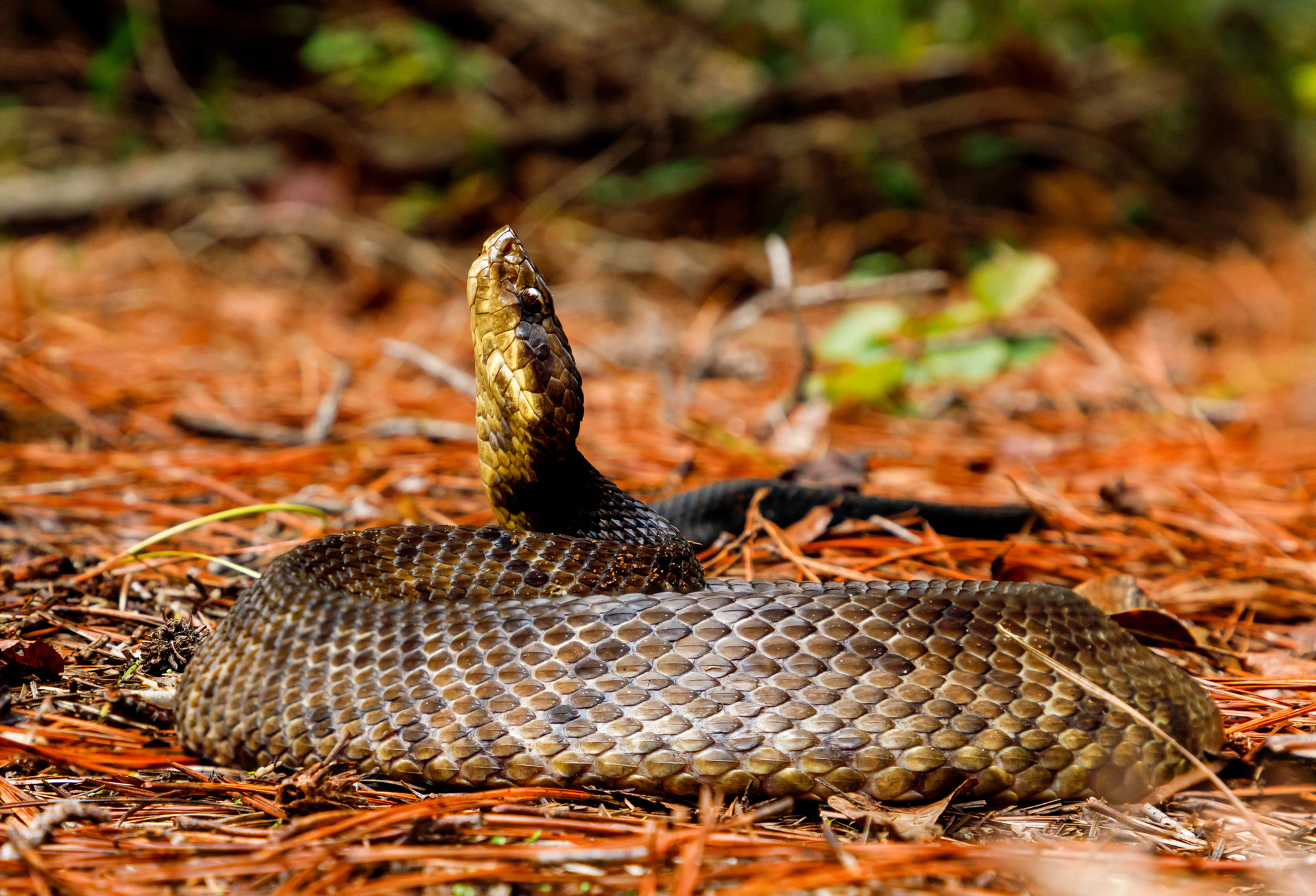
Photo Meghan Cassidy (opens in a new tab) / iNaturalist, CC BY-SA 4.0 (opens in a new tab)
At a glance
- Size
- Usually 60 to 120 cm long; heavy-bodied
- Habitat
- Swamps, marshes, slow streams, ponds and lake edges
- Diet
- Fish, frogs, snakes, small turtles, birds and carrion
- In Georgia
- Statewide except the higher mountains; Florida cottonmouths replace it in the far south
- Venomous
- Yes
- Rabies vector
- No
Identification
- Key marks
- Thick, dark body, often almost plain in adults; broad head with a dark band through the eye; young banded with a yellow tail tip; opens a white-lined mouth when threatened
- Told apart from
- Watersnakes, which are slimmer, have round pupils and flee rather than stand their ground
- Where to look
- Basking on banks, logs and roots at the water's edge
Behaviour
When threatened, a cottonmouth often coils, vibrates its tail and opens its mouth to show the white lining. This is a warning, not an attack. Cottonmouths swim with the whole body riding high on the surface, where watersnakes swim with only the head up.
Why they matter
Cottonmouths eat fish, frogs and carrion, including dead fish around ponds, and they are food for kingsnakes, herons and alligators. Many harmless watersnakes are killed in the belief that they are cottonmouths.
Reproduction and lifecycle
Young — Born live, usually 5 to 10, in late summer
Size at birth — About 20 to 30 cm
Venom — Present from birth
Maturity — At two to three years
Breeding — Females usually give birth every second or third year
Lifespan — Over 10 years
Living around people
- A cottonmouth that gapes is warning you; step back and it will usually leave.
- If someone is bitten, call 911 and get to a hospital. Keep them calm and still; do not cut, suck, ice or tie off the bite.
- Most snakes in Georgia water are harmless watersnakes; leaving all of them alone is the safe choice either way.
Misconceptions
- Cottonmouths chase people. They stand their ground or move away; a snake heading toward you is usually heading for the water behind you.
- Every snake swimming is a cottonmouth. Most are harmless watersnakes.
Related species
Seasonal activity
When this species is breeding, and when there are nests on the ground. Mowing during the shaded months is how most nests are found.
| Jan | Feb | Mar | Apr | May | Jun | Jul | Aug | Sep | Oct | Nov | Dec | |
|---|---|---|---|---|---|---|---|---|---|---|---|---|
| Breeding | Jan: no | Feb: no | Mar: no | Apr: no | May: no | Jun: no | Jul: no | Aug: no | Sep: no | Oct: no | Nov: no | Dec: no |
| Active nests | Jan: no | Feb: no | Mar: no | Apr: no | May: no | Jun: no | Jul: no | Aug: no | Sep: no | Oct: no | Nov: no | Dec: no |
| Notes | Sheltering | Basking on warm days | Active | Active; courtship | Active | Active, often at night | Active | Young born | Young and adults active | Active | Moving to winter shelter | Sheltering |
Where it lives
Recorded in 15 states and provinces. Each one links to the other animals there, and to the rehabilitators licensed for them.
If you found one
Answer a few questions and you will get a specific answer for what you are looking at.
I found an animal