
Species
Florida cottonmouth
Agkistrodon conanti
The cottonmouth of Georgia's far south, recognised as its own species in 2015.
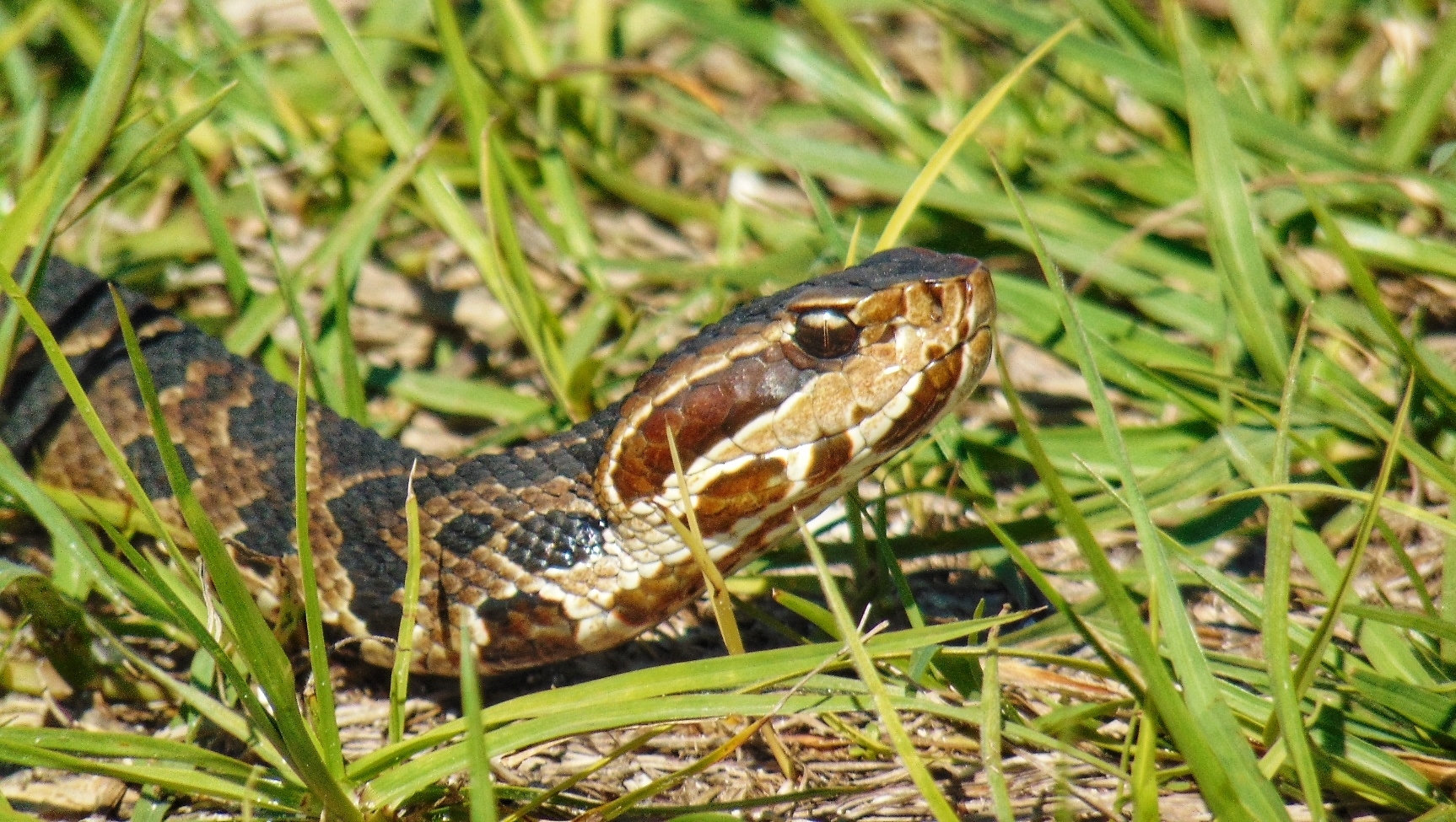
Photo JD Flores (opens in a new tab) / iNaturalist, CC BY 4.0 (opens in a new tab)
At a glance
- Size
- Usually 60 to 120 cm long; heavy-bodied
- Habitat
- Swamps, marshes, ditches and the edges of ponds and lakes
- Diet
- Fish, frogs, snakes, birds and carrion
- In Georgia
- South Georgia, near the Florida line
- Venomous
- Yes
- Rabies vector
- No
Identification
- Key marks
- Heavy, dark body; bold dark and light stripes on the face; white-lined mouth shown in threat
- Told apart from
- Northern cottonmouth, which has plainer facial markings and lives farther north
- Told apart from
- Watersnakes, which are slimmer, have round pupils and swim with only the head raised
- Where to look
- At the edges of wetlands and ditches
Behaviour
Like its northern relative it warns with a gaping, white-lined mouth and a vibrating tail, and prefers to be left alone. It hunts by night in hot weather and forages for dead fish around drying pools.
Why they matter
It is one of the main predators of fish, frogs and small animals in southern wetlands, and prey for kingsnakes, indigo snakes and alligators.
Reproduction and lifecycle
Young — Born live, usually 5 to 12
Size at birth — About 20 to 30 cm
Venom — Present from birth
Maturity — At two to three years
Breeding — Every second or third year
Lifespan — Over 10 years
Living around people
- Step back from a gaping snake and it will leave.
- If someone is bitten, call 911 and get to a hospital; do not cut, suck, ice or tie off the bite.
Misconceptions
- Cottonmouths are aggressive. They warn first and would rather retreat.
Related species
Seasonal activity
When this species is breeding, and when there are nests on the ground. Mowing during the shaded months is how most nests are found.
| Jan | Feb | Mar | Apr | May | Jun | Jul | Aug | Sep | Oct | Nov | Dec | |
|---|---|---|---|---|---|---|---|---|---|---|---|---|
| Breeding | Jan: no | Feb: no | Mar: no | Apr: no | May: no | Jun: no | Jul: no | Aug: no | Sep: no | Oct: no | Nov: no | Dec: no |
| Active nests | Jan: no | Feb: no | Mar: no | Apr: no | May: no | Jun: no | Jul: no | Aug: no | Sep: no | Oct: no | Nov: no | Dec: no |
| Notes | Sheltering; basking on warm days | Basking on warm days | Active | Active | Active | Active, often at night | Active | Young born | Young active | Active | Active on warm days | Sheltering |
Where it lives
Recorded in 3 states and provinces. Each one links to the other animals there, and to the rehabilitators licensed for them.
If you found one
Answer a few questions and you will get a specific answer for what you are looking at.
I found an animal