
Species
Banded watersnake
Nerodia fasciata
A boldly banded, harmless watersnake of south Georgia's ponds, marshes and ditches.
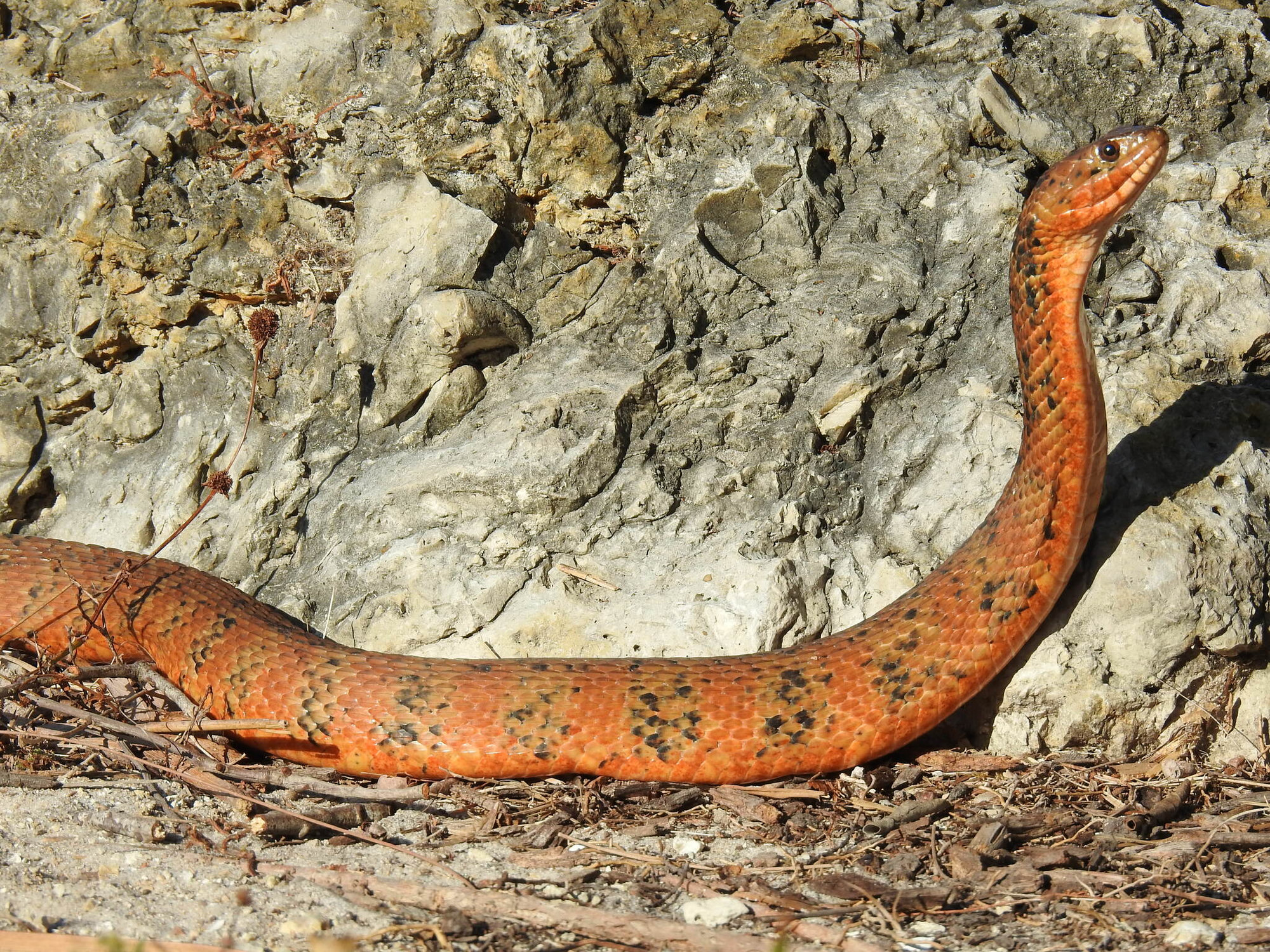
Photo Andrew Durso (opens in a new tab) / iNaturalist, CC BY 4.0 (opens in a new tab)
At a glance
- Size
- Usually 60 to 110 cm long
- Habitat
- Ponds, lakes, marshes, swamps, ditches and brackish marsh
- Diet
- Fish and frogs
- In Georgia
- The Coastal Plain and lower Piedmont
- Venomous
- No
- Rabies vector
- No
Identification
- Key marks
- Dark crossbands along the whole body on a lighter ground, often with red or orange between; dark stripe from eye to jaw; round pupils
- Told apart from
- Cottonmouths, which have vertical pupils, a broad head and swim high on the surface
- Where to look
- Basking at water's edges; hunting in shallows at night
Behaviour
Banded watersnakes hunt fish and frogs at night in warm weather, often in shallow water. Like other watersnakes they flatten, bite and musk when grabbed.
Why they matter
They are among the most common snakes of southern wetlands, where they feed on fish and frogs and are eaten by herons, alligators and kingsnakes.
Reproduction and lifecycle
Young — Born live, often 10 to 40
Size at birth — About 20 cm
Maturity — In two to three years
Breeding — Every year
Lifespan — About 10 years
Diet shift — Young eat small fish
Living around people
- It is harmless unless handled; give it room and it will leave.
Misconceptions
- Banded snakes in water are cottonmouths. Most are banded watersnakes.
Related species
Seasonal activity
When this species is breeding, and when there are nests on the ground. Mowing during the shaded months is how most nests are found.
| Jan | Feb | Mar | Apr | May | Jun | Jul | Aug | Sep | Oct | Nov | Dec | |
|---|---|---|---|---|---|---|---|---|---|---|---|---|
| Breeding | Jan: no | Feb: no | Mar: no | Apr: no | May: no | Jun: no | Jul: no | Aug: no | Sep: no | Oct: no | Nov: no | Dec: no |
| Active nests | Jan: no | Feb: no | Mar: no | Apr: no | May: no | Jun: no | Jul: no | Aug: no | Sep: no | Oct: no | Nov: no | Dec: no |
| Notes | Sheltering; out on warm days | Out on warm days | Active | Mating | Active | Active | Young born | Young born | Active | Active | Out on warm days | Sheltering |
Where it lives
Recorded in 12 states and provinces. Each one links to the other animals there, and to the rehabilitators licensed for them.
If you found one
Answer a few questions and you will get a specific answer for what you are looking at.
I found an animal