
Species
Brown watersnake
Nerodia taxispilota
A big, heavy watersnake of Georgia's rivers that basks on branches high over the water.
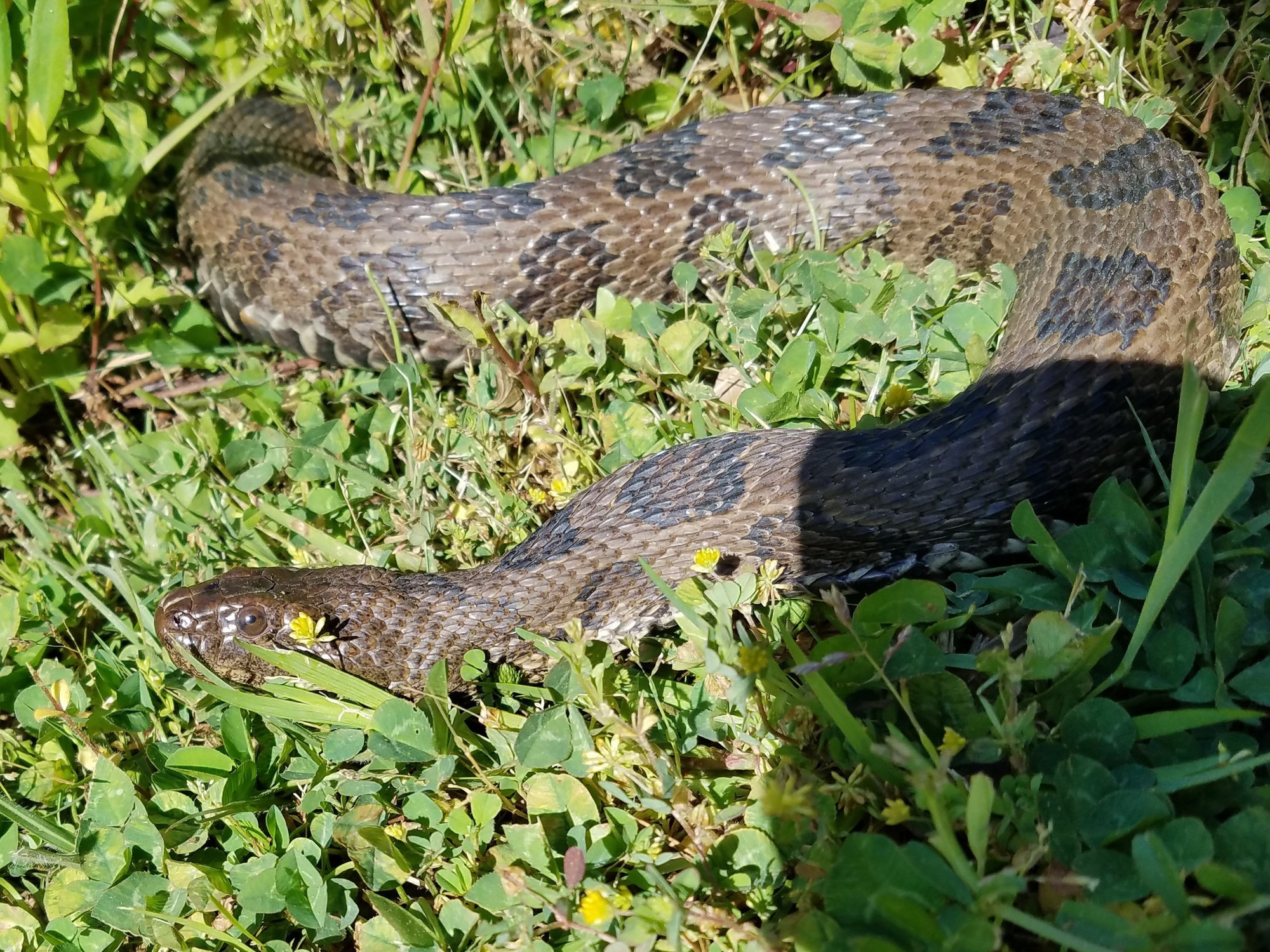
Photo Leila Dasher (opens in a new tab) / iNaturalist, CC BY 4.0 (opens in a new tab)
At a glance
- Size
- Usually 75 to 150 cm long; heavy-bodied
- Habitat
- Rivers, large streams, swamps and cypress-lined lakes
- Diet
- Mostly catfish and other fish
- In Georgia
- The Coastal Plain and lower Piedmont
- Venomous
- No
- Rabies vector
- No
Identification
- Key marks
- Brown with squarish dark blotches down the back and alternating ones on the sides
- Told apart from
- Cottonmouths, which have vertical pupils, a dark eye stripe and a broad head
- Where to look
- Basking on branches overhanging rivers
Behaviour
Brown watersnakes climb high into trees over water to bask and drop into the river when disturbed. They feed largely on catfish, swallowing them head-first to fold the spines down.
Why they matter
They are big predators of river fish and prey for alligators and herons, and are often killed in mistake for cottonmouths.
Reproduction and lifecycle
Young — Born live, often 15 to 40
Size at birth — About 20 to 30 cm
Maturity — In a few years
Breeding — Every year
Lifespan — About 10 years
Diet shift — Young eat small fish
Living around people
- A snake dropping from a branch into the river is avoiding you.
Misconceptions
- Snakes drop into boats to attack. A falling snake has lost its grip or is fleeing into the water.
Related species
Seasonal activity
When this species is breeding, and when there are nests on the ground. Mowing during the shaded months is how most nests are found.
| Jan | Feb | Mar | Apr | May | Jun | Jul | Aug | Sep | Oct | Nov | Dec | |
|---|---|---|---|---|---|---|---|---|---|---|---|---|
| Breeding | Jan: no | Feb: no | Mar: no | Apr: no | May: no | Jun: no | Jul: no | Aug: no | Sep: no | Oct: no | Nov: no | Dec: no |
| Active nests | Jan: no | Feb: no | Mar: no | Apr: no | May: no | Jun: no | Jul: no | Aug: no | Sep: no | Oct: no | Nov: no | Dec: no |
| Notes | Sheltering | Basking on warm days | Active | Mating | Active | Active | Active | Young born | Young born | Active | Basking on warm days | Sheltering |
Where it lives
Recorded in 6 states and provinces. Each one links to the other animals there, and to the rehabilitators licensed for them.
If you found one
Answer a few questions and you will get a specific answer for what you are looking at.
I found an animal