
Species
Northern bobwhite
Colinus virginianus
The small, round quail whose clear 'bob-WHITE' whistle was once the sound of every Georgia farm.
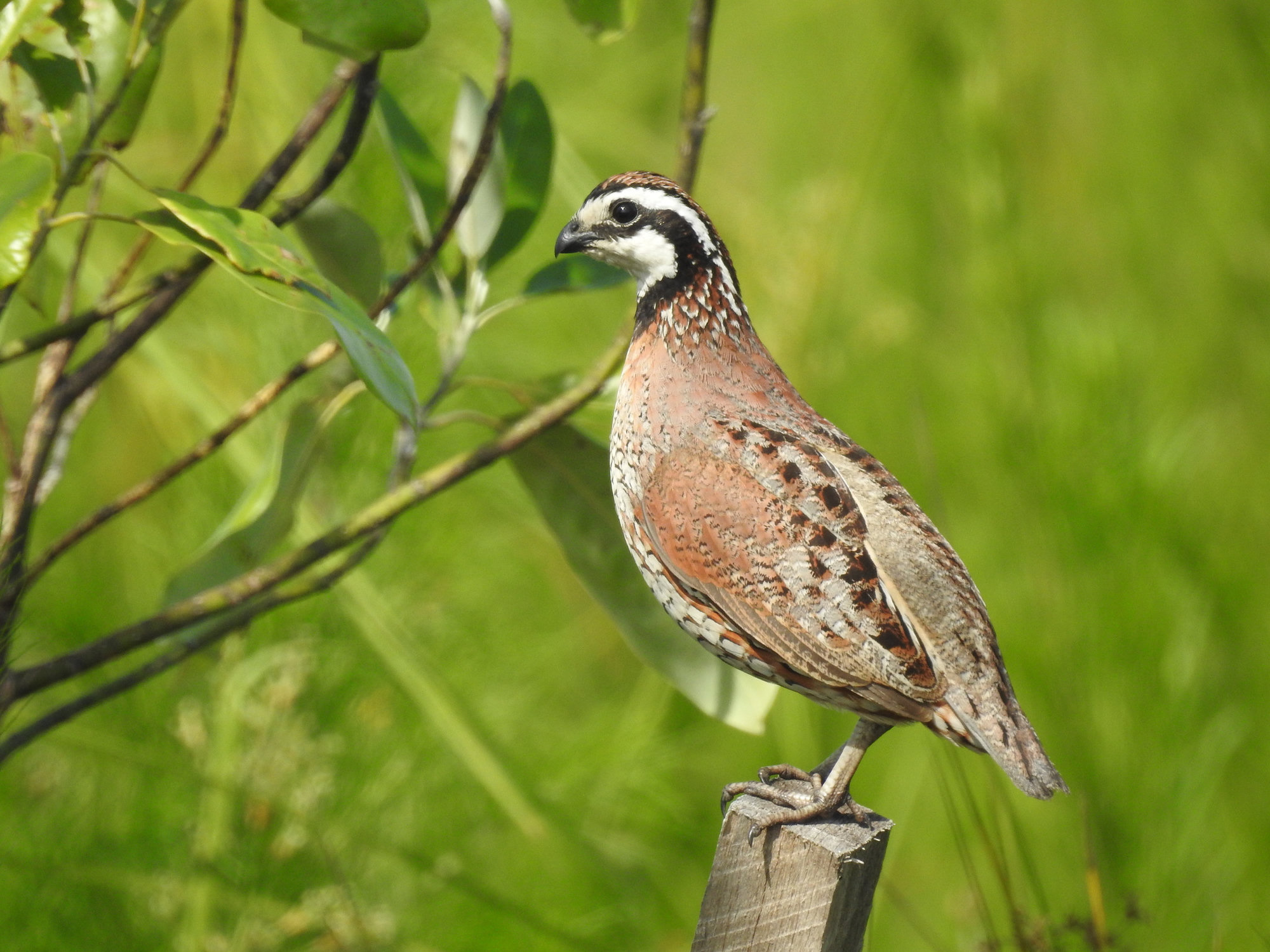
Photo Laura Mae (opens in a new tab) / iNaturalist, CC BY 4.0 (opens in a new tab)
At a glance
- Size
- About 24 to 28 cm long
- Weight
- About 170 to 255 g
- Habitat
- Open pine woods, old fields, field edges and grassy clearings
- Diet
- Seeds, grain and insects; chicks eat mostly insects
- In Georgia
- Resident statewide but much reduced from former numbers
- Voice
- A rising, whistled "bob-WHITE"; coveys call with a "koi-lee" in the evening
- Rabies vector
- No
Identification
- Key marks
- Small, round brown body; short tail; males with a white throat and eyebrow, females buff
- Told apart from
- Mourning dove, which is slimmer with a long pointed tail
- Told apart from
- Ruffed grouse, which is larger and lives in mountain woods
- Where to look
- Burned pine woods and field edges; usually heard rather than seen
Behaviour
Bobwhites live in groups called coveys through the autumn and winter. At night the covey roosts on the ground in a tight ring, tails in and heads out, so the birds share warmth and can burst away in every direction if disturbed.
In spring pairs split off, and males whistle their name from fence posts.
Why they matter
The northern bobwhite is a bird of open, frequently burned pine woods and weedy fields, and its decline — by around 80 per cent across much of its range since the 1960s — tracks the loss of those places. Where land is managed with prescribed fire and native grasses, bobwhites come back, and so do the insects, songbirds and plants that share their habitat.
Reproduction and lifecycle
Nest — A shallow scrape roofed over with grass on the ground
Eggs — Usually 12 to 16
Incubation — About 23 days, by either parent
Chicks — Leave the nest within hours, feed themselves and can fly short distances at two weeks
Lifespan — Most live less than a year; a few survive several
Living around people
- Mowing field edges in late spring and summer destroys nests; leaving edges until autumn helps.
- Brushy edges and native grasses give coveys cover from hawks.
- Free-roaming cats take many ground-nesting birds and chicks.
Misconceptions
- A quail chick alone is abandoned. Chicks scatter and hide when danger comes and call to regroup; the parents are close by.
- Bobwhites have declined because of predators. The loss of open, burned pine woods and weedy fields is the main cause.
Related species
Seasonal activity
When this species is breeding, and when there are nests on the ground. Mowing during the shaded months is how most nests are found.
| Jan | Feb | Mar | Apr | May | Jun | Jul | Aug | Sep | Oct | Nov | Dec | |
|---|---|---|---|---|---|---|---|---|---|---|---|---|
| Breeding | Jan: no | Feb: no | Mar: no | Apr: no | May: no | Jun: no | Jul: no | Aug: no | Sep: no | Oct: no | Nov: no | Dec: no |
| Active nests | Jan: no | Feb: no | Mar: no | Apr: no | May: no | Jun: no | Jul: no | Aug: no | Sep: no | Oct: no | Nov: no | Dec: no |
| Notes | Coveys roosting together | Coveys | Coveys breaking up | Pairs forming; males whistling | Nesting | Nesting; first broods | Broods; second nests | Late broods | Families join into coveys | Coveys feeding on seeds | Coveys | Coveys |
Where it lives
Recorded in 49 states and provinces. Each one links to the other animals there, and to the rehabilitators licensed for them.
United States
- Alabamabreeding
- Arkansasbreeding
- Coloradobreeding
- Connecticutbreeding
- Delawarebreeding
- Floridabreeding
- Georgiabreeding
- Illinoisbreeding
- Indianabreeding
- Iowabreeding
- Kansasbreeding
- Kentuckybreeding
- Louisianabreeding
- Marylandbreeding
- Massachusettsbreeding
- Michiganbreeding
- Mississippibreeding
- Missouribreeding
- Nebraskabreeding
- New Jerseybreeding
- New Mexico
- New Yorkbreeding
- North Carolinabreeding
- Ohiobreeding
- Oklahomabreeding
- Pennsylvaniabreeding
- South Carolinabreeding
- South Dakotabreeding
- Tennesseebreeding
- Texas
- Virginiabreeding
- West Virginiabreeding
- Wisconsin
If you found one
Answer a few questions and you will get a specific answer for what you are looking at.
I found an animal