
Species
Ruffed grouse
Bonasa umbellus
A mottled woodland grouse of the north Georgia mountains, whose spring 'drumming' sounds like a distant engine starting.
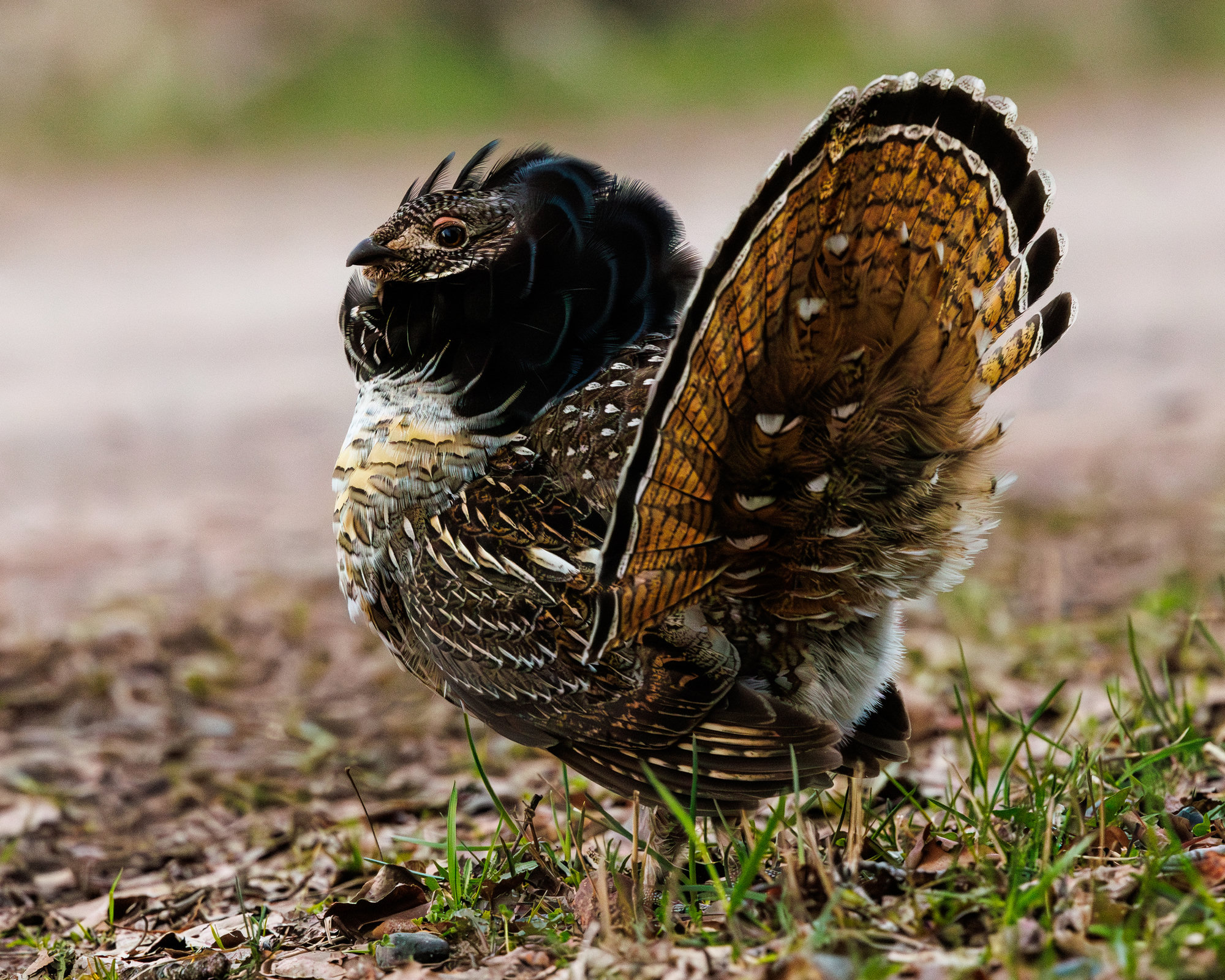
Photo Meghan Cassidy (opens in a new tab) / iNaturalist, CC BY-SA 4.0 (opens in a new tab)
At a glance
- Size
- About 40 to 50 cm long
- Weight
- About 450 to 750 g
- Habitat
- Young, dense forest and forest clearings in the mountains
- Diet
- Buds, leaves, fruit, seeds and insects
- In Georgia
- A scarce resident of the Blue Ridge mountains
- Voice
- Males "drum" by beating their wings, a thumping that speeds into a whir
- Rabies vector
- No
Identification
- Key marks
- Chicken-shaped; mottled grey or reddish-brown; a small crest; a broad fan-shaped tail with a dark band near the tip; black ruffs on the neck
- Told apart from
- Northern bobwhite, which is much smaller and lives in open country
- Told apart from
- Wild turkey, which is far larger
- Where to look
- Mountain forests with thick young growth; most often flushed from the ground
Behaviour
Ruffed grouse spend most of their time on the ground, walking through the forest, and burst into flight with a roar of wings when surprised. In spring, males stand on a log and beat their wings so fast the air thumps, a sound that can carry a long way.
In deep snow in the north, grouse dive into drifts to spend the night insulated from the cold.
Why they matter
Ruffed grouse need the dense young forest that grows back after storms, fire or logging, and their decline in the southern Appalachians follows the maturing and uniform ageing of those forests. Georgia is at the far southern edge of their range, and they are a sign of the varied, patchy mountain forests many other species need.
Reproduction and lifecycle
Nest — A shallow bowl in leaves at the base of a tree or log
Eggs — Usually 9 to 12
Incubation — About 23 to 24 days
Chicks — Leave the nest within a day; can fly short distances at about two weeks
Lifespan — Usually a few years
Living around people
- Grouse fly into windows and fences when flushed; low branches and cover near buildings reduce this.
- Leaving patches of young growth in mountain woodland helps them.
Misconceptions
- The drumming is made by beating on a log. The sound comes from the wings beating the air, not from the log.
Related species
Seasonal activity
When this species is breeding, and when there are nests on the ground. Mowing during the shaded months is how most nests are found.
| Jan | Feb | Mar | Apr | May | Jun | Jul | Aug | Sep | Oct | Nov | Dec | |
|---|---|---|---|---|---|---|---|---|---|---|---|---|
| Breeding | Jan: no | Feb: no | Mar: no | Apr: no | May: no | Jun: no | Jul: no | Aug: no | Sep: no | Oct: no | Nov: no | Dec: no |
| Active nests | Jan: no | Feb: no | Mar: no | Apr: no | May: no | Jun: no | Jul: no | Aug: no | Sep: no | Oct: no | Nov: no | Dec: no |
| Notes | Solitary; feeding on buds | Feeding on buds | Males begin drumming | Drumming at its peak; nesting | Incubating | Chicks hatch | Hens with broods | Broods | Young dispersing | Some autumn drumming | Solitary | Solitary |
Where it lives
Recorded in 35 states and provinces. Each one links to the other animals there, and to the rehabilitators licensed for them.
United States
If you found one
Answer a few questions and you will get a specific answer for what you are looking at.
I found an animal