
Species
Loggerhead sea turtle
Caretta caretta
The sea turtle that nests on Georgia's beaches every summer, returning to the coast where it hatched.
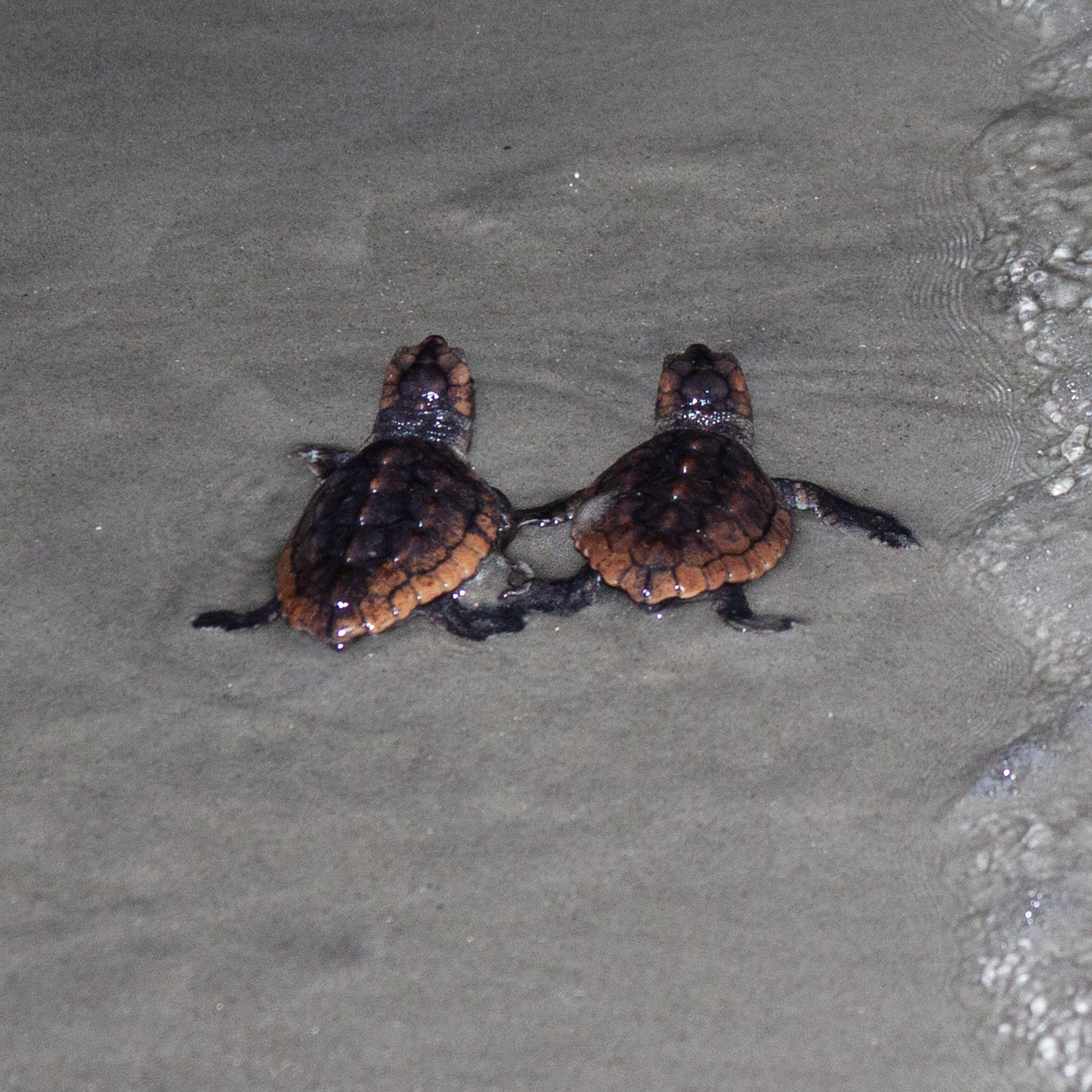
Photo Dan Vickers (opens in a new tab) / iNaturalist, CC BY 4.0 (opens in a new tab)
At a glance
- Size
- Shell usually 80 to 110 cm long
- Weight
- Usually 70 to 170 kg
- Habitat
- Warm coastal and ocean waters; nests on sandy beaches
- Diet
- Crabs, whelks and other shellfish, horseshoe crabs and jellyfish
- In Georgia
- Nests on the barrier-island beaches from May to August; young turtles feed in coastal waters
- Rabies vector
- No
Identification
- Key marks
- Reddish-brown shell; very large head with powerful jaws; flippers with two claws
- Told apart from
- Green sea turtle, which has a smaller, rounded head and a smoother, olive shell
- Told apart from
- Kemp's ridley, which is smaller, grey and nearly round
- Where to look
- Tracks on the beach at dawn in summer; heads at the surface offshore
Behaviour
Female loggerheads return to nest on the stretch of coast where they hatched, often decades earlier. They come ashore at night, dig a nest above the tide line, lay and return to the sea within an hour or two. Hatchlings emerge at night and head for the brightest horizon, which on a natural beach is the sea.
Why they matter
Loggerheads crush whelks and crabs and keep those populations in check, and their eggs bring ocean nutrients up onto the dunes, feeding the plants that hold beaches together. Georgia's beaches are an important part of their nesting range in the western Atlantic.
Reproduction and lifecycle
Nest — Dug in the beach above high tide by the female's hind flippers
Eggs — About 100 to 120 per nest, several nests a season
Incubation — About 55 to 60 days; sand temperature decides each hatchling's sex
Hatchlings — About 4.5 cm long; they swim offshore for years before returning to coastal waters
Maturity — At roughly 25 to 35 years
Lifespan — Many decades
Living around people
- On nesting beaches, turn off or shield lights facing the sea at night. Hatchlings follow artificial light inland and die.
- Fill in holes and remove beach furniture at night; both trap nesting females and hatchlings.
- Never touch a nesting turtle or a hatchling. Let hatchlings make their own way to the sea.
- A sea turtle stranded, injured or tangled on the beach needs a licensed wildlife rehabilitator at once; sea turtles are treated by specialist hospitals, which a rehabilitator can reach.
- Sea turtles are protected under federal law in the United States.
Misconceptions
- Hatchlings need to be carried to the water. The crawl across the sand is part of what prepares them to swim; carrying them can harm them.
- A sea turtle on the beach by day is resting. Only nesting females come ashore, at night. One on the beach in daylight is in trouble.
Related species
Seasonal activity
When this species is breeding, and when there are nests on the ground. Mowing during the shaded months is how most nests are found.
| Jan | Feb | Mar | Apr | May | Jun | Jul | Aug | Sep | Oct | Nov | Dec | |
|---|---|---|---|---|---|---|---|---|---|---|---|---|
| Breeding | Jan: no | Feb: no | Mar: no | Apr: no | May: no | Jun: no | Jul: no | Aug: no | Sep: no | Oct: no | Nov: no | Dec: no |
| Active nests | Jan: no | Feb: no | Mar: no | Apr: no | May: no | Jun: no | Jul: no | Aug: no | Sep: no | Oct: no | Nov: no | Dec: no |
| Notes | Offshore | Offshore | Offshore | Adults gathering off the coast | Nesting begins | Nesting | Nesting; first hatchlings | Nesting ends; hatchlings emerging | Hatchlings emerging | Last hatchlings | Offshore | Offshore |
Where it lives
Recorded in 21 states and provinces. Each one links to the other animals there, and to the rehabilitators licensed for them.
United States
- Alabamabreeding
- Connecticutpassing through
- Delawarepassing through
- Florida
- Georgiabreeding
- Louisianapassing through
- Marylandpassing through
- Massachusettspassing through
- Mississippipassing through
- New Jerseypassing through
- New Yorkpassing through
- North Carolinabreeding
- Rhode Islandpassing through
- South Carolinabreeding
- Texaspassing through
- Virginiapassing through
If you found one
Answer a few questions and you will get a specific answer for what you are looking at.
I found an animal