
Species
Green sea turtle
Chelonia mydas
A grazing sea turtle of seagrass and algae, named for the green colour of its fat.
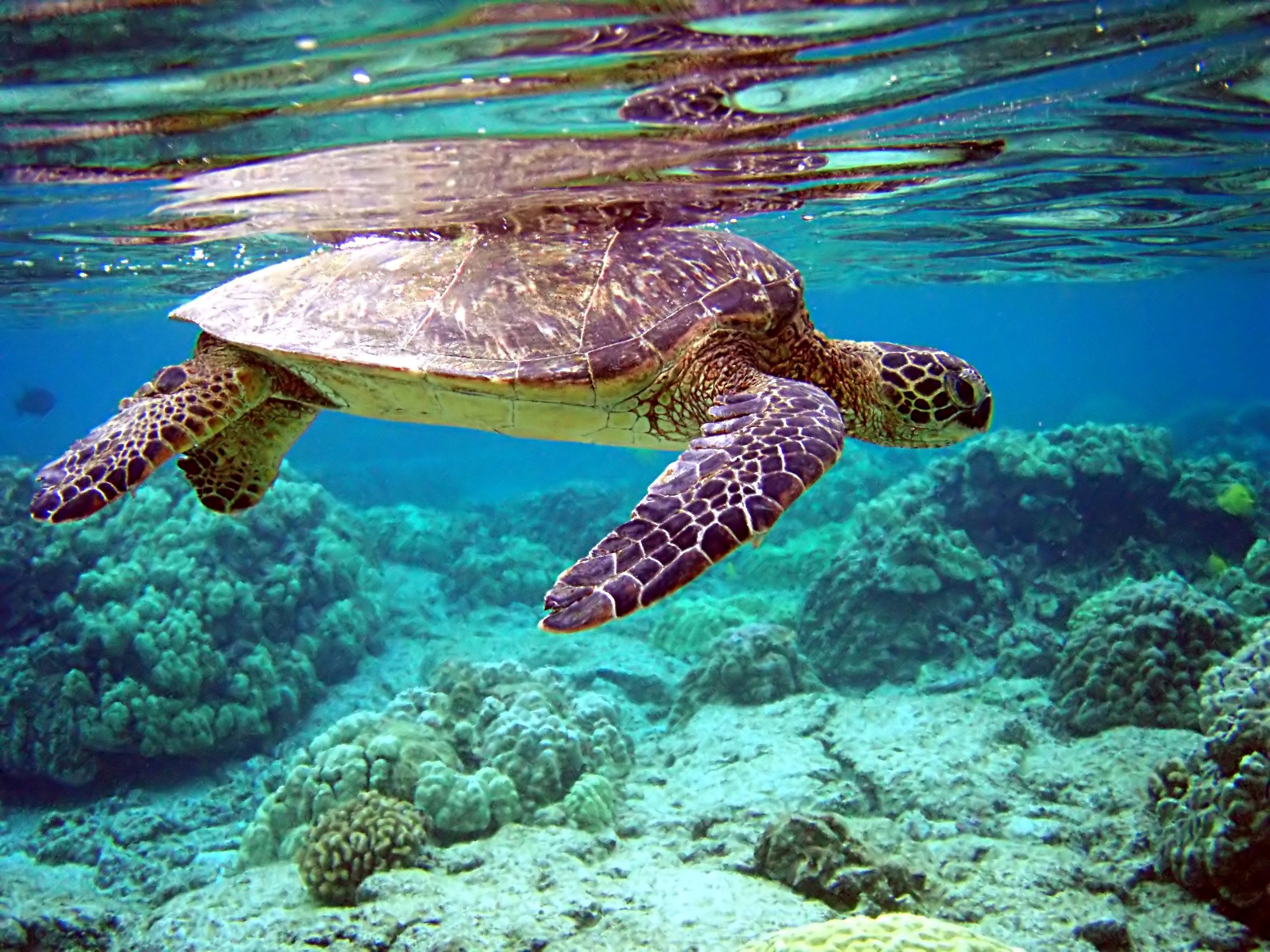
Photo Brocken Inaglory (opens in a new tab) / Wikimedia Commons, CC BY-SA 4.0 (opens in a new tab)
At a glance
- Size
- Shell usually 80 to 120 cm long
- Weight
- Adults usually 110 to 190 kg
- Habitat
- Warm coastal waters, seagrass beds and reefs; nests on sandy beaches
- Diet
- Adults eat seagrass and algae; young eat jellyfish and small animals
- In Georgia
- Young green turtles feed in coastal waters; a few nest on Georgia beaches in some years
- Rabies vector
- No
Identification
- Key marks
- Smooth olive to brown shell; small, rounded head with a single pair of scales between the eyes
- Told apart from
- Loggerhead, which has a much larger head and reddish shell
- Where to look
- Heads surfacing near jetties and inlets; nest tracks on beaches in summer
Behaviour
Adult green turtles are the only sea turtles that live mainly on plants. They graze seagrass meadows, which keeps them healthy and productive. Like other sea turtles, females return to nest in the region where they hatched.
Why they matter
Grazing by green turtles keeps seagrass beds short and growing, much as grazing animals keep a pasture. Seagrass beds are nurseries for fish and shellfish.
Reproduction and lifecycle
Nest — Dug in the beach above high tide
Eggs — About 100 to 140 per nest, several nests a season
Incubation — About 50 to 70 days
Hatchlings — Head straight out to sea at night
Maturity — At roughly 25 to 40 years
Lifespan — Many decades
Living around people
- On beaches, keep lights off or shielded at night in summer and fill in holes.
- Never touch a nesting turtle or a hatchling.
- A stranded, injured or cold-stunned sea turtle needs a licensed wildlife rehabilitator at once; specialist sea turtle hospitals treat them.
- Sea turtles are protected under federal law in the United States.
Misconceptions
- Green sea turtles are green. Their shells are olive or brown; the name comes from the colour of their fat.
Related species
Seasonal activity
When this species is breeding, and when there are nests on the ground. Mowing during the shaded months is how most nests are found.
| Jan | Feb | Mar | Apr | May | Jun | Jul | Aug | Sep | Oct | Nov | Dec | |
|---|---|---|---|---|---|---|---|---|---|---|---|---|
| Breeding | Jan: no | Feb: no | Mar: no | Apr: no | May: no | Jun: no | Jul: no | Aug: no | Sep: no | Oct: no | Nov: no | Dec: no |
| Active nests | Jan: no | Feb: no | Mar: no | Apr: no | May: no | Jun: no | Jul: no | Aug: no | Sep: no | Oct: no | Nov: no | Dec: no |
| Notes | Offshore or in warmer waters | Offshore | Offshore | Moving north along the coast | Feeding in coastal waters | Nesting season | Nesting | Nesting ends | Hatchlings emerge | Moving south as water cools | Leaving coastal waters | Offshore |
Where it lives
Recorded in 23 states and provinces. Each one links to the other animals there, and to the rehabilitators licensed for them.
United States
If you found one
Answer a few questions and you will get a specific answer for what you are looking at.
I found an animal