
Species
Kemp's ridley sea turtle
Lepidochelys kempii
The smallest and most endangered sea turtle, whose young feed in Georgia's sounds and inshore waters.
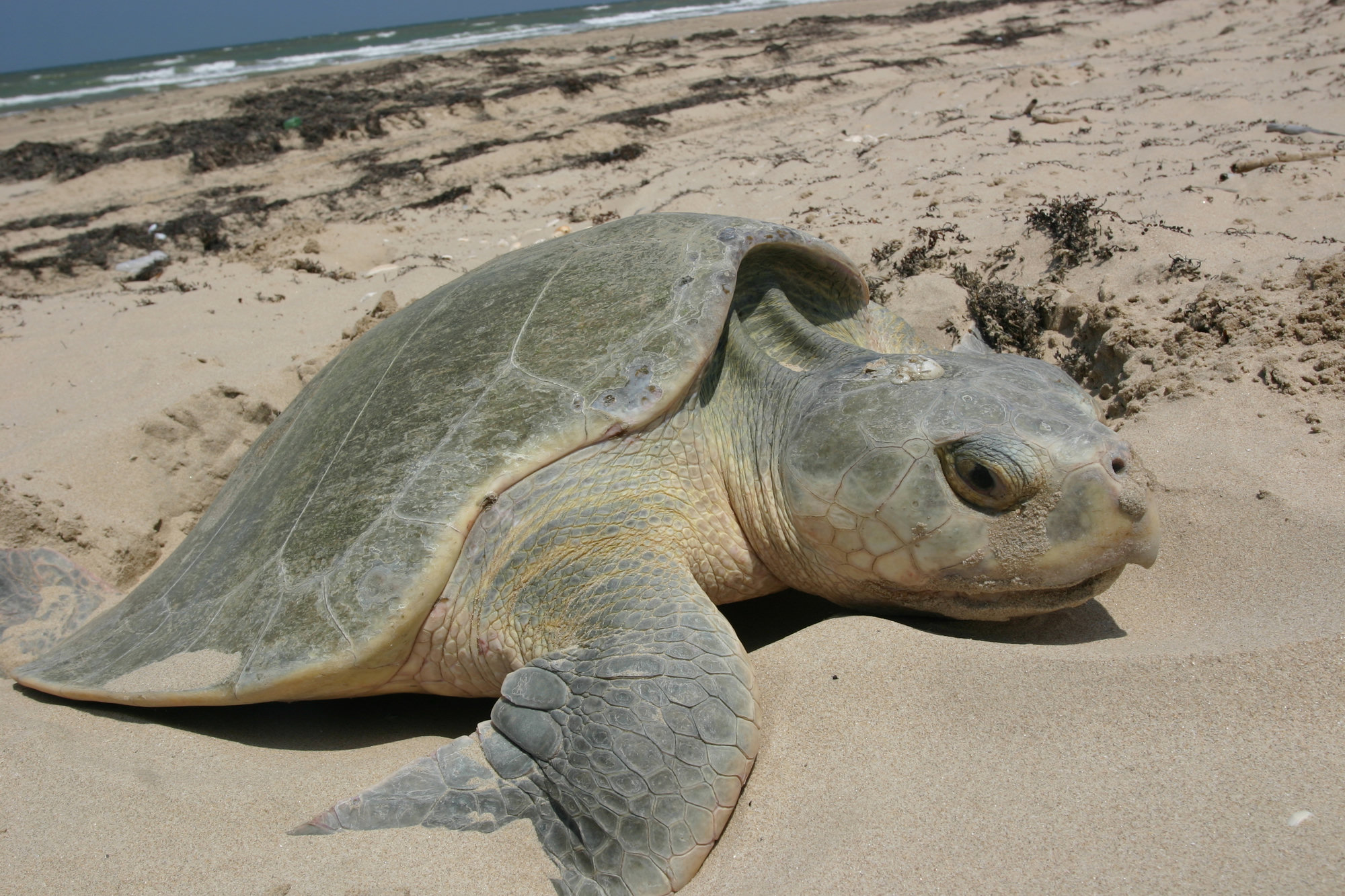
Photo National Park Service (opens in a new tab) / Wikimedia Commons, Public domain (opens in a new tab)
At a glance
- Size
- Shell usually 60 to 70 cm long, almost round
- Weight
- Usually 35 to 45 kg
- Habitat
- Shallow coastal waters, bays and sounds with muddy or sandy bottoms
- Diet
- Crabs, especially blue crabs, and other shellfish
- In Georgia
- Young turtles feed in sounds and inshore waters, especially from spring to autumn
- Rabies vector
- No
Identification
- Key marks
- Grey-green, nearly round shell; triangular head
- Told apart from
- Loggerhead, which is larger, reddish-brown and has a longer shell
- Where to look
- Rarely seen; sometimes near piers and inlets
Behaviour
Kemp's ridleys nest mainly on beaches in northeastern Mexico and south Texas, where females come ashore together in daytime groups called arribadas. The young spread along the Gulf and Atlantic coasts to feed on crabs in shallow water.
Why they matter
Their numbers fell to a few hundred nesting females in the 1980s, and years of work on nesting beaches and fishing gear have brought them back part of the way. They are a measure of how coastal fisheries and conservation can live together.
Reproduction and lifecycle
Nest — On beaches in Mexico and Texas, often in daytime groups
Eggs — About 100 per nest
Incubation — About 45 to 58 days
Hatchlings — Grey-black, heading out to sea
Maturity — At about 10 to 15 years
Lifespan — Several decades
Living around people
- Anglers on piers sometimes hook ridleys. Cut the line close to the mouth and call a licensed wildlife rehabilitator, who can arrange treatment at a sea turtle hospital.
- Cold-stunned or stranded turtles need a licensed wildlife rehabilitator at once.
- Sea turtles are protected under federal law in the United States.
Misconceptions
- Sea turtles only nest at night. Kemp's ridleys often nest in daylight.
Related species
Seasonal activity
When this species is breeding, and when there are nests on the ground. Mowing during the shaded months is how most nests are found.
| Jan | Feb | Mar | Apr | May | Jun | Jul | Aug | Sep | Oct | Nov | Dec | |
|---|---|---|---|---|---|---|---|---|---|---|---|---|
| Breeding | Jan: no | Feb: no | Mar: no | Apr: no | May: no | Jun: no | Jul: no | Aug: no | Sep: no | Oct: no | Nov: no | Dec: no |
| Active nests | Jan: no | Feb: no | Mar: no | Apr: no | May: no | Jun: no | Jul: no | Aug: no | Sep: no | Oct: no | Nov: no | Dec: no |
| Notes | Offshore or farther south | Offshore | Moving north | Feeding in coastal waters | Feeding | Feeding | Feeding | Feeding | Feeding | Moving south as water cools | Leaving coastal waters | Offshore |
Where it lives
Recorded in 18 states and provinces. Each one links to the other animals there, and to the rehabilitators licensed for them.
United States
- Alabamapassing through
- Delawarepassing through
- Floridapassing through
- Georgiapassing through
- Louisianapassing through
- Marylandpassing through
- Massachusettspassing through
- Mississippipassing through
- New Jerseypassing through
- New Yorkpassing through
- North Carolinapassing through
- South Carolinapassing through
- Texasbreeding
- Virginiapassing through
If you found one
Answer a few questions and you will get a specific answer for what you are looking at.
I found an animal