
Species
Leatherback sea turtle
Dermochelys coriacea
The largest turtle in the world, a deep-diving jellyfish eater that passes Georgia's coast each spring and autumn.
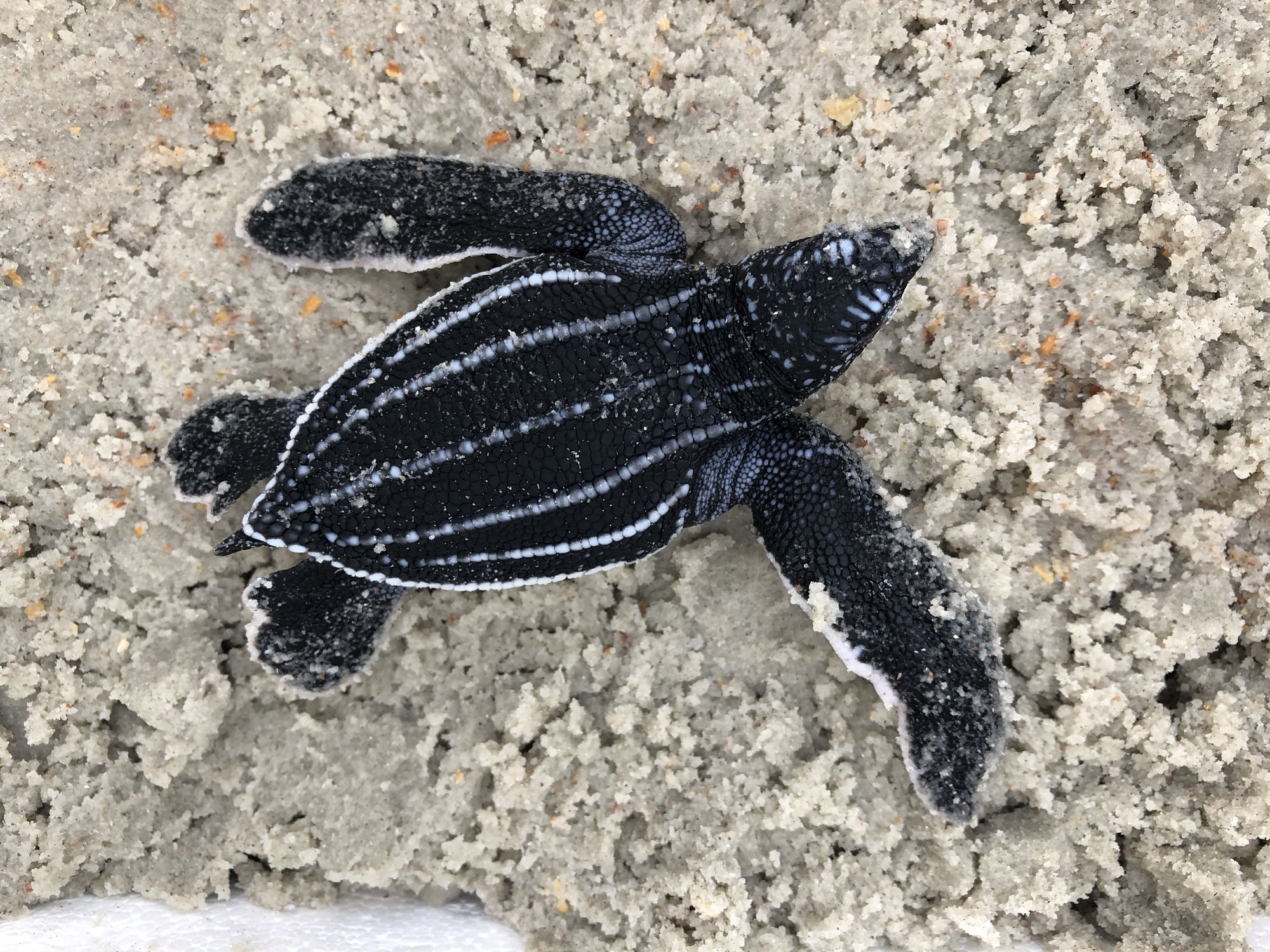
Photo Pam Kleinsasser (opens in a new tab) / iNaturalist, CC BY 4.0 (opens in a new tab)
At a glance
- Size
- Shell usually 1.5 to 1.8 m long
- Weight
- Usually 250 to 700 kg
- Habitat
- Open ocean; nests on sandy beaches
- Diet
- Jellyfish and other soft-bodied animals
- In Georgia
- Passes offshore in spring and autumn; a few nest on Georgia beaches in some years
- Rabies vector
- No
Identification
- Key marks
- Huge; no hard scutes, but a leathery, dark back with seven long ridges and pale spots
- Told apart from
- All other sea turtles, which have hard shells
- Where to look
- Rarely seen from shore; occasionally at the surface offshore
Behaviour
Leatherbacks dive deeper than a kilometre and travel thousands of kilometres between feeding grounds and nesting beaches. They keep their bodies warmer than the surrounding water, which lets them feed in cold northern seas.
Why they matter
By eating great numbers of jellyfish, leatherbacks help keep jellyfish populations in check. Plastic bags in the sea look like jellyfish to them, and swallowing plastic is one of the threats they face.
Reproduction and lifecycle
Nest — Dug in the beach at night
Eggs — About 80 fertile eggs per nest, with smaller yolkless ones on top
Incubation — About 55 to 75 days
Hatchlings — Black with white-lined flippers
Maturity — At roughly 15 to 30 years
Lifespan — Decades
Living around people
- Keep plastic out of the sea; balloons and bags are swallowed as jellyfish.
- A stranded leatherback needs a licensed wildlife rehabilitator at once.
- Sea turtles are protected under federal law in the United States.
Misconceptions
- Leatherbacks are cold like other reptiles. They keep their bodies warmer than the water around them.
Related species
Seasonal activity
When this species is breeding, and when there are nests on the ground. Mowing during the shaded months is how most nests are found.
| Jan | Feb | Mar | Apr | May | Jun | Jul | Aug | Sep | Oct | Nov | Dec | |
|---|---|---|---|---|---|---|---|---|---|---|---|---|
| Breeding | Jan: no | Feb: no | Mar: no | Apr: no | May: no | Jun: no | Jul: no | Aug: no | Sep: no | Oct: no | Nov: no | Dec: no |
| Active nests | Jan: no | Feb: no | Mar: no | Apr: no | May: no | Jun: no | Jul: no | Aug: no | Sep: no | Oct: no | Nov: no | Dec: no |
| Notes | Farther south | Farther south | Moving north | Passing Georgia's coast | Passing; a few nesting | Nesting in some years | Farther north | Farther north | Moving south | Passing Georgia's coast | Passing | Farther south |
Where it lives
Recorded in 29 states and provinces. Each one links to the other animals there, and to the rehabilitators licensed for them.
United States
- Californiapassing through
- Connecticutpassing through
- Delawarepassing through
- Floridabreeding
- Georgiapassing through
- Hawaiipassing through
- Louisianapassing through
- Mainepassing through
- Marylandpassing through
- Massachusettspassing through
- New Hampshirepassing through
- New Jerseypassing through
- New Yorkpassing through
- North Carolinapassing through
- Oregonpassing through
- Rhode Islandpassing through
- South Carolinapassing through
- Texaspassing through
- Virginiapassing through
- Washingtonpassing through
Canada
If you found one
Answer a few questions and you will get a specific answer for what you are looking at.
I found an animal