
Species
Least tern
Sternula antillarum
The smallest American tern, which dives for tiny fish and nests on Georgia's beaches and even gravel rooftops.
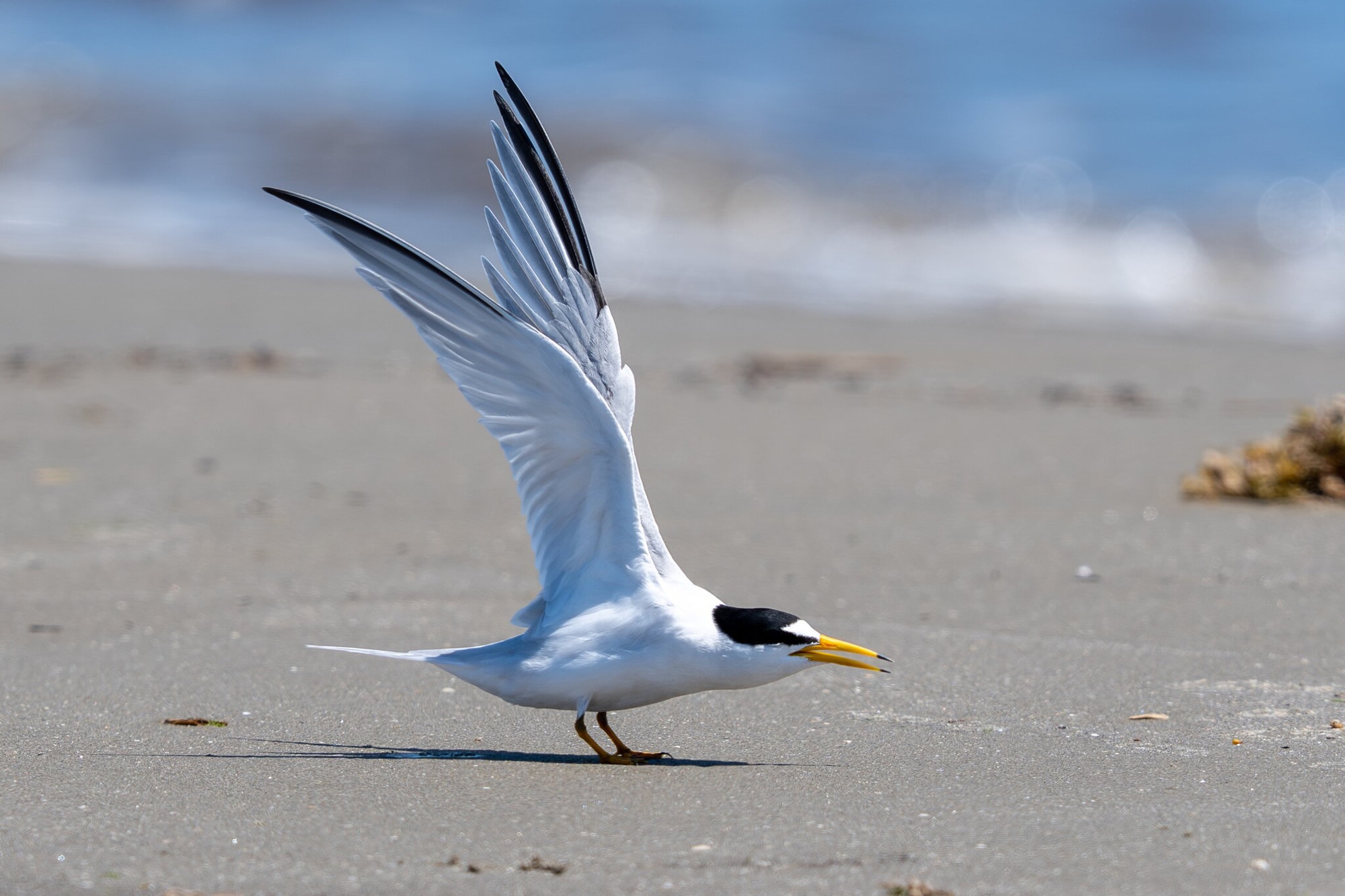
Photo Brandon Johnson (opens in a new tab) / iNaturalist, CC BY 4.0 (opens in a new tab)
At a glance
- Size
- About 21 to 24 cm long
- Weight
- About 40 to 50 g
- Habitat
- Beaches, sandbars, rivers and coastal waters
- Diet
- Small fish and crustaceans
- In Georgia
- A summer resident on the coast, April to September
- Voice
- A high, chattering "kit-kit-kit"
- Rabies vector
- No
Identification
- Key marks
- Tiny tern; yellow bill with a black tip; black cap with a white forehead; yellow legs
- Told apart from
- Forster's and common terns, which are much larger with orange-red bills
- Where to look
- Beaches and inlets in summer, hovering and plunging for fish
Behaviour
Least terns hover over water and plunge in to catch small fish. They nest in colonies on open sand and on flat gravel roofs, and dive at intruders near their nests.
Why they matter
Least terns were nearly wiped out for the hat trade in the 1800s and now face loss of undisturbed beaches. In Georgia, some colonies nest on flat gravel roofs, showing how birds adapt when beaches are crowded.
Reproduction and lifecycle
Nest — A scrape in sand or gravel
Eggs — Usually two or three
Incubation — About 21 days
Chicks — Leave the nest within a few days but are fed by their parents
Flight — At about three weeks
Lifespan — Wild birds over twenty years are recorded
Living around people
- Posted nesting areas on beaches protect eggs and chicks that are almost invisible on sand.
- Terns diving at people are defending their colony; walking away ends it.
- Least terns nesting on gravel roofs sometimes lose chicks that fall or wander off the edge; a chick found at the foot of a building needs a rehabilitator.
Misconceptions
- Birds diving at you are attacking. They are warning you away from nests and chicks.
Related species
Seasonal activity
When this species is breeding, and when there are nests on the ground. Mowing during the shaded months is how most nests are found.
| Jan | Feb | Mar | Apr | May | Jun | Jul | Aug | Sep | Oct | Nov | Dec | |
|---|---|---|---|---|---|---|---|---|---|---|---|---|
| Breeding | Jan: no | Feb: no | Mar: no | Apr: no | May: no | Jun: no | Jul: no | Aug: no | Sep: no | Oct: no | Nov: no | Dec: no |
| Active nests | Jan: no | Feb: no | Mar: no | Apr: no | May: no | Jun: no | Jul: no | Aug: no | Sep: no | Oct: no | Nov: no | Dec: no |
| Notes | In South America | In South America | In South America | Arriving | Nesting | Chicks | Young flying | Leaving | Last birds | In South America | In South America | In South America |
Where it lives
Recorded in 50 states and provinces. Each one links to the other animals there, and to the rehabilitators licensed for them.
United States
- Alabamabreeding
- Arkansasbreeding
- Californiabreeding
- Coloradobreeding
- Connecticutbreeding
- Delawarebreeding
- Floridabreeding
- Georgiabreeding
- Illinoisbreeding
- Indianabreeding
- Iowabreeding
- Kansasbreeding
- Kentuckybreeding
- Louisianabreeding
- Mainebreeding
- Marylandbreeding
- Massachusettsbreeding
- Mississippibreeding
- Missouribreeding
- Nebraskabreeding
- New Hampshirebreeding
- New Jerseybreeding
- New Mexicobreeding
- New Yorkbreeding
- North Carolinabreeding
- North Dakotabreeding
- Oklahomabreeding
- Rhode Islandbreeding
- South Carolinabreeding
- South Dakotabreeding
- Tennesseebreeding
- Texasbreeding
- Virginiabreeding
Mexico
- Baja Californiabreeding
- Baja California Surbreeding
- Campechebreeding
- Chiapaspassing through
- Colimabreeding
- Guerrerobreeding
- Jaliscobreeding
- Nayaritbreeding
- Nuevo Leonbreeding
- Oaxacabreeding
- Quintana Roobreeding
- Sinaloabreeding
- Sonorabreeding
- Tabascopassing through
- Tamaulipasbreeding
- Veracruzbreeding
- Yucatanbreeding
If you found one
Answer a few questions and you will get a specific answer for what you are looking at.
I found an animal