
Species
Forster's tern
Sterna forsteri
A pale tern with a black eye patch in winter, the tern most often seen around Georgia's marshes and docks.
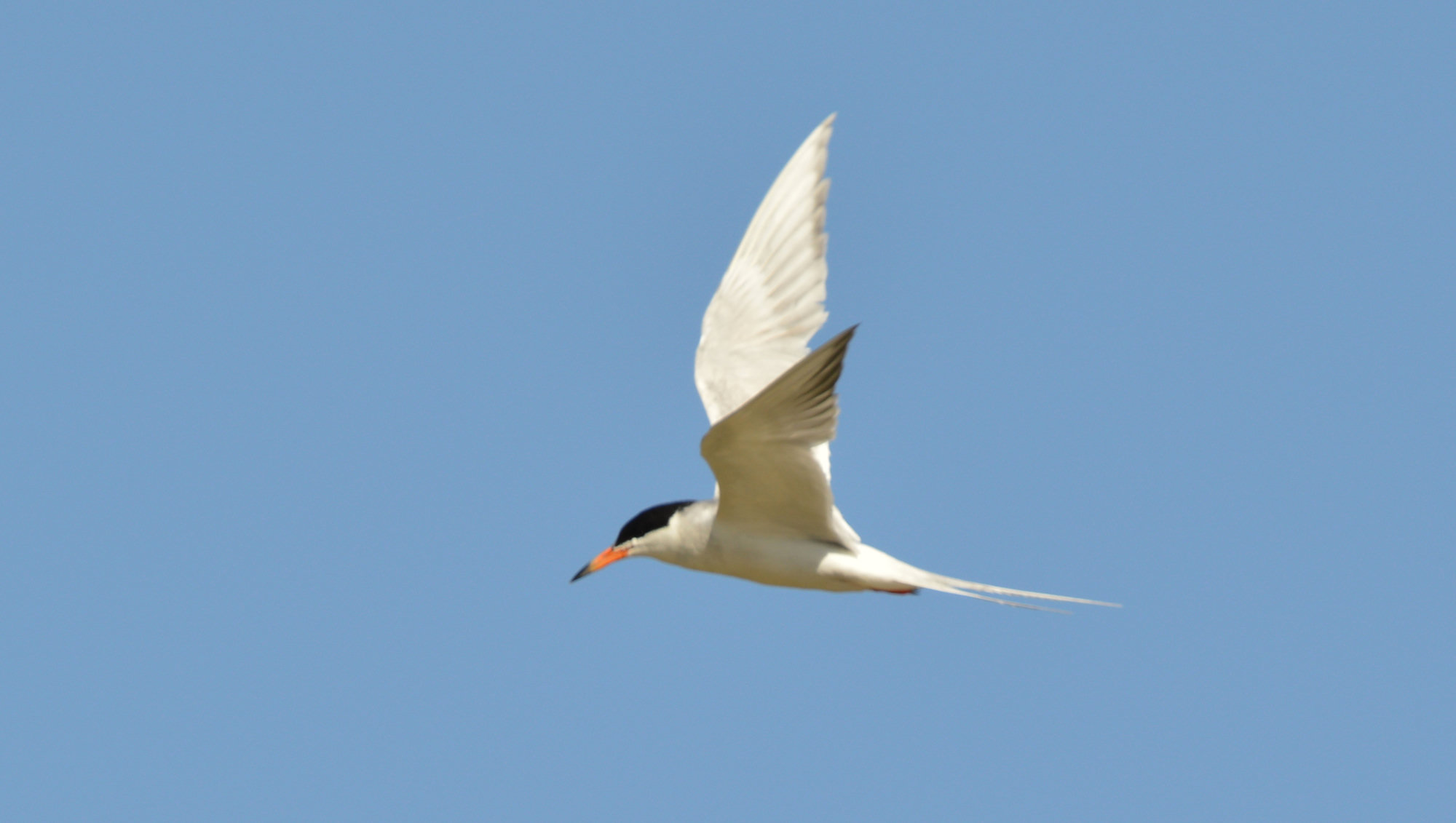
Photo Unknown photographer (opens in a new tab) / iNaturalist, CC0 1.0 (opens in a new tab)
At a glance
- Size
- About 33 to 36 cm long
- Weight
- About 130 to 190 g
- Habitat
- Salt marshes, estuaries, coastal waters and reservoirs
- Diet
- Small fish
- In Georgia
- A common winter visitor on the coast; also on reservoirs
- Voice
- A harsh "kyarr"
- Rabies vector
- No
Identification
- Key marks
- Pale grey; in winter a black mask through the eye; long forked tail; orange bill with a dark tip in summer
- Told apart from
- Common tern, which has darker wingtips and a black cap extending to the nape in winter
- Where to look
- Tidal creeks, docks and inlets in winter
Behaviour
Forster's terns hover and dive for fish in creeks and marshes, often perching on posts and docks between dives.
Why they matter
Forster's terns are a North American species, breeding in inland and coastal marshes. They are the tern most likely to be seen in Georgia in winter, and they depend on healthy coastal fish populations.
Reproduction and lifecycle
Nest — A mat of plants on marsh wrack, in colonies
Eggs — Usually three
Incubation — About 23 to 25 days
Chicks — Fed by both parents
Flight — At about four to five weeks
Lifespan — Several years
Living around people
- Terns perched on docks are resting between dives and need no help.
- Fishing line and hooks are hazards around docks.
Misconceptions
- Terns only live at the beach. Forster's terns also winter on large inland reservoirs.
Related species
Seasonal activity
When this species is breeding, and when there are nests on the ground. Mowing during the shaded months is how most nests are found.
| Jan | Feb | Mar | Apr | May | Jun | Jul | Aug | Sep | Oct | Nov | Dec | |
|---|---|---|---|---|---|---|---|---|---|---|---|---|
| Breeding | Jan: no | Feb: no | Mar: no | Apr: no | May: no | Jun: no | Jul: no | Aug: no | Sep: no | Oct: no | Nov: no | Dec: no |
| Active nests | Jan: no | Feb: no | Mar: no | Apr: no | May: no | Jun: no | Jul: no | Aug: no | Sep: no | Oct: no | Nov: no | Dec: no |
| Notes | Wintering | Wintering | Wintering | Migrating north | Nesting in marshes farther north | Nesting | Chicks | Migrants arriving | Migrants | Wintering birds settle | Wintering | Wintering |
Where it lives
Recorded in 69 states and provinces. Each one links to the other animals there, and to the rehabilitators licensed for them.
United States
- Alabama
- Arkansas
- California
- Coloradobreeding
- Connecticutbreeding
- Delawarebreeding
- District of Columbiapassing through
- Floridain winter
- Georgiain winter
- Idahobreeding
- Illinoisbreeding
- Indianabreeding
- Iowabreeding
- Kansasbreeding
- Kentuckyin winter
- Louisiana
- Marylandbreeding
- Massachusettsbreeding
- Michiganbreeding
- Minnesotabreeding
- Mississippi
- Missouribreeding
- Montanabreeding
- Nebraskabreeding
- Nevadabreeding
- New Jerseybreeding
- New Mexicobreeding
- New Yorkbreeding
- North Carolina
- North Dakotabreeding
- Ohiobreeding
- Oklahomain winter
- Oregonbreeding
- Pennsylvaniabreeding
- Rhode Islandbreeding
- South Carolinain winter
- South Dakotabreeding
- Tennesseein winter
- Texas
- Utahbreeding
- Virginia
- Washingtonbreeding
- Wisconsinbreeding
- Wyomingbreeding
Mexico
- Baja California
- Baja California Surin winter
- Campechein winter
- Chihuahuapassing through
- Coahuilain winter
- Colimain winter
- Guerreroin winter
- Jaliscoin winter
- Mexico Citybreeding
- Michoacanin winter
- Nayaritin winter
- Nuevo Leon
- Oaxacain winter
- Queretaroin winter
- Sinaloain winter
- Sonorain winter
- State of Mexicobreeding
- Tabascoin winter
- Tamaulipasin winter
- Veracruzin winter
- Yucatanin winter
If you found one
Answer a few questions and you will get a specific answer for what you are looking at.
I found an animal