
Species
Common tern
Sterna hirundo
A graceful, black-capped tern that passes Georgia's coast in migration, diving for small fish.
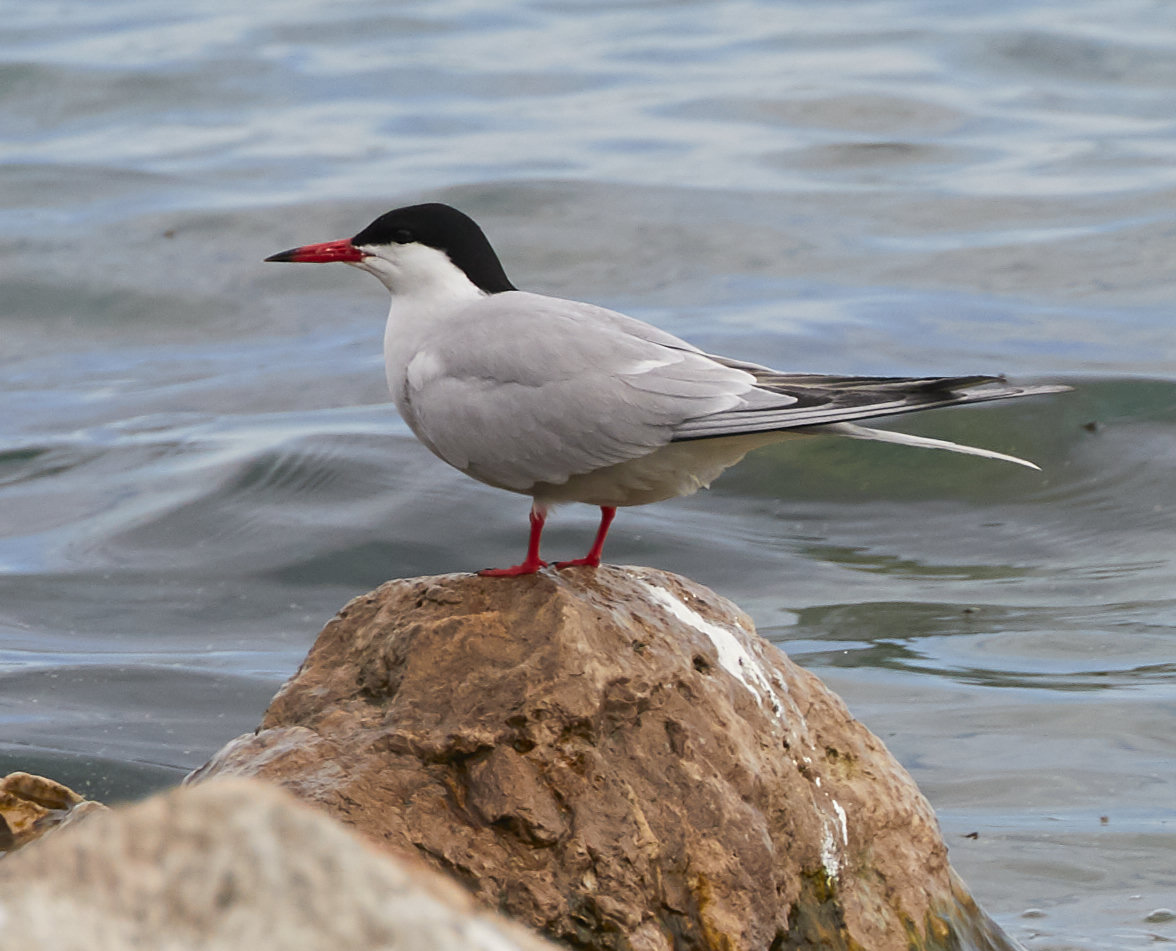
Photo Unknown photographer (opens in a new tab) / iNaturalist, CC0 1.0 (opens in a new tab)
At a glance
- Size
- About 31 to 35 cm long
- Weight
- About 110 to 145 g
- Habitat
- Coastal waters, beaches and inlets
- Diet
- Small fish
- In Georgia
- A common migrant on the coast
- Voice
- A harsh "kee-arr"
- Rabies vector
- No
Identification
- Key marks
- Black cap; red-orange bill with a black tip in summer; grey back; forked tail
- Told apart from
- Forster's tern, which has paler wingtips and a black eye patch in winter
- Where to look
- Beaches and inlets in May and August to October
Behaviour
Common terns hover and plunge-dive for small fish. They nest in colonies and fiercely defend their nests, diving at intruders.
Why they matter
Common terns were decimated for the feather trade and have since recovered in many areas, though some populations remain low. Their migrations take them as far as South America.
Reproduction and lifecycle
Nest — A scrape on sand or gravel in colonies
Eggs — Usually two or three
Incubation — About 21 to 25 days
Chicks — Fed by both parents
Flight — At about four weeks
Lifespan — Wild birds over thirty years are recorded
Living around people
- Tern colonies are disturbed by people and dogs.
Misconceptions
- Common terns are the most common tern in Georgia. On the coast, royal and Forster's terns are often more common.
Related species
Seasonal activity
When this species is breeding, and when there are nests on the ground. Mowing during the shaded months is how most nests are found.
| Jan | Feb | Mar | Apr | May | Jun | Jul | Aug | Sep | Oct | Nov | Dec | |
|---|---|---|---|---|---|---|---|---|---|---|---|---|
| Breeding | Jan: no | Feb: no | Mar: no | Apr: no | May: no | Jun: no | Jul: no | Aug: no | Sep: no | Oct: no | Nov: no | Dec: no |
| Active nests | Jan: no | Feb: no | Mar: no | Apr: no | May: no | Jun: no | Jul: no | Aug: no | Sep: no | Oct: no | Nov: no | Dec: no |
| Notes | In South America | In South America | In South America | Migrating north | Migrants passing | Nesting farther north | Chicks | Migrants arriving | Migrants | Last migrants | In South America | In South America |
Where it lives
Recorded in 58 states and provinces. Each one links to the other animals there, and to the rehabilitators licensed for them.
United States
- Alabamapassing through
- Californiapassing through
- Connecticutbreeding
- Delawarebreeding
- Floridapassing through
- Georgiapassing through
- Idahopassing through
- Illinoispassing through
- Indianapassing through
- Iowapassing through
- Louisianapassing through
- Mainebreeding
- Marylandbreeding
- Massachusettsbreeding
- Michiganbreeding
- Minnesotabreeding
- Mississippipassing through
- Montanabreeding
- New Hampshirebreeding
- New Jerseybreeding
- New Yorkbreeding
- North Carolinabreeding
- North Dakotabreeding
- Ohiobreeding
- Rhode Islandbreeding
- South Carolinapassing through
- South Dakotapassing through
- Texaspassing through
- Vermontbreeding
- Virginiabreeding
- Washingtonpassing through
- Wisconsinbreeding
Canada
If you found one
Answer a few questions and you will get a specific answer for what you are looking at.
I found an animal