
Species
Groundhog
Marmota monax
A heavy-bodied burrowing squirrel of fields and roadsides that spends winter in true hibernation.
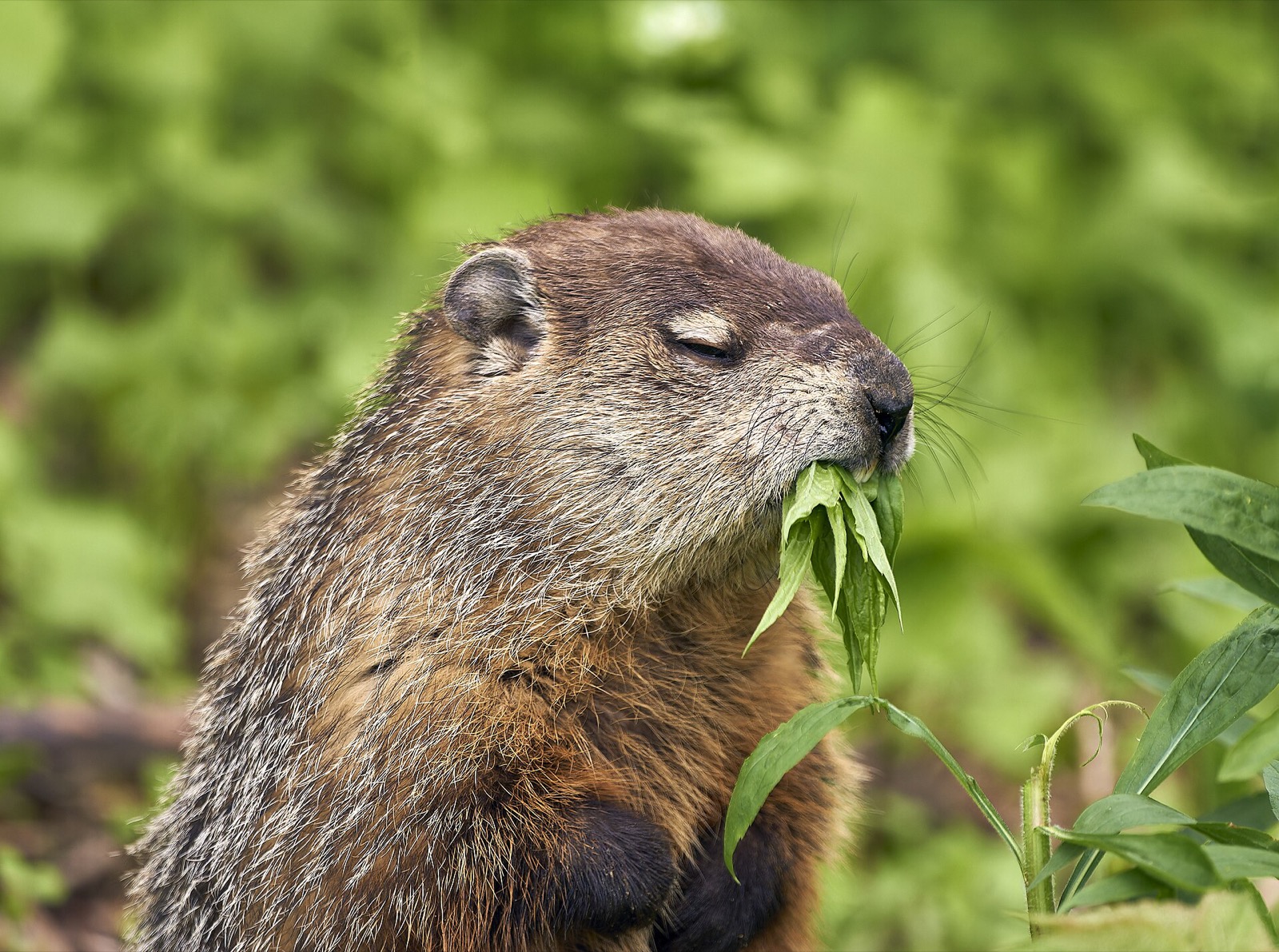
Photo Paul Danese (opens in a new tab), CC BY-SA 4.0 (opens in a new tab)
At a glance
- Occurrence
- Native to North America
- Habitat
- Open fields, pastures, road embankments and forest edges
- Diet
- Grasses, clover, leaves, garden plants and occasional insects
- Activity
- Diurnal, especially morning and late afternoon
- Shelter
- Extensive underground burrows with several entrances
- Social pattern
- Mostly solitary, with brief breeding contact and young sharing the natal burrow
- Rabies vector
- No
Identification
- Key marks
- A stocky brown-grey rodent with short legs, small rounded ears and a short furry tail
- Told apart from
- American beaver, which has a broad flat tail and is closely tied to water
- Where to look
- Open fields, pastures, road embankments and forest edges
Behaviour
It is diurnal, especially morning and late afternoon. It uses habitats including open fields, pastures, road embankments and forest edges. It feeds on grasses, clover, leaves, garden plants and occasional insects.
Groundhogs feed close to cover and retreat underground when alarmed. They are true hibernators, lowering body temperature and metabolism for much of winter in the colder parts of the range.
Groundhog burrows can provide shelter later used by rabbits, snakes, foxes and other wildlife.
Why they matter
Their burrows mix soil and create underground refuges later used by rabbits, reptiles, amphibians and other mammals. Grazing and digging also create small patches of early-successional habitat.
Hibernation is a major physiological shift rather than ordinary sleep, allowing the animal to survive months when green food is scarce.
Reproduction and lifecycle
Mating — soon after adults emerge from hibernation, usually February to April, later in the north.
Gestation — about 31–32 days.
Burrow young — usually 2–6 young are born underground and remain in the den for roughly 5–6 weeks.
Independence — juveniles disperse during summer and build fat reserves before their first winter hibernation.
Living around people
- Check burrow entrances before filling or blocking them; occupied burrows may contain dependent young in spring.
- Use fencing or exclusion around gardens rather than repeatedly destroying active burrows.
- Drive carefully along grassy road embankments where groundhogs often forage.
- Keep dogs from entering burrows; a cornered groundhog can defend itself with strong incisors.
Misconceptions
- A groundhog seen in winter is necessarily sick. Warm spells can bring brief activity, especially near the beginning or end of hibernation.
- Groundhogs eat tree roots because they dig near them. Most feeding is on green vegetation; digging is primarily for shelter.
- A burrow becomes useless when the groundhog leaves. Many other animals can use abandoned groundhog tunnels.
Related species
- Eastern gray squirrel
- eastern-fox-squirrel
- Eastern chipmunk
Seasonal activity
When this species is breeding, and when there are nests on the ground. Mowing during the shaded months is how most nests are found.
| Jan | Feb | Mar | Apr | May | Jun | Jul | Aug | Sep | Oct | Nov | Dec | |
|---|---|---|---|---|---|---|---|---|---|---|---|---|
| Breeding | Jan: no | Feb: no | Mar: no | Apr: no | May: no | Jun: no | Jul: no | Aug: no | Sep: no | Oct: no | Nov: no | Dec: no |
| Active nests | Jan: no | Feb: no | Mar: no | Apr: no | May: no | Jun: no | Jul: no | Aug: no | Sep: no | Oct: no | Nov: no | Dec: no |
| Notes | Deep hibernation continues in underground burrows in the colder parts of the range. | Some adults begin emerging late in the month during warm spells; mating starts soon after emergence. | Most are active above ground; breeding and early pregnancy occur. | Females give birth underground while adults feed heavily on spring plants. | Young begin emerging from natal burrows after about five to six weeks. | Juveniles forage above ground and begin dispersing. | Daily feeding is heavy as adults and young build reserves. | Animals continue gaining fat for the coming hibernation season. | Foraging remains intense; burrow maintenance increases. | Activity declines with cooling weather and accumulated body fat. | Most enter hibernation, though timing varies with elevation and weather. | Hibernation is well established in burrows. |
If you found one
Answer a few questions and you will get a specific answer for what you are looking at.
I found an animal