
Species
Eastern chipmunk
Tamias striatus
A striped ground squirrel of eastern woods and gardens that carries seeds in expandable cheek pouches.
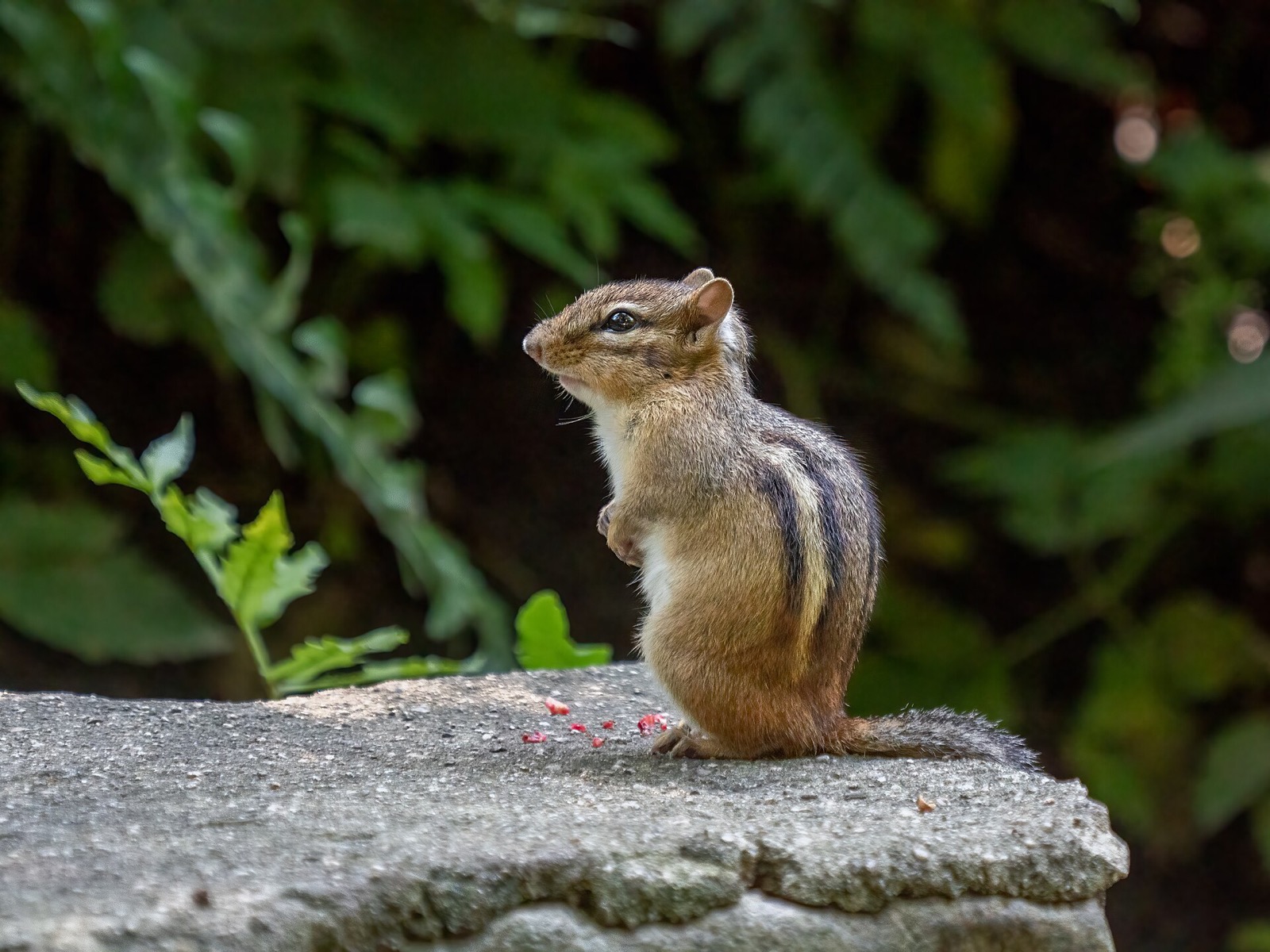
Photo Rhododendrites (opens in a new tab), CC BY-SA 4.0 (opens in a new tab)
At a glance
- Occurrence
- Native to North America
- Habitat
- Deciduous woods, rocky slopes, brushy edges, stone walls and wooded neighbourhoods
- Diet
- Seeds, nuts, fruit, fungi, insects and other small foods
- Activity
- Diurnal
- Shelter
- Underground burrows with sleeping, nesting and food-storage chambers
- Social pattern
- Mostly solitary and territorial around the burrow
- Rabies vector
- No
Identification
- Key marks
- Five dark stripes on the back and sides separated by pale stripes, with facial stripes and a moderately bushy tail
- Told apart from
- Thirteen-lined ground squirrel, which lives in open country farther west and has many narrow spotted stripes
- Where to look
- Deciduous woods, rocky slopes, brushy edges, stone walls and wooded neighbourhoods
Behaviour
It is diurnal. It uses habitats including deciduous woods, rocky slopes, brushy edges, stone walls and wooded neighbourhoods. It feeds on seeds, nuts, fruit, fungi, insects and other small foods.
Chipmunks forage above ground but retreat to burrows quickly. They use cheek pouches to carry food and spend much of winter in the burrow, waking periodically rather than remaining in one uninterrupted deep hibernation.
Chipmunks transport large amounts of food in cheek pouches and store it in underground chambers for later use.
Why they matter
By gathering and caching seeds, chipmunks move nuts and other plant material through the forest floor. They are also a major prey item for snakes, hawks, foxes and small carnivores.
Cheek pouches let a chipmunk transport several food items at once without chewing them, making each exposed foraging trip shorter.
Reproduction and lifecycle
Breeding — mainly late winter to spring, with a possible second breeding period in summer.
Gestation — about 30–32 days.
Burrow young — usually 2–5 young remain below ground for about 4–6 weeks.
Independence — juveniles emerge, disperse and begin building their own food stores during summer.
Living around people
- Do not use glue traps outdoors; chipmunks and other small wildlife can become trapped in them.
- Seal foundation openings after checking that no animal is inside.
- Protect bulbs or seedlings with buried hardware cloth where digging is a problem.
- Keep cats indoors or supervised in areas with active chipmunk burrows.
Misconceptions
- Chipmunks store food because they sleep continuously all winter. They enter torpor but wake periodically and use stored food.
- A chipmunk with full cheeks has a facial swelling. Cheek pouches can expand dramatically when carrying seeds.
- Burrow openings always have obvious spoil piles. Chipmunks often carry excavated soil away, leaving entrances surprisingly inconspicuous.
Related species
- red-squirrel
- Eastern gray squirrel
- Groundhog
Seasonal activity
When this species is breeding, and when there are nests on the ground. Mowing during the shaded months is how most nests are found.
| Jan | Feb | Mar | Apr | May | Jun | Jul | Aug | Sep | Oct | Nov | Dec | |
|---|---|---|---|---|---|---|---|---|---|---|---|---|
| Breeding | Jan: no | Feb: no | Mar: no | Apr: no | May: no | Jun: no | Jul: no | Aug: no | Sep: no | Oct: no | Nov: no | Dec: no |
| Active nests | Jan: no | Feb: no | Mar: no | Apr: no | May: no | Jun: no | Jul: no | Aug: no | Sep: no | Oct: no | Nov: no | Dec: no |
| Notes | Mostly underground in the colder parts of the range, cycling through torpor and brief waking periods to eat stored food. | Winter torpor continues, with increased activity during mild spells late in the month. | Regular surface activity resumes and spring breeding begins. | Pregnancy, nesting and intense foraging occur. | Young remain in burrows and adults gather spring seeds and insects. | Juveniles emerge; some populations may begin a second breeding period. | Active by day with food gathering and juvenile dispersal. | Seed caching increases as summer matures. | Heavy food storage for winter. | Surface activity continues while burrow stores build. | Activity declines and longer torpor bouts begin. | Most time is spent underground, but chipmunks wake periodically rather than sleeping continuously. |
If you found one
Answer a few questions and you will get a specific answer for what you are looking at.
I found an animal