
Species
Eastern fox squirrel
Sciurus niger
The largest tree squirrel in North America; in Georgia often black with a white nose and ears.
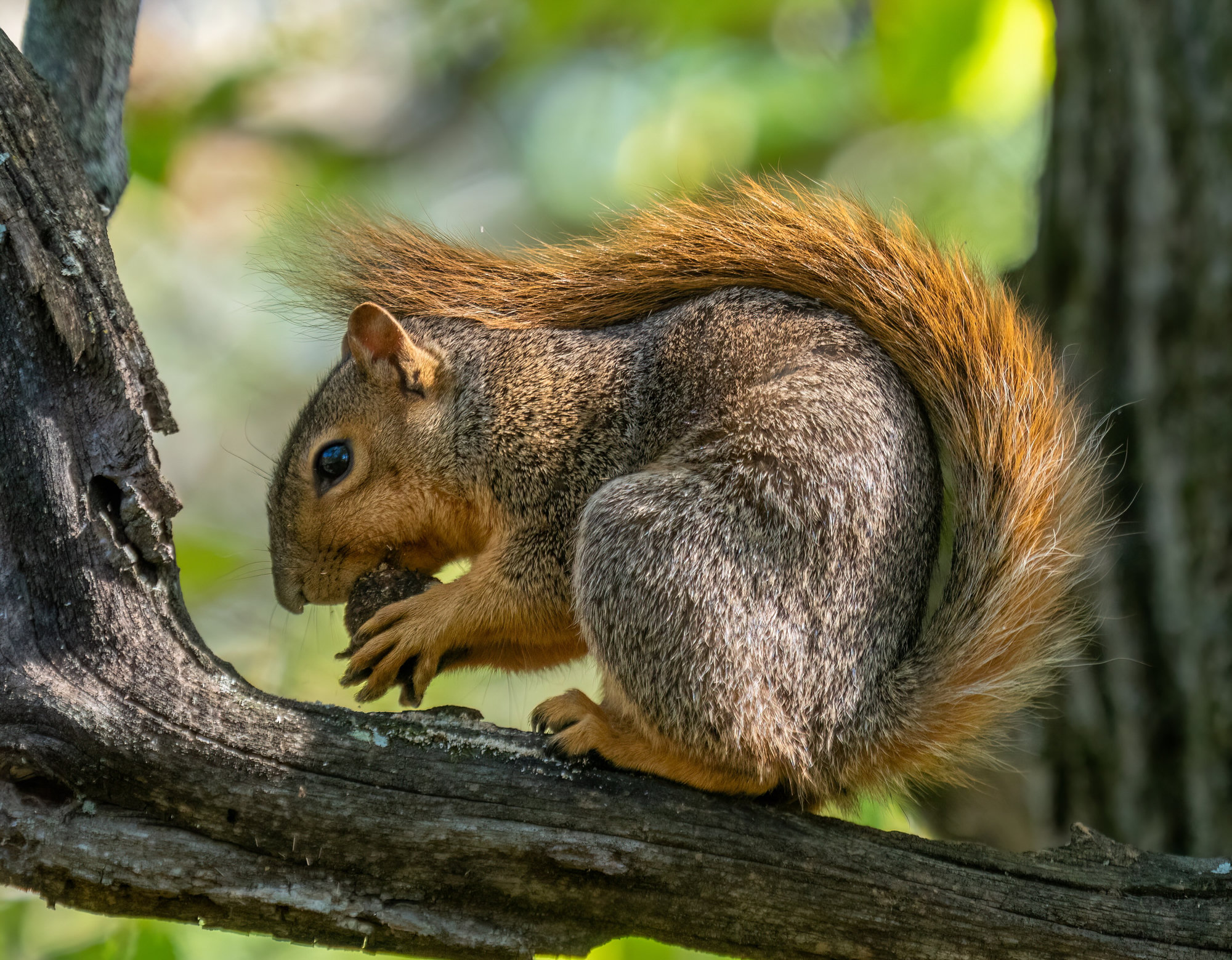
Photo Rhododendrites (opens in a new tab) / Wikimedia Commons, CC BY-SA 4.0 (opens in a new tab)
At a glance
- Size
- Body about 25 to 35 cm; tail about 20 to 33 cm
- Weight
- About 500 g to 1.2 kg
- Habitat
- Open pine and oak woods, longleaf pine savanna, field edges, pecan groves and parks
- Diet
- Pine seeds, acorns, hickory nuts, pecans, fruit, buds, fungi and insects
- Active
- Day, mostly mid-morning to afternoon
- Shelter
- Leaf nests in trees and tree cavities
- Lifespan
- Several years in the wild
- Rabies vector
- No
Identification
- Key marks
- Large; colour varies greatly — orange-brown, grey with orange underparts, or, in much of the Southeast, black with a white nose and white ears
- Told apart from
- Eastern gray squirrel, which is smaller and grey with a white belly and white-edged tail
- Told apart from
- American red squirrel, which is much smaller and lives only in the high mountains
- Where to look
- Open pinewoods and oak woods, field edges, pecan orchards and golf courses; on the ground as often as in trees
Behaviour
Fox squirrels are big and deliberate, spending much of their time on the ground, where they forage for fallen seeds and nuts. They prefer open woods with scattered large trees rather than dense forest, and in the South they are strongly tied to longleaf and other pine savannas.
They bury nuts in scattered caches and find many of them again by smell. Nests are leafy "dreys" high in trees or dens in tree cavities.
Why they matter
Fox squirrels plant trees. Nuts and pine seeds they bury and never recover sprout far from the parent tree, helping oaks, hickories and pines spread across open woods.
They also carry an oddity: a harmless inherited condition makes their bones and teeth reddish-pink, so pink they glow under ultraviolet light.
Reproduction and lifecycle
Mating — midwinter and, in many areas, again in early summer
Gestation — about 44 to 45 days
Litter — usually two to four young, born hairless and blind
Eyes open — at about five weeks old
Leaving the nest — at about seven to eight weeks old
Independence — at about three months old
Lifespan — several years in the wild
Living around people
- Tree trimming between late winter and summer can bring down nests with young.
- Cars kill many fox squirrels, which cross open ground more than gray squirrels do.
- A young squirrel on the ground may have fallen from a nest; its mother will often retrieve it if it is left at the base of the tree and people and pets stay away.
Misconceptions
- A black squirrel is a different species. In the Southeast, black is one of the fox squirrel's normal colours.
- Squirrels forget where they bury nuts. They find many by smell and memory; the ones they miss become trees.
- A baby squirrel on the ground needs to be taken in right away. The mother often comes back for it within hours.
Related species
Seasonal activity
When this species is breeding, and when there are nests on the ground. Mowing during the shaded months is how most nests are found.
| Jan | Feb | Mar | Apr | May | Jun | Jul | Aug | Sep | Oct | Nov | Dec | |
|---|---|---|---|---|---|---|---|---|---|---|---|---|
| Breeding | Jan: no | Feb: no | Mar: no | Apr: no | May: no | Jun: no | Jul: no | Aug: no | Sep: no | Oct: no | Nov: no | Dec: no |
| Active nests | Jan: no | Feb: no | Mar: no | Apr: no | May: no | Jun: no | Jul: no | Aug: no | Sep: no | Oct: no | Nov: no | Dec: no |
| Notes | Courtship and mating chases begin | Mating continues | First litters born in tree nests | Young open their eyes at about five weeks old | Young begin leaving the nest | A second mating season begins in some areas | Second litters born | Young of the first litter disperse | Feeding on pine seeds and early nuts | Caching acorns and nuts | Caching continues | Relying on cached food |
Where it lives
Recorded in 46 states and provinces. Each one links to the other animals there, and to the rehabilitators licensed for them.
United States
- Alabama
- Arkansas
- Californiaintroduced
- Colorado
- Delaware
- Florida
- Georgia
- Idahointroduced
- Illinois
- Indiana
- Iowa
- Kansas
- Kentucky
- Louisiana
- Maryland
- Michigan
- Minnesota
- Mississippi
- Missouri
- Montana
- Nebraska
- Nevadaintroduced
- New Mexicointroduced
- North Carolina
- North Dakota
- Ohio
- Oklahoma
- Oregonintroduced
- Pennsylvania
- South Carolina
- South Dakota
- Tennessee
- Texas
- Utahintroduced
- Virginia
- Washingtonintroduced
- West Virginia
- Wisconsin
- Wyoming
If you found one
Answer a few questions and you will get a specific answer for what you are looking at.
I found an animal