
Species
Southern flying squirrel
Glaucomys volans
A small nocturnal tree squirrel that glides between trunks on a membrane stretched from wrist to ankle.
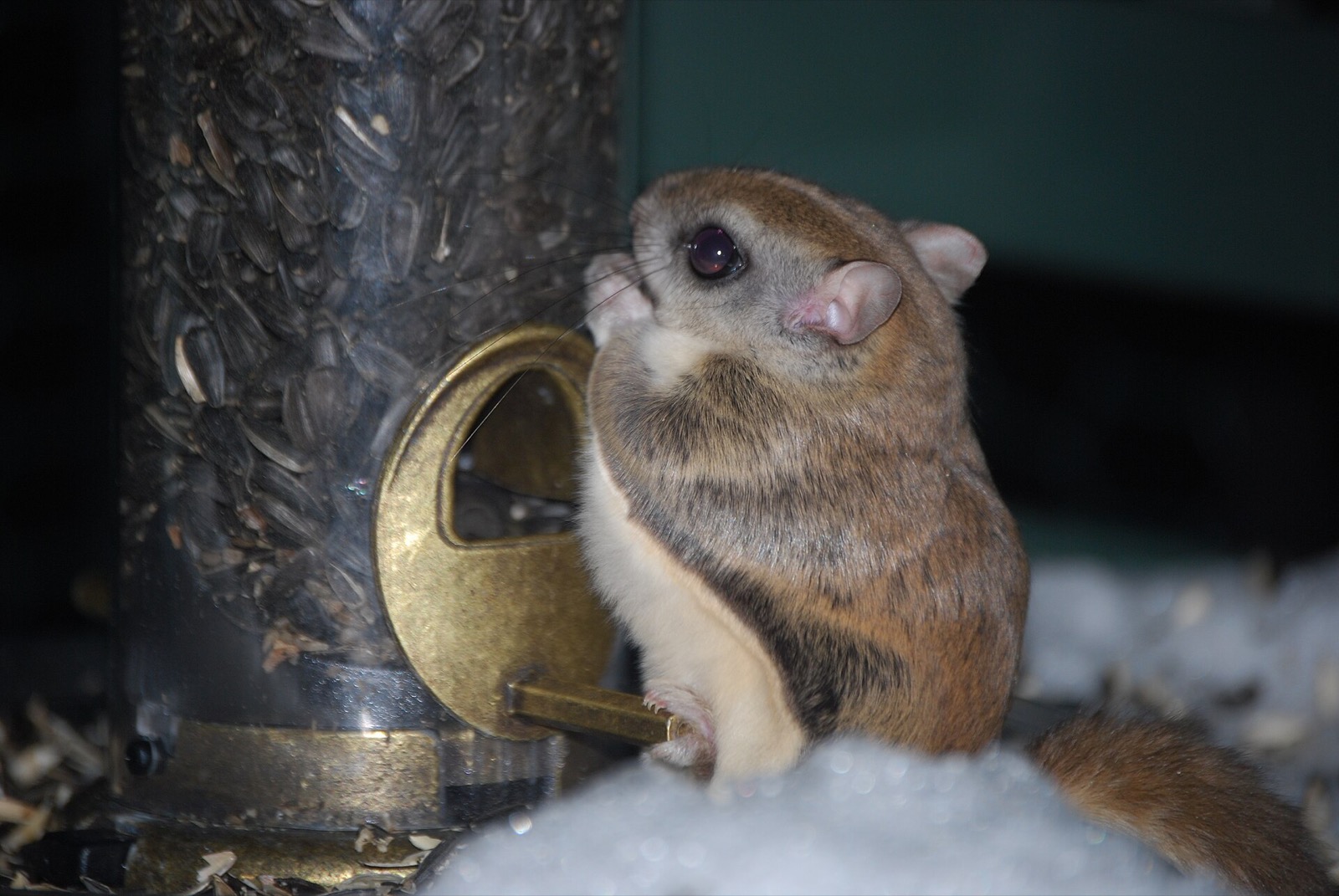
Photo Joshua Mayer (opens in a new tab), CC BY-SA 2.0 (opens in a new tab)
At a glance
- Occurrence
- Native to North America
- Habitat
- Mature hardwood and mixed forests, wooded neighbourhoods and parks with tree cavities
- Diet
- Nuts, seeds, fruit, fungi, insects, bird eggs and other small foods
- Activity
- Nocturnal
- Shelter
- Tree cavities, old woodpecker holes and sometimes attics or nest boxes
- Social pattern
- Often social, especially in cool weather when several may share a den
- Rabies vector
- No
Identification
- Key marks
- Large dark eyes, soft grey-brown fur, a flattened tail and a loose gliding membrane along each side
- Told apart from
- Eastern gray squirrel, which is much larger, active mainly by day and lacks a gliding membrane
- Where to look
- Mature hardwood and mixed forests, wooded neighbourhoods and parks with tree cavities
Behaviour
It is nocturnal. It uses habitats including mature hardwood and mixed forests, wooded neighbourhoods and parks with tree cavities. It feeds on nuts, seeds, fruit, fungi, insects, bird eggs and other small foods.
It climbs to height and glides downward by spreading the patagium between the front and hind legs. The flattened tail helps steer and brake before landing on a trunk.
By eating truffles and other fungi, flying squirrels spread fungal spores that help tree roots acquire nutrients.
Why they matter
Flying squirrels eat nuts, seeds and fungi. Their movement of underground fungi spreads spores that form mycorrhizal partnerships with tree roots, helping forests cycle nutrients.
A glide is controlled flight without flapping: the squirrel can change direction in the air and land feet-first on a vertical trunk.
Reproduction and lifecycle
Mating — peaks in late winter and again in summer in the Southeast.
Gestation — about 40 days.
Nestling — litters commonly contain 2–4 young, born naked and blind in a cavity nest.
Weaning — roughly 6–8 weeks, with juveniles remaining near the natal area while learning to glide.
Living around people
- Trim access routes and seal building entry points only after confirming no squirrels are trapped inside.
- Cap chimneys and vents with wildlife-safe materials; small openings can admit a flying squirrel.
- Keep cats indoors at night, when flying squirrels are most active.
- Retain safe cavity trees where possible because tree hollows are natural den sites.
Misconceptions
- Flying squirrels can fly like bats. They glide on a skin membrane and cannot gain altitude by flapping.
- A squirrel in an attic must be active in daytime. Southern flying squirrels are mainly nocturnal, so noises may be strongest after dark.
- They are rare because people seldom see them. They can be common in suitable woods but are easy to miss because they are small and nocturnal.
Related species
- Eastern gray squirrel
- eastern-fox-squirrel
- red-squirrel
Seasonal activity
When this species is breeding, and when there are nests on the ground. Mowing during the shaded months is how most nests are found.
| Jan | Feb | Mar | Apr | May | Jun | Jul | Aug | Sep | Oct | Nov | Dec | |
|---|---|---|---|---|---|---|---|---|---|---|---|---|
| Breeding | Jan: no | Feb: no | Mar: no | Apr: no | May: no | Jun: no | Jul: no | Aug: no | Sep: no | Oct: no | Nov: no | Dec: no |
| Active nests | Jan: no | Feb: no | Mar: no | Apr: no | May: no | Jun: no | Jul: no | Aug: no | Sep: no | Oct: no | Nov: no | Dec: no |
| Notes | Active at night; several squirrels may share a cavity for warmth during cold spells. | Late-winter courtship begins while communal denning may continue. | First breeding period; females select secure cavity nests. | Pregnancy and early litters; nightly insect and fungal foods increase. | Young develop in cavity nests while adults forage through the canopy. | Early young begin gliding; a second breeding period can begin. | Summer breeding and juvenile activity continue. | Second litters may be in nests; young practise gliding and dispersal. | Active nightly, feeding on nuts, fungi and autumn fruit. | Food caching increases and animals may begin sharing winter dens. | Communal denning becomes more common during cold nights. | Active throughout winter between cold-weather periods; several may share one cavity. |
If you found one
Answer a few questions and you will get a specific answer for what you are looking at.
I found an animal