
Species
American red squirrel
Tamiasciurus hudsonicus
A small, loud, fiercely territorial squirrel of northern and mountain conifer forests.
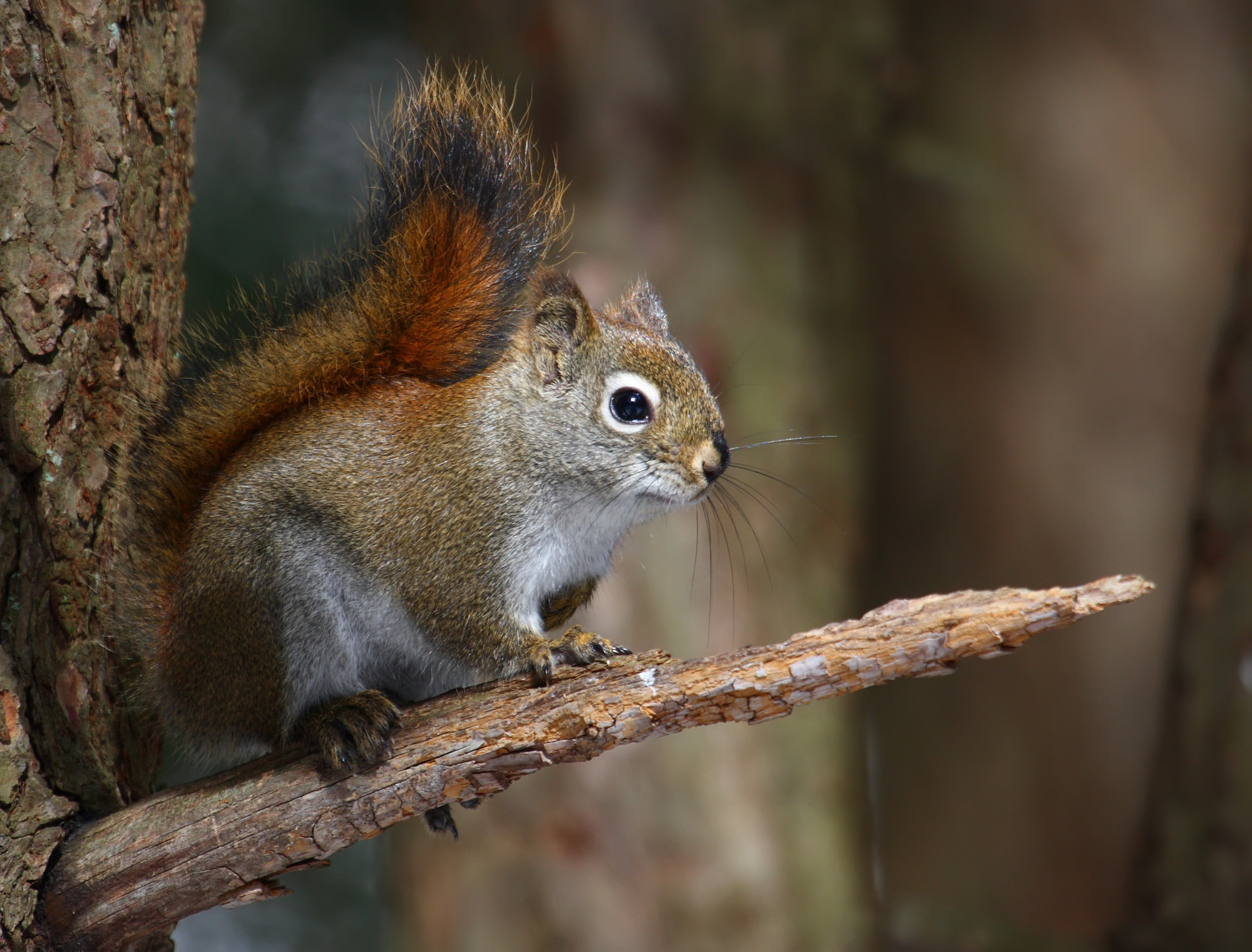
Photo Cephas (opens in a new tab) / Wikimedia Commons, CC BY-SA 3.0 (opens in a new tab)
At a glance
- Size
- Body about 17 to 20 cm; tail about 10 to 15 cm
- Weight
- About 200 to 250 g
- Habitat
- Conifer and mixed forests; in Georgia, only high-elevation forests in the northeastern mountains
- Diet
- Seeds from conifer cones, nuts, buds, fungi, fruit, and sometimes bird eggs
- Active
- Day
- Shelter
- Tree cavities, leaf nests and underground tunnels in cone middens
- Lifespan
- Usually a few years
- Rabies vector
- No
Identification
- Key marks
- Small; rusty-red back; white belly; a bold white ring around the eye; tail edged with rust or black
- Voice
- Loud, rattling chatter when disturbed
- Signs
- Piles of stripped cone scales, called middens, at the base of trees
- Told apart from
- Eastern gray squirrel and fox squirrel, which are much larger
- Where to look
- Hemlock, spruce and northern hardwood forests at high elevation in north Georgia
Behaviour
Red squirrels are loud, busy and territorial. Each defends its own patch of forest and a central larder — a midden of cones and scales that can build up over years — against other red squirrels, chattering and chasing intruders away.
They harvest cones in autumn and store them in the midden, where the cool, damp conditions keep them closed until winter. They also dry mushrooms by wedging them in branches, and in spring they bite into maple bark and return later to lick the sugary sap.
Why they matter
Red squirrels store and spread the seeds of conifers and eat and disperse fungi, including the underground fungi that grow on tree roots and help trees take up water and nutrients.
In the southern Appalachians they are a remnant of the northern forest that retreated to the mountaintops after the last Ice Age.
Reproduction and lifecycle
Mating — late winter and spring; some areas have a second litter in summer
Gestation — about 33 to 35 days
Litter — usually three to five young
Leaving the nest — at about seven weeks old
Independence — at about ten weeks, when each young squirrel must find its own territory
Lifespan — a few years; many young do not survive their first winter
Living around people
- Red squirrels in cabins and outbuildings in the mountains can usually be kept out by closing gaps.
- Leaving cone middens undisturbed keeps a squirrel's winter food.
- A young squirrel on the ground is best left near the tree for its mother to retrieve.
Misconceptions
- Red squirrels in Georgia are escaped pets. They are native, living only on the highest mountains.
- Squirrels only eat nuts. Red squirrels eat seeds, fungi, sap, fruit and sometimes eggs.
Related species
- Eastern gray squirrel
- Eastern fox squirrel
- Southern flying squirrel
- Eastern chipmunk
Seasonal activity
When this species is breeding, and when there are nests on the ground. Mowing during the shaded months is how most nests are found.
| Jan | Feb | Mar | Apr | May | Jun | Jul | Aug | Sep | Oct | Nov | Dec | |
|---|---|---|---|---|---|---|---|---|---|---|---|---|
| Breeding | Jan: no | Feb: no | Mar: no | Apr: no | May: no | Jun: no | Jul: no | Aug: no | Sep: no | Oct: no | Nov: no | Dec: no |
| Active nests | Jan: no | Feb: no | Mar: no | Apr: no | May: no | Jun: no | Jul: no | Aug: no | Sep: no | Oct: no | Nov: no | Dec: no |
| Notes | Living on stored cones | Mating chases begin | Mating | Young born in tree cavities or nests | Young begin to leave the nest | Young disperse to find territories of their own | Feeding on fruit, fungi and early seeds | Cone harvest begins | Harvesting and storing cones | Filling middens; drying mushrooms | Relying increasingly on stored food | Living on stored cones |
Where it lives
Recorded in 47 states and provinces. Each one links to the other animals there, and to the rehabilitators licensed for them.
United States
- Alaska
- Arizona
- Colorado
- Connecticut
- Delaware
- Georgia
- Idaho
- Illinois
- Indiana
- Iowa
- Maine
- Maryland
- Massachusetts
- Michigan
- Minnesota
- Montana
- New Hampshire
- New Jersey
- New Mexico
- New York
- North Carolina
- North Dakota
- Ohio
- Oregon
- Pennsylvania
- Rhode Island
- South Dakota
- Tennessee
- Utah
- Vermont
- Virginia
- Washington
- West Virginia
- Wisconsin
- Wyoming
If you found one
Answer a few questions and you will get a specific answer for what you are looking at.
I found an animal