
Species
Great blue heron
Ardea herodias
The tall, grey-blue heron of every Georgia shoreline, standing motionless until it strikes.
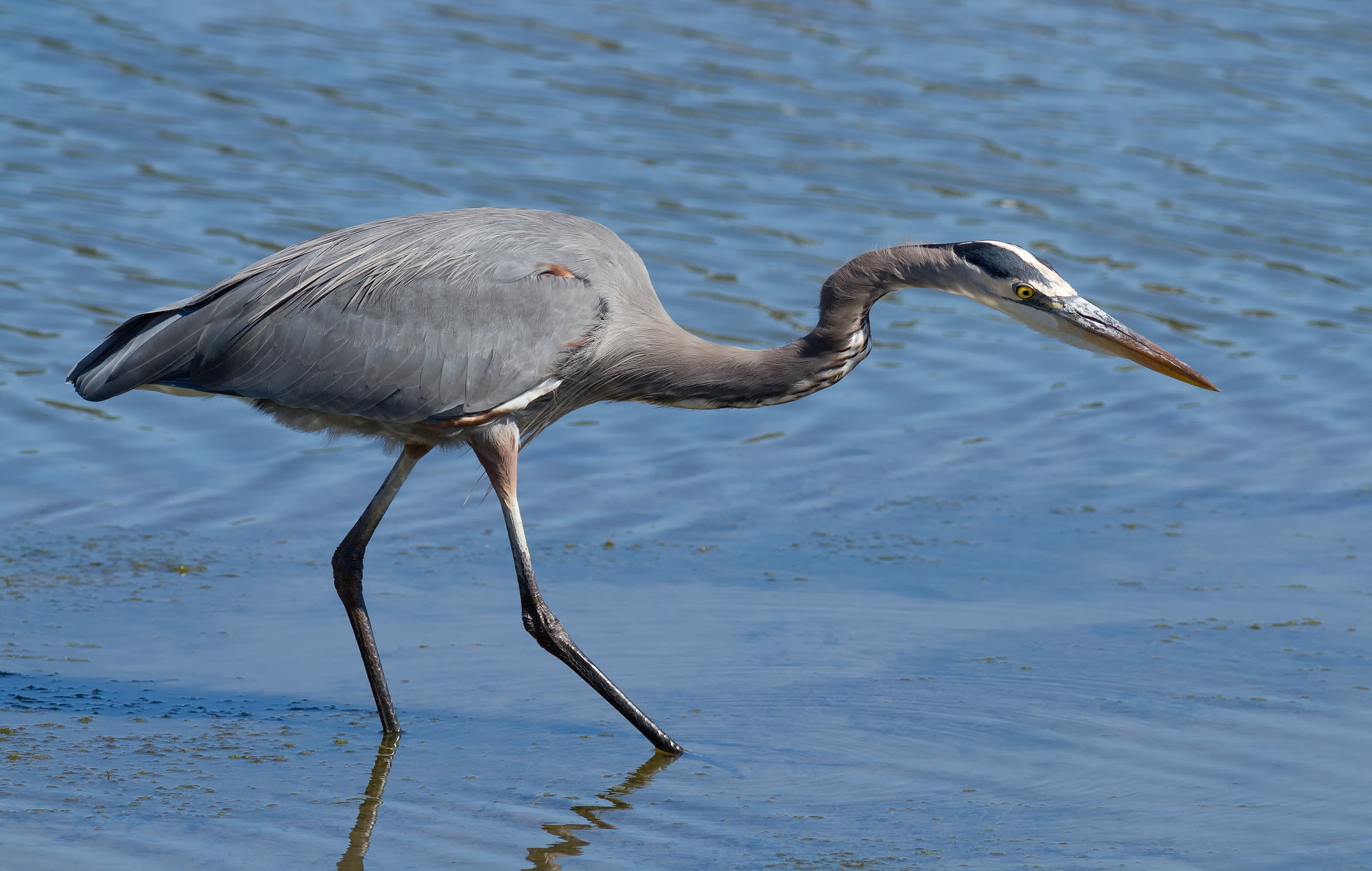
Photo Frank Schulenburg (opens in a new tab) / Wikimedia Commons, CC BY-SA 3.0 (opens in a new tab)
At a glance
- Size
- About 1 to 1.4 m tall; wingspan about 1.7 to 2 m
- Weight
- About 2 to 2.5 kg
- Habitat
- Marshes, rivers, lakes, ponds, ditches and fields
- Diet
- Fish, frogs, snakes, small mammals and birds
- In Georgia
- Common all year statewide
- Voice
- A deep, harsh croak
- Rabies vector
- No
Identification
- Key marks
- Very tall; grey-blue body; white face with a black stripe over the eye; dagger-like yellow bill; flies with neck folded
- Told apart from
- Sandhill crane, which is grey with a red crown and flies with its neck out
- Told apart from
- Tricolored heron, which is smaller with a white belly
- Where to look
- Almost any water, and fields where it hunts voles
Behaviour
Great blue herons stand or walk slowly in shallow water, then strike with lightning speed. They also hunt in fields for voles and gophers.
They nest in colonies high in trees, sometimes with hundreds of nests together.
Why they matter
The great blue heron is the largest heron in North America and a top predator in wetlands. It eats many fish, frogs and rodents, and its colonies are among the most striking sights in Georgia's swamps and lakes.
Reproduction and lifecycle
Nest — A large platform of sticks high in a tree, in colonies
Eggs — Usually three to six
Incubation — About 27 days
Chicks — Fed by both parents
Flight — At about eight to ten weeks
Lifespan — Wild birds over twenty years are recorded
Living around people
- Herons visit garden ponds for fish; netting or deep sides protect ornamental fish without harming the bird.
- A heron tangled in fishing line needs a rehabilitator; its dagger-like bill is aimed at the eyes of anyone who handles it.
Misconceptions
- Herons are cranes. They are not closely related; herons fly with necks folded, cranes with necks outstretched.
Related species
Seasonal activity
When this species is breeding, and when there are nests on the ground. Mowing during the shaded months is how most nests are found.
| Jan | Feb | Mar | Apr | May | Jun | Jul | Aug | Sep | Oct | Nov | Dec | |
|---|---|---|---|---|---|---|---|---|---|---|---|---|
| Breeding | Jan: no | Feb: no | Mar: no | Apr: no | May: no | Jun: no | Jul: no | Aug: no | Sep: no | Oct: no | Nov: no | Dec: no |
| Active nests | Jan: no | Feb: no | Mar: no | Apr: no | May: no | Jun: no | Jul: no | Aug: no | Sep: no | Oct: no | Nov: no | Dec: no |
| Notes | Resident; colonies occupied in the south | Nesting begins | Nesting | Chicks | Chicks | Young fledging | Young dispersing | Present | Present | Northern birds arriving | Present | Present |
Where it lives
Recorded in 92 states and provinces. Each one links to the other animals there, and to the rehabilitators licensed for them.
United States
- Alabama
- Alaska
- Arizona
- Arkansas
- California
- Colorado
- Connecticut
- Delaware
- District of Columbia
- Florida
- Georgia
- Idaho
- Illinois
- Indiana
- Iowabreeding
- Kansas
- Kentucky
- Louisiana
- Mainebreeding
- Maryland
- Massachusetts
- Michigan
- Minnesotabreeding
- Mississippi
- Missouri
- Montana
- Nebraskabreeding
- Nevada
- New Hampshirebreeding
- New Jersey
- New Mexico
- New York
- North Carolina
- North Dakotabreeding
- Ohio
- Oklahoma
- Oregon
- Pennsylvania
- Rhode Island
- South Carolina
- South Dakotabreeding
- Tennessee
- Texas
- Utah
- Vermontbreeding
- Virginia
- Washington
- West Virginia
- Wisconsinbreeding
- Wyomingbreeding
Canada
Mexico
- Aguascalientesin winter
- Baja California
- Baja California Sur
- Campeche
- Chiapasin winter
- Chihuahua
- Coahuilain winter
- Colima
- Durango
- Guanajuatoin winter
- Guerreroin winter
- Hidalgoin winter
- Jalisco
- Mexico Cityin winter
- Michoacan
- Morelosin winter
- Nayarit
- Nuevo Leonin winter
- Oaxacain winter
- Pueblain winter
- Queretaroin winter
- Quintana Roo
- San Luis Potosiin winter
- Sinaloa
- Sonora
- State of Mexicoin winter
- Tabascoin winter
- Tamaulipasin winter
- Tlaxcalain winter
- Veracruz
- Yucatan
- Zacatecasin winter
If you found one
Answer a few questions and you will get a specific answer for what you are looking at.
I found an animal