
Species
Tricolored heron
Egretta tricolor
A slim, dark heron with a clean white belly, dancing through Georgia's salt marshes after small fish.
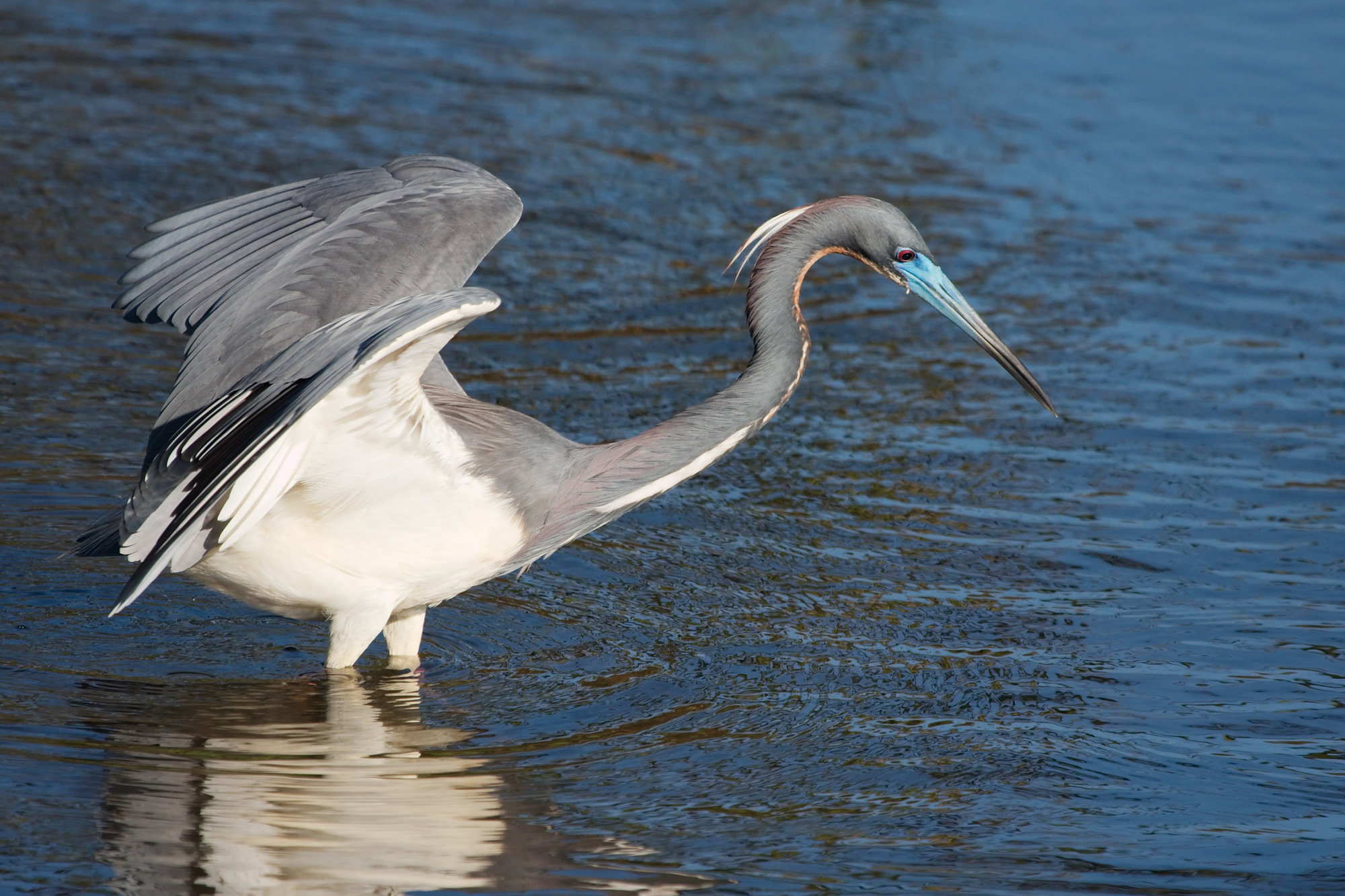
Photo Dori (opens in a new tab) / Wikimedia Commons, CC BY-SA 3.0 (opens in a new tab)
At a glance
- Size
- About 60 to 70 cm long
- Weight
- About 300 to 450 g
- Habitat
- Salt marshes, tidal creeks and coastal ponds
- Diet
- Small fish, shrimp and crabs
- In Georgia
- Common on the coast all year
- Voice
- A harsh croak
- Rabies vector
- No
Identification
- Key marks
- Slim, dark blue-grey heron; white belly and white stripe down the front of the neck; long thin bill
- Told apart from
- Little blue heron, which is all dark
- Told apart from
- Great blue heron, which is much larger and paler
- Where to look
- Salt marsh creeks and tidal ponds
Behaviour
Tricolored herons hunt actively, running, turning and spreading their wings to shade the water and see fish more clearly.
Why they matter
This heron is a specialist of coastal marshes, and Georgia's broad salt marshes are among its strongholds on the Atlantic coast. Its elegance earned it the old name "lady of the waters".
Reproduction and lifecycle
Nest — A platform of sticks in mixed colonies
Eggs — Usually three or four
Incubation — About 21 to 25 days
Chicks — Fed by both parents
Flight — At about five weeks
Lifespan — Several years
Living around people
- Fishing line and crab traps are hazards in tidal creeks.
Misconceptions
- All dark herons are great blue herons. The tricolored heron is smaller, with a white belly.
Related species
Seasonal activity
When this species is breeding, and when there are nests on the ground. Mowing during the shaded months is how most nests are found.
| Jan | Feb | Mar | Apr | May | Jun | Jul | Aug | Sep | Oct | Nov | Dec | |
|---|---|---|---|---|---|---|---|---|---|---|---|---|
| Breeding | Jan: no | Feb: no | Mar: no | Apr: no | May: no | Jun: no | Jul: no | Aug: no | Sep: no | Oct: no | Nov: no | Dec: no |
| Active nests | Jan: no | Feb: no | Mar: no | Apr: no | May: no | Jun: no | Jul: no | Aug: no | Sep: no | Oct: no | Nov: no | Dec: no |
| Notes | Present on the coast | Present | Colonies forming | Nesting | Nesting | Chicks | Young fledging | Young dispersing | Present | Present | Present | Present |
Where it lives
Recorded in 43 states and provinces. Each one links to the other animals there, and to the rehabilitators licensed for them.
United States
Mexico
- Baja Californiain winter
- Baja California Sur
- Campeche
- Chiapasin winter
- Coahuilain winter
- Colima
- Durangopassing through
- Guanajuatoin winter
- Guerrero
- Hidalgoin winter
- Jalisco
- Mexico City
- Michoacanin winter
- Morelosin winter
- Nayarit
- Nuevo Leon
- Oaxacain winter
- Pueblain winter
- Queretarobreeding
- Quintana Roo
- San Luis Potosiin winter
- Sinaloa
- Sonora
- State of Mexicoin winter
- Tabasco
- Tamaulipas
- Tlaxcalain winter
- Veracruz
- Yucatan
If you found one
Answer a few questions and you will get a specific answer for what you are looking at.
I found an animal