
Species
Eastern milksnake
Lampropeltis triangulum
A blotched, grey-and-red kingsnake of north Georgia's mountains, wrongly thought to steal milk from cows.
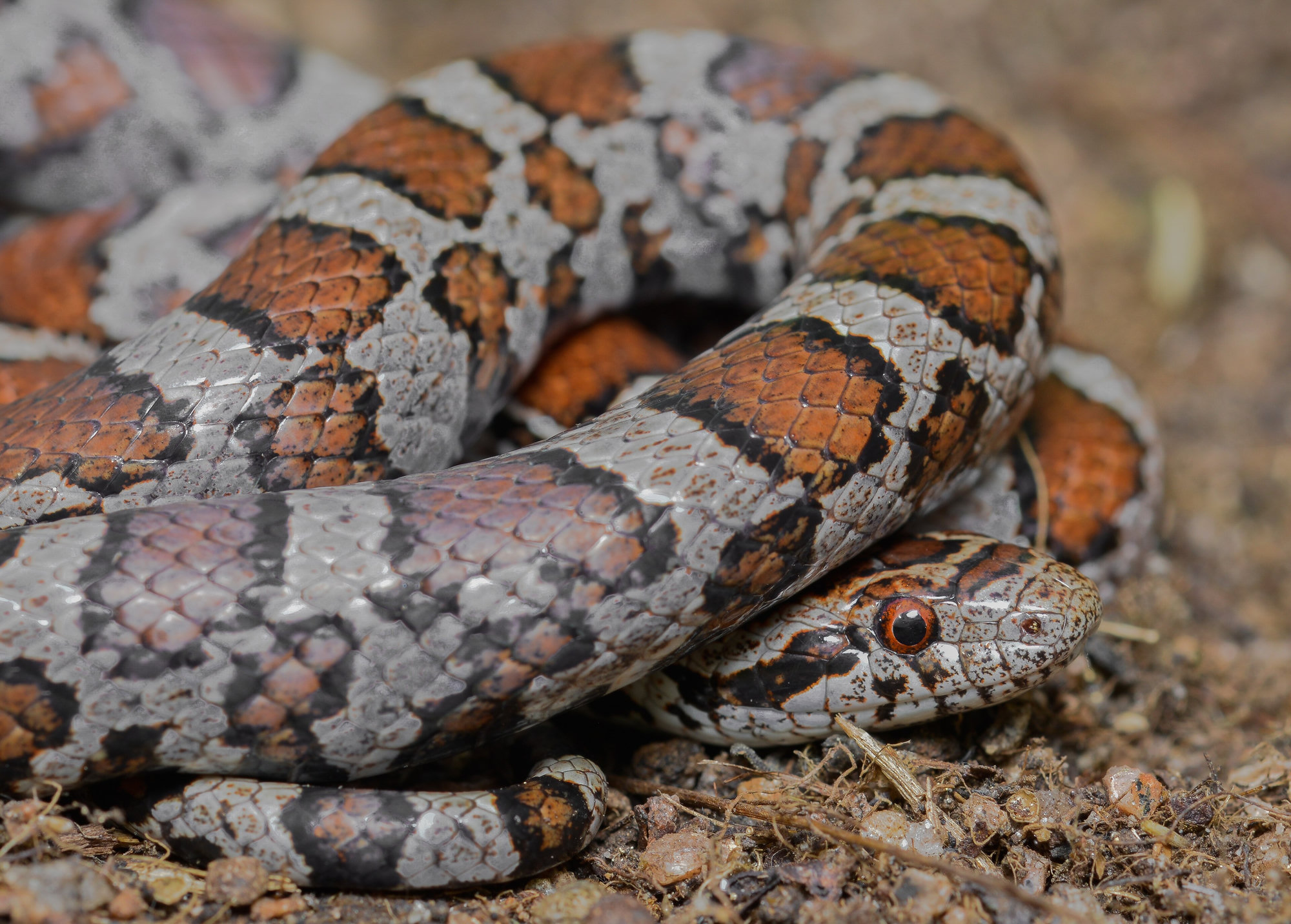
Photo Will Brown (opens in a new tab) / Wikimedia Commons, CC BY 2.0 (opens in a new tab)
At a glance
- Size
- Usually 60 to 90 cm long
- Habitat
- Woods, rocky hillsides, fields and old buildings
- Diet
- Mice, voles, lizards and small snakes
- In Georgia
- The mountains of north Georgia
- Venomous
- No
- Rabies vector
- No
Identification
- Key marks
- Grey or tan with red-brown blotches edged in black; a Y or V mark on the back of the head; chequered belly
- Told apart from
- Eastern copperhead, which has hourglass bands and a plain coppery head
- Where to look
- Under logs, boards and stones, and in old barns
Behaviour
Milksnakes hunt rodents in fields and around buildings, mostly at night. They constrict their prey and vibrate the tail when threatened.
Why they matter
They are rodent predators around farms and are often killed by mistake for copperheads.
Reproduction and lifecycle
Eggs — Usually 5 to 15
Nest — In rotting logs, manure or soil
Incubation — About 6 to 9 weeks
Hatchlings — Brightly blotched in red
Maturity — In three to four years
Lifespan — Over 10 years
Living around people
- It is harmless and eats rodents.
Misconceptions
- Milk snakes drink milk from cows. Snakes cannot suck milk; they visit barns for the mice.
Related species
Seasonal activity
When this species is breeding, and when there are nests on the ground. Mowing during the shaded months is how most nests are found.
| Jan | Feb | Mar | Apr | May | Jun | Jul | Aug | Sep | Oct | Nov | Dec | |
|---|---|---|---|---|---|---|---|---|---|---|---|---|
| Breeding | Jan: no | Feb: no | Mar: no | Apr: no | May: no | Jun: no | Jul: no | Aug: no | Sep: no | Oct: no | Nov: no | Dec: no |
| Active nests | Jan: no | Feb: no | Mar: no | Apr: no | May: no | Jun: no | Jul: no | Aug: no | Sep: no | Oct: no | Nov: no | Dec: no |
| Notes | Sheltering | Sheltering | Sheltering | Emerging | Mating | Laying | Active at night | Hatching | Young active | Active | Sheltering | Sheltering |
Where it lives
Recorded in 32 states and provinces. Each one links to the other animals there, and to the rehabilitators licensed for them.
United States
If you found one
Answer a few questions and you will get a specific answer for what you are looking at.
I found an animal