
Species
Brown pelican
Pelecanus occidentalis
A grey-brown pelican that plunges head first into the sea, back from near extinction along Georgia's coast.
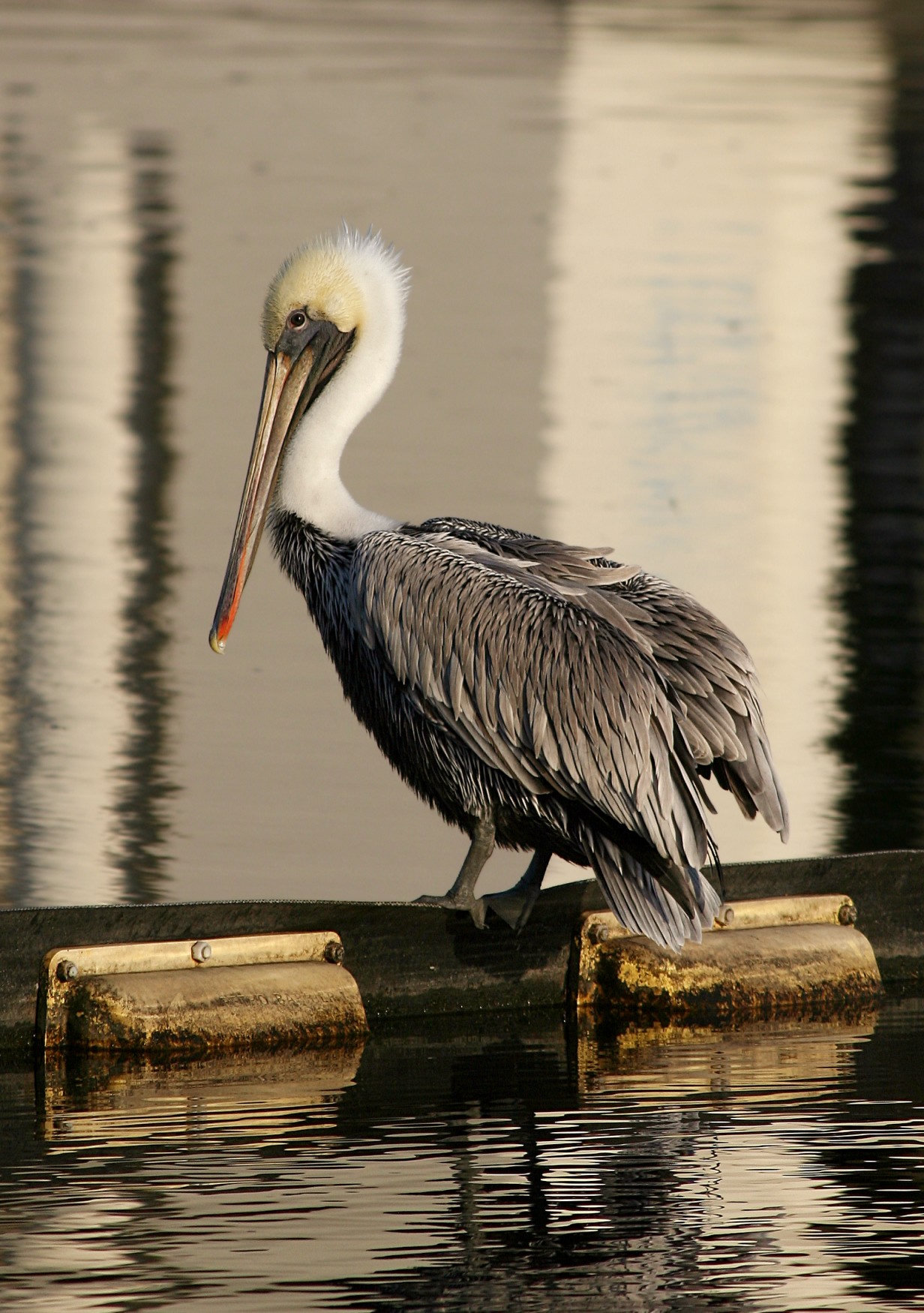
Photo Calibas (opens in a new tab) / Wikimedia Commons, CC BY 3.0 (opens in a new tab)
At a glance
- Size
- About 1 to 1.4 m long; wingspan about 2 to 2.3 m
- Weight
- About 2 to 5 kg
- Habitat
- Coastal waters, inlets, piers and harbours
- Diet
- Fish, especially menhaden and mullet
- In Georgia
- Common on the coast all year; nests on offshore islands
- Voice
- Silent as adults
- Rabies vector
- No
Identification
- Key marks
- Large, grey-brown body; huge bill and pouch; adults with a white or yellowish head; flies in lines low over the waves
- Told apart from
- American white pelican, which is white and does not dive
- Told apart from
- Northern gannet, which is white with black wingtips
- Where to look
- Over beaches, inlets and piers all year
Behaviour
Brown pelicans dive from the air, folding their wings and hitting the water bill first, then scoop fish into their pouches. Air sacs under the skin cushion the impact.
They fly in lines, gliding just above the waves on the updraft.
Why they matter
Brown pelicans nearly disappeared from the Southeast in the 1960s because DDT thinned their eggshells. With the pesticide banned, they recovered and were removed from the endangered species list in 2009 — one of the great conservation successes of the last century.
Reproduction and lifecycle
Nest — A mound of sticks or grass on the ground or in low shrubs on islands
Eggs — Usually three
Incubation — About 28 to 30 days
Chicks — Naked at hatching; fed regurgitated fish by both parents
Flight — At about ten to twelve weeks
Lifespan — Wild birds over thirty years are recorded
Living around people
- Pelicans at piers become tangled in fishing line and hooked by lures; cutting the line off short and leaving the hook in does more harm, so a hooked pelican needs a rehabilitator.
- Feeding pelicans fish scraps and bones can injure their pouches and teaches them to beg at piers.
Misconceptions
- Pelicans hold fish in their pouch for later. The pouch drains water; fish are swallowed at once.
- A young pelican on a pier is fine because it is near people. Young birds that learn to beg often get hooked or tangled.
Related species
Seasonal activity
When this species is breeding, and when there are nests on the ground. Mowing during the shaded months is how most nests are found.
| Jan | Feb | Mar | Apr | May | Jun | Jul | Aug | Sep | Oct | Nov | Dec | |
|---|---|---|---|---|---|---|---|---|---|---|---|---|
| Breeding | Jan: no | Feb: no | Mar: no | Apr: no | May: no | Jun: no | Jul: no | Aug: no | Sep: no | Oct: no | Nov: no | Dec: no |
| Active nests | Jan: no | Feb: no | Mar: no | Apr: no | May: no | Jun: no | Jul: no | Aug: no | Sep: no | Oct: no | Nov: no | Dec: no |
| Notes | Present on the coast | Present | Nesting begins on islands | Nesting | Chicks | Chicks | Young fledging | Young flying | Present | Present | Present | Present |
Where it lives
Recorded in 34 states and provinces. Each one links to the other animals there, and to the rehabilitators licensed for them.
United States
If you found one
Answer a few questions and you will get a specific answer for what you are looking at.
I found an animal