
Species
Northern gannet
Morus bassanus
A big white seabird that plunges into the sea from great heights, seen off Georgia's beaches in winter.
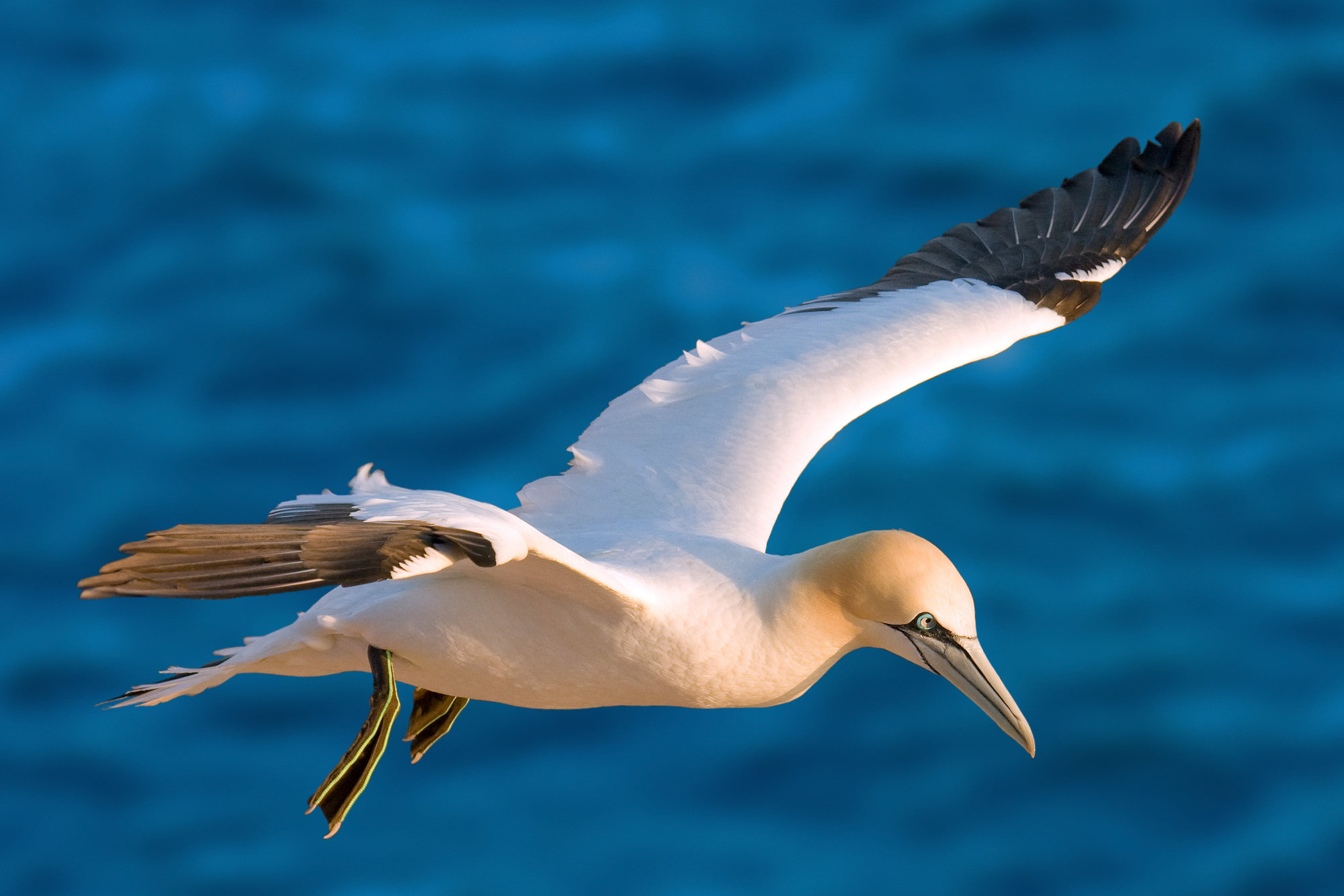
Photo Andreas Trepte (opens in a new tab) / Wikimedia Commons, CC BY-SA 2.5 (opens in a new tab)
At a glance
- Size
- About 87 to 100 cm long; wingspan about 1.7 to 1.8 m
- Weight
- About 2.2 to 3.6 kg
- Habitat
- Nearshore and offshore ocean in winter
- Diet
- Fish such as menhaden, mackerel and herring
- In Georgia
- A common winter visitor offshore, often visible from beaches
- Voice
- Silent at sea
- Rabies vector
- No
Identification
- Key marks
- Large; white with black wingtips; yellowish head in adults; pointed bill, tail and wings; young birds dark brown with white speckles
- Told apart from
- Brown pelican, which is brown-grey with a huge bill
- Told apart from
- Large gulls, which have broad, rounded wings
- Where to look
- Offshore from beaches, November to April, diving in groups
Behaviour
Gannets dive from as high as 30 m, folding their wings back just before hitting the water. Air sacs under their skin cushion the impact.
Why they matter
Gannets follow schools of fish along the coast in winter, and their plunging dives mark where fish are gathered. Many winter off the Southeast, and strandings on beaches often reflect storms, oil or fishing gear.
Reproduction and lifecycle
Nest — A mound of seaweed on cliffs, in dense colonies
Eggs — One
Incubation — About 42 to 44 days
Chick — Fed by both parents for about 90 days
Maturity — Adult plumage at about four to five years
Lifespan — Wild birds over thirty years are recorded
Living around people
- A gannet on the beach is usually injured or ill; it needs a rehabilitator. Its sharp bill can injure a person's eyes, so it is best left to someone trained.
Misconceptions
- A gannet on the sand just needs to be pushed back into the water. It usually needs care before it can return.
Related species
Seasonal activity
When this species is breeding, and when there are nests on the ground. Mowing during the shaded months is how most nests are found.
| Jan | Feb | Mar | Apr | May | Jun | Jul | Aug | Sep | Oct | Nov | Dec | |
|---|---|---|---|---|---|---|---|---|---|---|---|---|
| Breeding | Jan: no | Feb: no | Mar: no | Apr: no | May: no | Jun: no | Jul: no | Aug: no | Sep: no | Oct: no | Nov: no | Dec: no |
| Active nests | Jan: no | Feb: no | Mar: no | Apr: no | May: no | Jun: no | Jul: no | Aug: no | Sep: no | Oct: no | Nov: no | Dec: no |
| Notes | Offshore | Offshore | Offshore | Leaving | Nesting on northern cliffs | Nesting | Chicks | Chicks | Young leave colonies | Moving south | Arriving offshore | Offshore |
Where it lives
Recorded in 22 states and provinces. Each one links to the other animals there, and to the rehabilitators licensed for them.
United States
- Alabamain winter
- Californiain winter
- Connecticutin winter
- Delawarein winter
- Floridain winter
- Georgiain winter
- Mainein winter
- Marylandin winter
- Massachusettsin winter
- Mississippiin winter
- New Hampshirein winter
- New Jerseyin winter
- New Yorkin winter
- North Carolinain winter
- Rhode Islandin winter
- South Carolinain winter
- Virginiain winter
If you found one
Answer a few questions and you will get a specific answer for what you are looking at.
I found an animal