
Species
Magnificent frigatebird
Fregata magnificens
A huge, angular seabird with a forked tail that soars over Georgia's coast in summer and steals food from other birds.
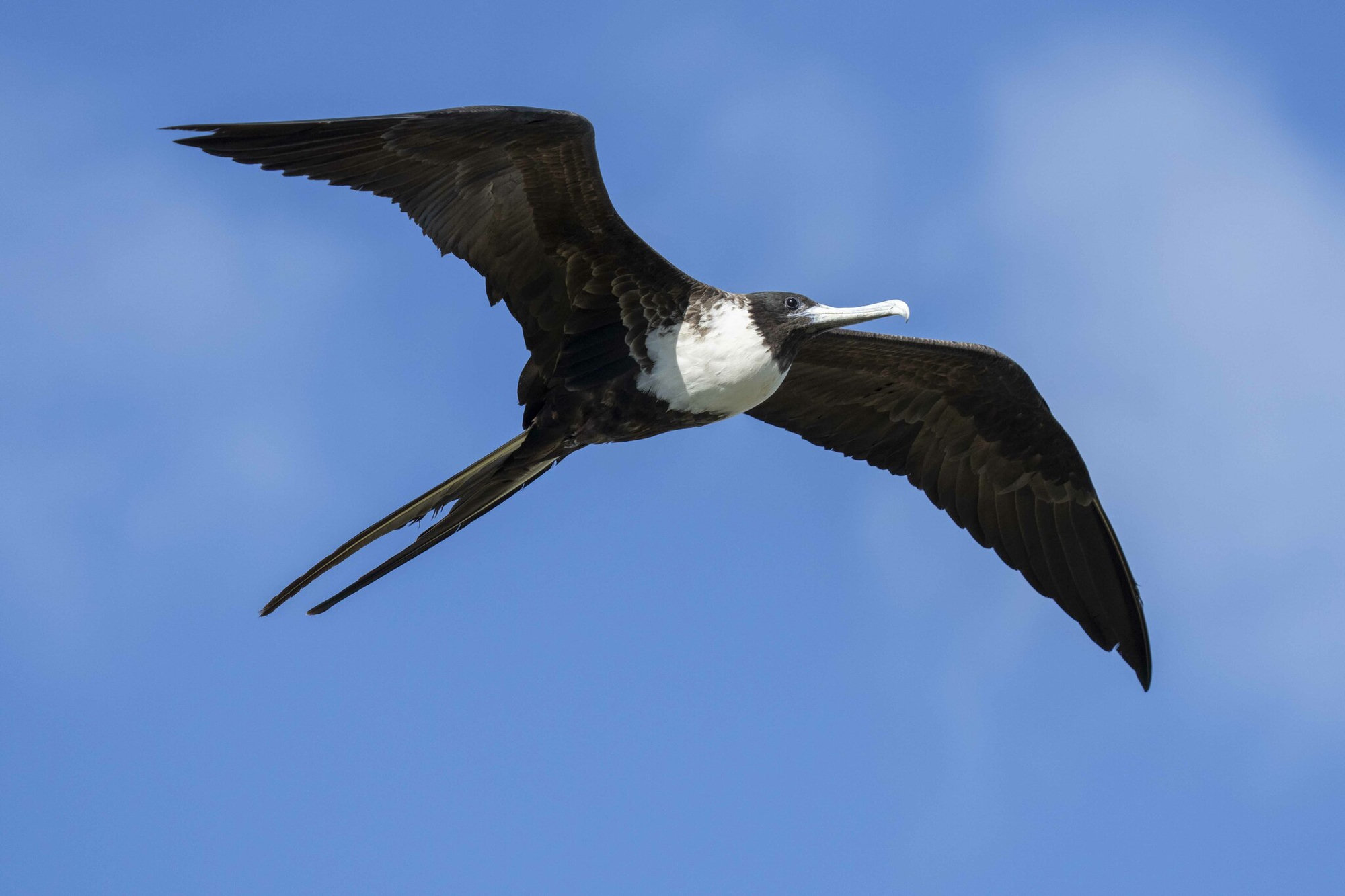
Photo Luciano Massa (opens in a new tab) / iNaturalist, CC BY 4.0 (opens in a new tab)
At a glance
- Size
- About 89 to 114 cm long; wingspan about 2.2 to 2.4 m
- Weight
- About 1 to 1.6 kg
- Habitat
- Tropical coasts and oceans
- Diet
- Fish and squid snatched from the surface, and food stolen from other birds
- In Georgia
- An uncommon summer visitor to the coast
- Voice
- Silent away from colonies
- Rabies vector
- No
Identification
- Key marks
- Very long, narrow, angled wings; long forked tail; hooked bill; males black with a red throat pouch, females with a white breast
- Told apart from
- Other seabirds, none of which have this silhouette
- Where to look
- Soaring high over the coast, especially after tropical storms
Behaviour
Frigatebirds cannot land on the water because their feathers are not waterproof. They soar for days on end and chase other birds to steal their catch, or pick fish from the surface in flight.
Why they matter
Frigatebirds have the largest wingspan relative to body weight of any bird, letting them stay aloft for weeks over the ocean. Tracking has shown them sleeping in flight.
Reproduction and lifecycle
Nest — A platform of sticks in mangroves or bushes, in colonies
Eggs — One
Incubation — About 50 to 60 days
Chick — Fed by the female for a year or more
Lifespan — Wild birds over thirty years are recorded
Living around people
- A frigatebird on the ground or water is in trouble; it needs a rehabilitator.
Misconceptions
- Frigatebirds can rest on the sea. Their feathers soak through and they cannot take off from water.
Related species
Seasonal activity
When this species is breeding, and when there are nests on the ground. Mowing during the shaded months is how most nests are found.
| Jan | Feb | Mar | Apr | May | Jun | Jul | Aug | Sep | Oct | Nov | Dec | |
|---|---|---|---|---|---|---|---|---|---|---|---|---|
| Breeding | Jan: no | Feb: no | Mar: no | Apr: no | May: no | Jun: no | Jul: no | Aug: no | Sep: no | Oct: no | Nov: no | Dec: no |
| Active nests | Jan: no | Feb: no | Mar: no | Apr: no | May: no | Jun: no | Jul: no | Aug: no | Sep: no | Oct: no | Nov: no | Dec: no |
| Notes | In the tropics | In the tropics | In the tropics | Occasionally seen | Occasional visitor | Visitor to the coast | Visitor | Visitor; storm-driven birds possible | Visitor | Leaving | In the tropics | In the tropics |
Where it lives
Recorded in 26 states and provinces. Each one links to the other animals there, and to the rehabilitators licensed for them.
United States
If you found one
Answer a few questions and you will get a specific answer for what you are looking at.
I found an animal