
Species
Bonaparte's gull
Chroicocephalus philadelphia
A small, dainty gull that flies like a tern, wintering on Georgia's coast and big reservoirs.
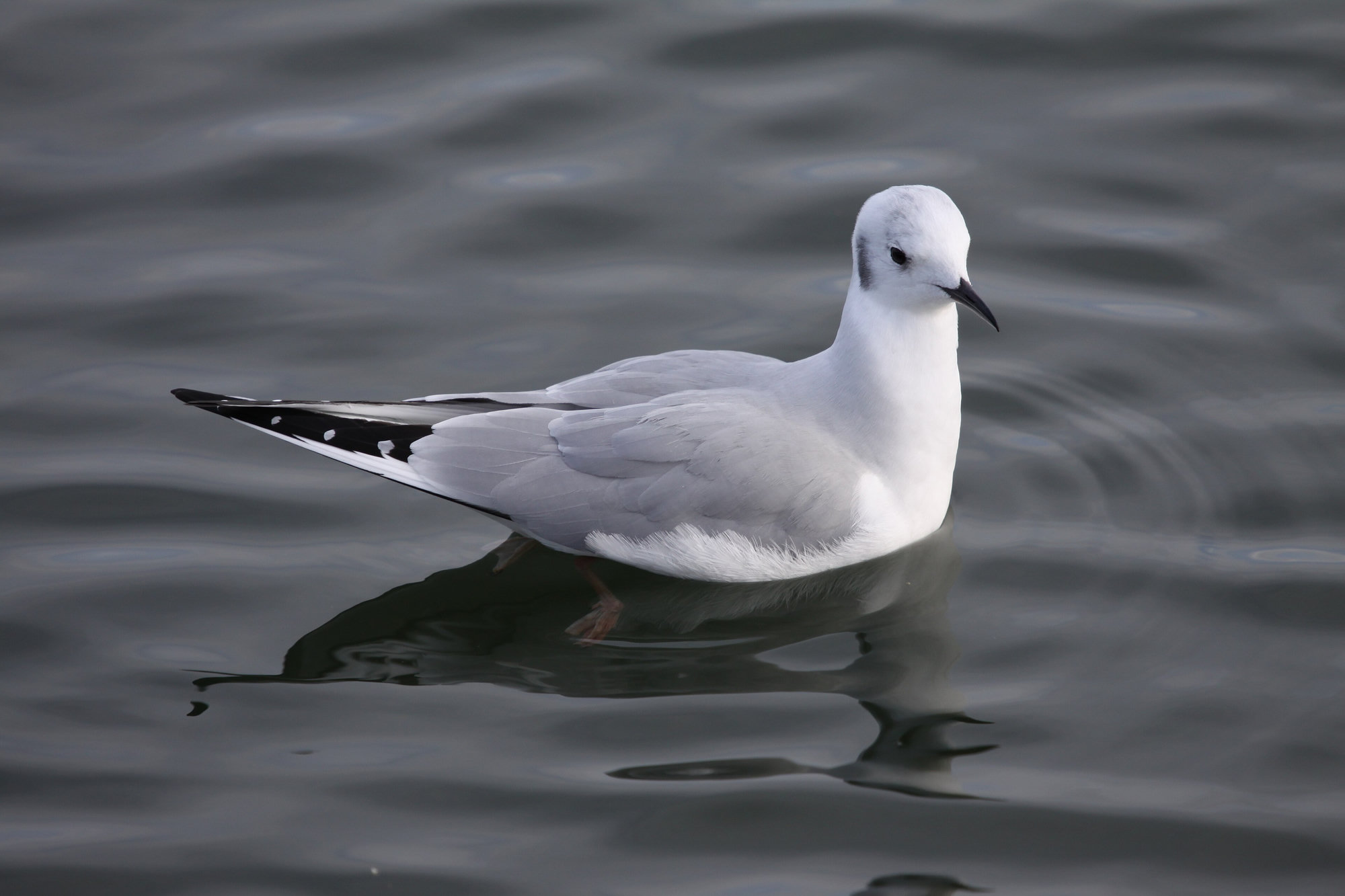
Photo Basar (opens in a new tab) / Wikimedia Commons, CC BY-SA 3.0 (opens in a new tab)
At a glance
- Size
- About 28 to 34 cm long
- Weight
- About 170 to 230 g
- Habitat
- Coastal waters, inlets and large reservoirs
- Diet
- Small fish, crustaceans and insects
- In Georgia
- A fairly common winter visitor
- Voice
- A nasal, rasping "cheer"
- Rabies vector
- No
Identification
- Key marks
- Small, slender gull; black bill; pink legs; in winter a white head with a dark ear spot; a white wedge on the leading edge of the wing
- Told apart from
- Laughing gull, which is larger with a darker grey back and dark wingtips without the white wedge
- Where to look
- Inlets, sounds and large reservoirs such as Lake Lanier and West Point Lake, November to March
Behaviour
Bonaparte's gulls pick food from the surface of the water in buoyant, tern-like flight. Unlike most gulls, they nest in trees, in the boreal forests of Canada and Alaska.
Why they matter
This is the only gull that regularly nests in trees, placing its nests in spruces near northern lakes. On migration it gathers where water churns up small fish and plankton, at river mouths and below dams.
Reproduction and lifecycle
Nest — A platform of sticks in a conifer near water
Eggs — Usually two or three
Incubation — About 24 days
Chicks — Stay in the nest until they can fly
Flight — At about four to five weeks
Lifespan — Wild birds over eighteen years are recorded
Living around people
- Gulls tangled in fishing line near piers and dams need help from a rehabilitator.
Misconceptions
- All gulls nest on the ground. Bonaparte's gulls nest in trees.
Related species
Seasonal activity
When this species is breeding, and when there are nests on the ground. Mowing during the shaded months is how most nests are found.
| Jan | Feb | Mar | Apr | May | Jun | Jul | Aug | Sep | Oct | Nov | Dec | |
|---|---|---|---|---|---|---|---|---|---|---|---|---|
| Breeding | Jan: no | Feb: no | Mar: no | Apr: no | May: no | Jun: no | Jul: no | Aug: no | Sep: no | Oct: no | Nov: no | Dec: no |
| Active nests | Jan: no | Feb: no | Mar: no | Apr: no | May: no | Jun: no | Jul: no | Aug: no | Sep: no | Oct: no | Nov: no | Dec: no |
| Notes | Wintering | Wintering | Migrating north | Last birds leave | Nesting in boreal forest | Nesting | Chicks | Young flying | Migration begins | Moving south | Arriving in Georgia | Wintering |
Where it lives
Recorded in 72 states and provinces. Each one links to the other animals there, and to the rehabilitators licensed for them.
United States
- Alabamain winter
- Alaskabreeding
- Arizonain winter
- Arkansasin winter
- Californiain winter
- Coloradoin winter
- Connecticutin winter
- Delawarein winter
- District of Columbiapassing through
- Floridain winter
- Georgiain winter
- Idahoin winter
- Illinoisin winter
- Indianain winter
- Iowapassing through
- Kansasin winter
- Kentuckyin winter
- Louisianain winter
- Mainein winter
- Marylandin winter
- Massachusettsin winter
- Michiganin winter
- Minnesotapassing through
- Mississippiin winter
- Missouriin winter
- Montanapassing through
- Nebraskapassing through
- Nevadapassing through
- New Hampshirein winter
- New Jerseyin winter
- New Mexicoin winter
- New Yorkin winter
- North Carolinain winter
- North Dakotapassing through
- Ohioin winter
- Oklahomain winter
- Oregonpassing through
- Pennsylvaniain winter
- Rhode Islandin winter
- South Carolinain winter
- South Dakotain winter
- Tennesseein winter
- Texasin winter
- Utahpassing through
- Vermontpassing through
- Virginiain winter
- Washingtonin winter
- West Virginiain winter
- Wisconsinpassing through
- Wyomingpassing through
Canada
If you found one
Answer a few questions and you will get a specific answer for what you are looking at.
I found an animal