
Species
American black bear
Ursus americanus
North America's most widespread bear, an intelligent omnivore whose movements closely follow seasonal food supplies.
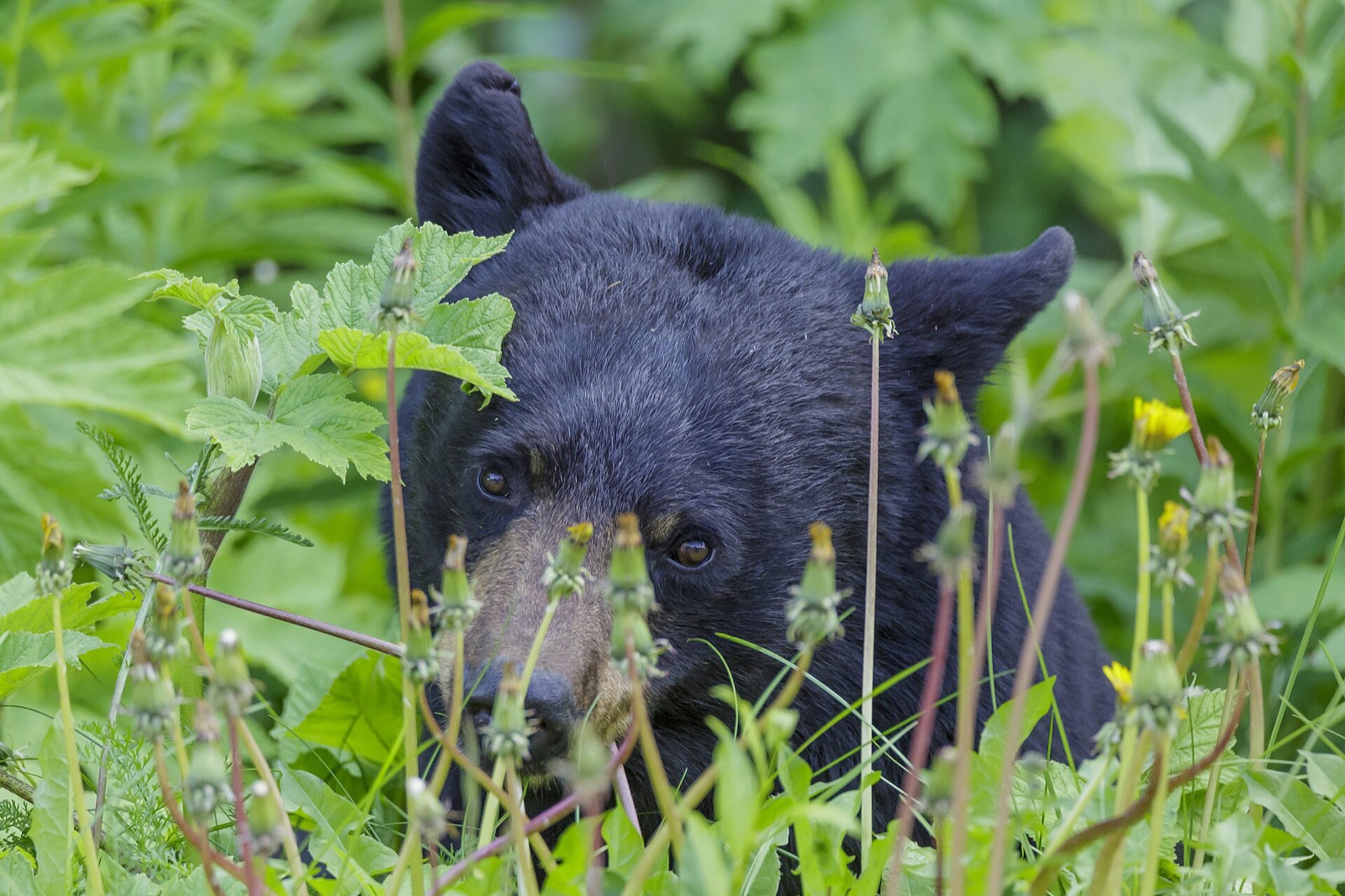
Photo Thomas Fuhrmann (opens in a new tab), CC BY-SA 4.0 (opens in a new tab)
At a glance
- Occurrence
- Native to North America
- Habitat
- Large forested tracts, swamps and mountain landscapes with secure cover and varied seasonal foods
- Diet
- Acorns, berries, nuts, insects, vegetation, carrion and occasional animal prey
- Activity
- Most active around dawn, dusk and night, with daylight activity also normal
- Shelter
- Seasonal dens in hollow trees, ground cavities, brush piles, rock crevices or other protected sites
- Social pattern
- Usually solitary except females with cubs and brief breeding associations
- Rabies vector
- No
Identification
- Key marks
- Large black body, short tail, rounded ears and a straight facial profile without the shoulder hump of a grizzly bear
- Told apart from
- Feral hog, which has a long snout, visible tail and a lower-slung body
- Where to look
- Large forested tracts, swamps and mountain landscapes with secure cover and varied seasonal foods
Behaviour
It is most active around dawn, dusk and night, with daylight activity also normal. It uses habitats including large forested tracts, swamps and mountain landscapes with secure cover and varied seasonal foods. It feeds on acorns, berries, nuts, insects, vegetation, carrion and occasional animal prey.
Black bears follow seasonal food: spring greens and insects, summer fruit and autumn nuts can shift movement dramatically. Many bears reduce activity and den in winter, though the timing and depth of dormancy vary with weather, sex and food.
Black bears disperse seeds over long distances after eating fruits and berries, linking feeding sites with forest regeneration.
Why they matter
Bears disperse seeds from berries and fruit, tear apart rotten wood while feeding on insects and move nutrients through forests as large omnivores.
Despite their size, black bears are strong climbers and can run and swim well; their survival strategy depends more on memory and smell than confrontation.
Reproduction and lifecycle
Mating — mainly June and July.
Delayed implantation — the embryo does not implant until autumn; cubs are born about seven months after mating, with active fetal growth concentrated late in pregnancy.
Cubs — usually 1–3 are born in the den in January or February.
Dependency — cubs remain with the mother through their first year and den with her the following winter.
Family breakup — usually the following spring or early summer, so females often raise a litter only every other year.
Living around people
- Secure rubbish, pet food, bird seed and outdoor freezers so a bear is not rewarded for approaching a home.
- Keep dogs leashed where bears are present; an off-leash dog can chase a bear and then bring the conflict back to its owner.
- Give bears a clear escape route and never approach cubs.
- Drive carefully at dawn, dusk and night in bear range.
Misconceptions
- A black bear standing upright is preparing to attack. Standing often improves smell and view; it is investigative behaviour, not an attack posture.
- A cub seen without its mother is necessarily orphaned. A mother can be nearby but out of sight; approaching a cub can create danger for both people and bears.
- Black bears are strict carnivores. Most of their diet is plant material, insects and seasonally abundant foods.
Seasonal activity
When this species is breeding, and when there are nests on the ground. Mowing during the shaded months is how most nests are found.
| Jan | Feb | Mar | Apr | May | Jun | Jul | Aug | Sep | Oct | Nov | Dec | |
|---|---|---|---|---|---|---|---|---|---|---|---|---|
| Breeding | Jan: no | Feb: no | Mar: no | Apr: no | May: no | Jun: no | Jul: no | Aug: no | Sep: no | Oct: no | Nov: no | Dec: no |
| Active nests | Jan: no | Feb: no | Mar: no | Apr: no | May: no | Jun: no | Jul: no | Aug: no | Sep: no | Oct: no | Nov: no | Dec: no |
| Notes | Many females are in dens and cubs are born in January or February; other bears may be intermittently active during mild spells. | Denning continues and newborn cubs nurse while mothers rely on stored fat. | Many bears begin emerging, with timing varying by region, sex and weather. | Spring foraging focuses on green plants, insects and carrion. | Activity and movement increase as food diversity expands. | Breeding season begins and adult males travel widely. | Peak breeding continues; berries and other summer foods are important. | Bears feed intensively on fruit, insects and other available foods. | Autumn mast begins to dominate where acorns and nuts are available. | Heavy feeding helps build fat reserves before winter. | Some bears begin denning while others remain active where food is abundant. | Den use increases, though bears may wake or remain active during mild periods. |
If you found one
Answer a few questions and you will get a specific answer for what you are looking at.
I found an animal